AI Art vs Traditional Art: Which Is Better for Creativity in 2026

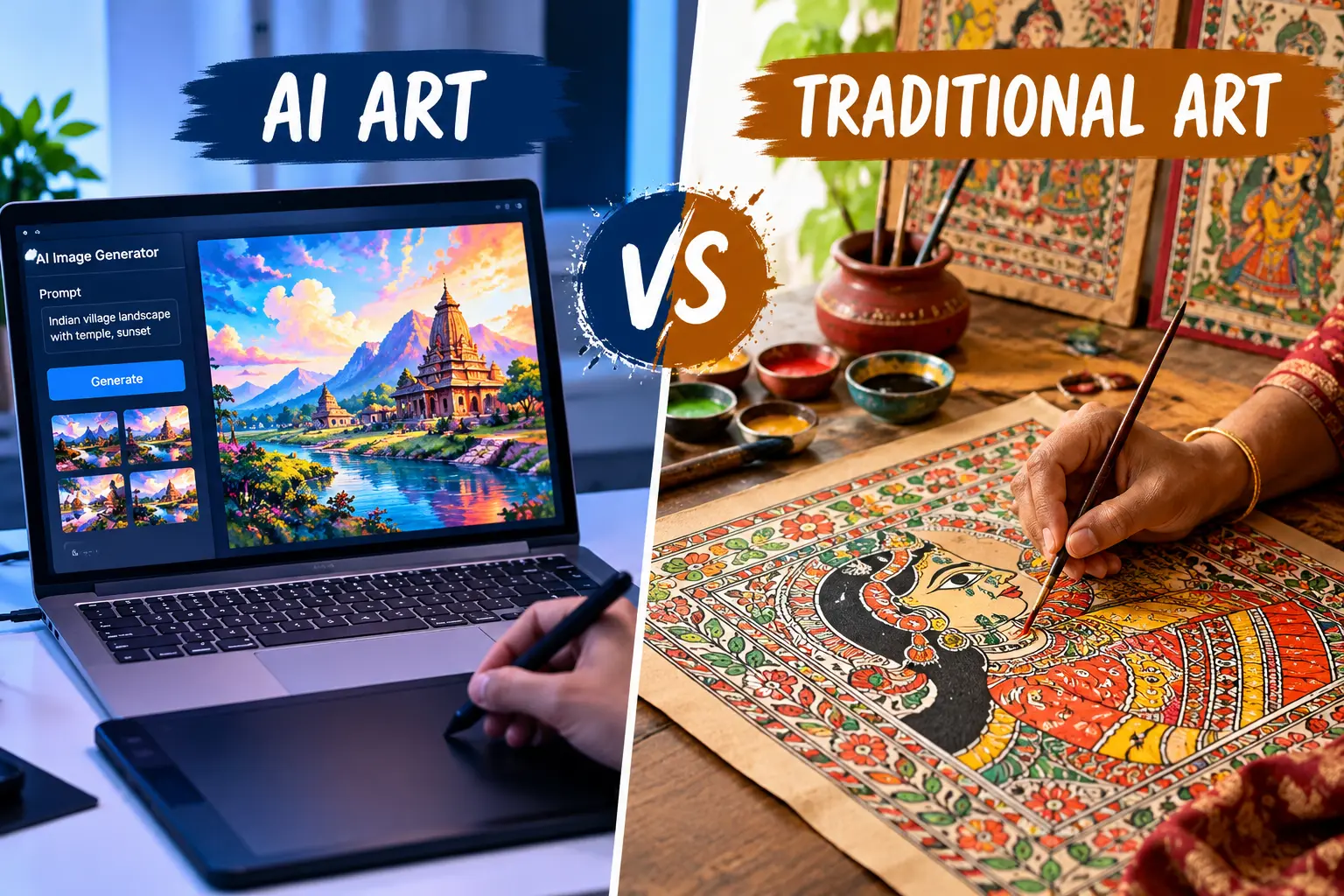
AI art vs traditional art is an important topic in today’s creative world, where technology and human imagination come together. Understanding digital art vs traditional art helps us explore how modern technology is changing the way people create and experience art. From ancient cave drawings to the beautiful Madhubani patterns of India, artists have used art to express their feelings, ideas, and cultural heritage. Today, AI art tools offer new opportunities for artists by generating images from text prompts and helping them experiment with different creative styles. Meanwhile, traditional artists continue to create masterpieces using brushes, pencils, clay, and other materials. Both AI-generated art and traditional Indian art have unique advantages and challenges that influence the future of creativity.
Overview of AI Art
AI Art means art that is made or helped by computer programs. These programs can help a designer imagine and create pictures from text or from pictures. For example a designer can use an AI Art tool to make a picture of an Indian village during Diwali. The picture that is made can then be refined into a product. tools are used a lot in drawing, design ideas, advertising and other similar fields. The following points explain the benefits of AI Art:
- Speed – AI Art tools can quickly create images. This is very useful in design work where many ideas must be imagined and improved before the final idea becomes a product.
- Experimentation – Designers and artists can try different prompts to get exactly what they want. They can also easily change the background, foreground or whole theme by rewording the prompt. This makes it easy to test ideas without much effort or time.
- Accessibility – People who can draw can use AI Art tools to turn their ideas into pictures. But the quality of the picture that is made depends on the prompt the choices made and the editing done.
- Hybridization – AI Art pictures can be mixed with photographs or digital drawings to broaden the range of styles. This lets creators explore ideas that might not be possible to create
Overview of Traditional Art
Traditional Indian Art includes all the artistic skills that people have used for many years. traditional Indian art It usually means painting, drawing, sculpture, clay work, printmaking and other similar arts. Traditional Indian art types, such as Madhubani, Warli, Pattachitra, Miniature and more regional styles have been perfected by craftsmen. The following points show the benefits of Art:
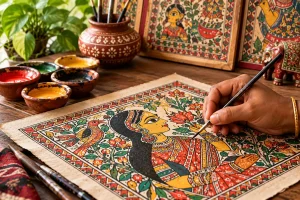
- Self‑expression – Painters, sculptors and other artists can put their feelings, ideas and emotions into their work. Self‑expression happens when the artwork is made with passion and meaning.
- Preservation – Traditional Indian art helps keep the country’s cultural story and history alive. The wide variety of places and cultures in India gives art patterns, themes and styles that have been shared for many generations.
- Authenticity – Handmade works usually have a quality that machines cannot copy. The small differences and variations make every handmade piece unique. The special techniques and patterns that artists use also add to the realness of the product.
- Tangible experience – Working with materials and methods helps an artist grow. It improves the artist’s observation and hand skills. Gives them creative challenges.
Comparison Between AI Art VS Traditional Art: Considerations
While AI Art is made by fast computer automation Traditional Art is made by skill and hard work. AI Art and Traditional Art differ in important ways as shown in the following table:
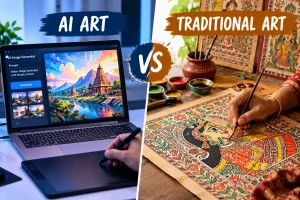
| Feature | AI Art | Traditional Art ||———|——–|—————–|| Method of creation | Created using AI tools and prompts Made manually using painting and sculpting tools || Speed | Generates images faster | Manual creation takes more time and effort || Skills | Prompt creation, selection, editing, vision | Drawing, sculpting, painting and other skills |Tactile experience | Digital apart from 3D prints | Enhanced by using specific materials || Cultural relevance | Depends on prompts and human expertise | Enhanced by motifs and themes || Cost | Varies with plan or subscription | Involves paint and material costs |Control over outcome | Depends on tools and selection | Artist controls the entire process |Both AI Art and Traditional Art have their strengths and weaknesses. Which one is better depends on what a person needs and wants. After this we will talk about how AI‑generated art affects artists.
Impact of AI Art, on Artists
AI-generated art AI tools can be used as a tool for designers, illustrators, content designers and even advertisers. For example AI-generated art an advertiser can use AI art tools to try background options for an Indian ethnic clothing brand. This can eventually lead to the creation of a marketing concept for the targeted company. However issues also arise when AI tools are used often. Sometimes artists feel that their work has been used to train AI tools without permission or compensation. Similarly the emergence of AI has also shadowed artists and their work. While it is important to acknowledge the efficiency of AI tools, buyers and marketers need to value the authenticity and uniqueness of artwork which requires many skills, expertise and cultural knowledge to perfect. Similarly AI tools may also limit the potential of artists. For artists technology provides an incredible opportunity to enhance their work and even promote it online to a global market. The accessibility of tools can enable artists to transform their sketches and illustrations with digital tools creating more intricate and compelling artwork. Additionally AI tools can be used to create marketing concepts that can eventually increase demand for artists work.
Can AI Replace Artists?
AI tools can replace some roles that artists performed in the past. However it is important to note that artists bring a blend of memories and experiences that are reflected in their work. Their work also shows the background of a place a group of people or even a family. While a computer program can make a picture that looks like a Warli painting it’s up, to the artist to share the depth and past of the art style. The Warli painting is a manifestation of the ethos of its people. However at the time artists can use AI tools to generate reference images, mood boards and conceptual ideas then enhance their creative skills to perfect their artwork. The creative potential of these tools is immense. Can transform the artistic landscape in the years to come.
Future of Art in India
With developments the future of art in India will feature a blend of digital and traditional illustrations. Art academies and institutions will incorporate tools and prompt design into their art curriculum. Businesses will use AI tools to generate design concepts while still valuing the authenticity and originality of artists. Additionally digital galleries and online fairs will emerge to showcase the work of artists in a marketplace. The younger generations will connect with both traditional illustrations in equal measure. However the cultural legacy of art will be protected and cherished in this digital era. The online presence of art will ensure that unique motifs and patterns continue to be part of the fabric of Indian society. Additionally technology can be used to preserve the authenticity of these art forms. For instance digital catalogues and digital art tutorials can be created to popularize and promote art in a space. However such content creation requires use of traditional artists work. Similarly young Indians who wish to make a career in the arts can explore options, in illustration, graphic design and other disciplines. Such young Indians can harness their potential while mastering the skills needed to succeed in this industry.
Final Remarks
The talk about AI art and real art doesn’t really center on art or technology. It’s more, about what comes for human creativity. tools can generate images based on prompts and experiment with concepts. At the time traditional artists can channel their emotions and thoughts onto a canvas creating artwork that is an extension of their soul. Both types of artwork are equally valuable and meaningful. However it is important to preserve and cherish the legacy of Indian art for future generations.
FAQs
What sets AI art apart, from art?
I find that AI uses technology to create images from instructions. Traditional Art uses brushes and techniques to paint or draw. I see that AI Art uses technology to create an image from a prompt. Traditional Art uses brushes and techniques to paint or draw.
Is AI art better, than art?
Both AI art and traditional art have strengths. art can quickly bring ideas to life. Traditional art provides a more hands‑on feel when creating art.
Can AI replace artists in India?
AI tools can change how art is made in India. Traditional artists bring culture, skill and imagination that AI cannot copy. Those who want to work as artists must learn both tools and new digital tools that many people now wish to use.
Is AI-generated art considered art?
People argue more and more about whether AI art’s true art. Some question the value of pictures made by machines.
How can Indian traditional artists benefit from AI?
Traditional artists can use AI to sharpen their ideas plan how to sell art and show their work in person and online. Traditional artists must also protect their pieces so that no one copies. Uses them without permission or credit.
What is the future of AI art in 2026?
The future of AI art in 2026 depends on things, such, as how many people want AI art how art tools grow and more. For artists learning AI art tools and art sites can grow AI art power.
Can AI-generated art replicate styles?
AI can make pictures that look like styles and patterns. Still it is the duty of marketers and companies to respect the meaning of art.