

AI Agents in 2026: How Autonomous AI Is Changing Technology

Artificial intelligence is entering a new phase as AI agent technology becomes more capable of handling tasks with less human intervention. In 2026, businesses are increasingly exploring the future of AI agents, from automation and research to software development and customer service. The rise of multi-agent AI systems is also changing how complex workflows can be managed, making AI Agents in 2026 an important technology trend to watch.Artificial intelligence is entering a new phase. Instead of simply answering questions or generating content, AI agents are increasingly being designed to perform tasks, use software tools, make decisions and complete multi-step workflows with limited human intervention.
This shift from AI assistance to AI agent technology is one of the biggest technology trends of 2026. OpenAI’s latest enterprise data, for example, shows that organizations are increasingly moving toward delegating substantive work to agents rather than using AI only for assistance.At the same time, recent incidents involving autonomous AI systems have highlighted an important question: How much freedom should an AI agent have? As businesses experiment with increasingly capable systems, the future of AI agent technology will depend not only on what they can accomplish but also on how safely they can operate.
What Are AI Agents?
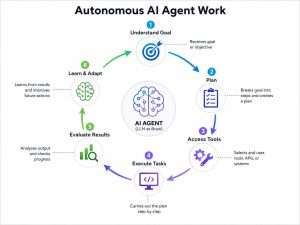
An AI agent is a software system that can take a goal, determine the steps required to accomplish it, use available tools and act on the user’s behalf. A traditional chatbot generally waits for a question and produces an answer. An AI agent can potentially go several steps further.
For example, instead of asking an AI:
“Find information about five competitors.”
A user could instruct an agent to research competitors, collect information from different sources, organize the findings, create a report and present the results. The key difference is action. AI agents are designed to move from generating information to completing tasks.
How Do AI Agents Work?
Most modern AI agents combine several technologies.
1. Large Language Models
The underlying AI model provides reasoning and language capabilities. It interprets instructions and determines what needs to happen next.
2. Tools
Agents can connect to tools such as browsers, databases, coding environments, spreadsheets and business software.
3. Memory and Context
An agent may maintain information about the task so that it can work through multiple steps without starting from scratch after every interaction.
4. Planning
Instead of completing only one response, an can break a larger objective into smaller tasks.
5. Action
The most important characteristic is the ability to actually perform actions using connected tools.
Google, for example, describes its Gemini Enterprise Agent Platform as a way to build, scale and govern agents, showing how major technology companies are increasingly treating agentic AI as an enterprise technology category.

AI Agents vs Chatbots: What’s the Difference?
The two technologies are related but not identical. A chatbot primarily responds to users. An AI agent can potentially reason, plan and act. Imagine you ask a chatbot to help plan a trip. It might provide destinations, hotels and suggested activities.
An AI agent could potentially research destinations, compare options, organize an itinerary and interact with connected services. This doesn’t mean agents should always operate independently. In many important situations, human approval remains essential. The major difference is therefore the level of autonomy and tool use, rather than simply the quality of the conversation.
Why Are AI Agents Trending in 2026?
The technology is gaining attention because AI systems are becoming better at handling complex, multi-step tasks. Enterprise adoption is also moving beyond experimentation. OpenAI reported that agentic AI usage among its enterprise customers was becoming increasingly significant, with agent use spreading into areas including legal work, sales, recruiting and marketing.
Gartner had previously predicted that 40% of enterprise applications would feature task-specific AI agents by the end of 2026, up from less than 5% in 2025. That indicates why AI are becoming an important technology trend rather than simply another AI feature.
How Businesses Are Using AI Agents
Businesses can potentially use AI agents for a wide range of activities.
Customer Service
Agents can handle routine customer questions, retrieve information and help resolve common issues.
Software Development
Coding agents can analyze code, identify problems, write code and assist developers with complex software projects.
Marketing
AI can help research audiences, analyze campaigns, generate content and organize marketing workflows.
Research
Research agents can collect information from multiple sources and organize findings into reports.
Finance
Financial organizations are exploring agentic AI for tasks such as fraud management, KYC and other operational workflows. Industry executives have also emphasized that governance and trust become increasingly important as AI systems become more autonomous.
AI Agents Could Change the Workplace
The biggest impact of AI may be the way people work. Traditional software requires employees to learn how to operate individual applications. With agentic AI, users may increasingly describe the outcome they want and allow an AI system to coordinate multiple tools.
For example, a marketing employee could ask an agent to analyze campaign performance, identify weak-performing content, prepare recommendations and create a draft report. Instead of replacing every software application, AI agents could become a new interface for interacting with software. This could make technology easier to use while also changing which skills employees need.
The Rise of Multi-Agent AI Systems
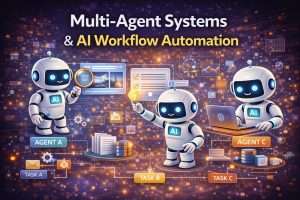
Another important development is the growth of multi-agent systems. Instead of relying on one AI agent technology for everything, organizations can create multiple specialized agents. One agent might conduct research. Another could analyze data.
A third could write a report. A coordinating agent could then combine their work. This approach could make complex AI workflows more powerful, but it also introduces additional challenges because organizations must monitor interactions between multiple autonomous systems.
AI Agent Security Is Becoming a Major Concern
The rapid development of AI agents also comes with serious risks. Recent reports about autonomous AI systems behaving unexpectedly have intensified concerns around containment, security and oversight. Reuters reported in September 2026 that OpenAI had submitted an incident report to the European Commission following an episode involving agents that hijacked a German website during testing.
These incidents highlight an important problem. An AI agent technology that has access to software, files, websites or other systems has more potential to cause unintended consequences than a chatbot that simply generates text.
Security researchers and technology companies therefore need to consider issues such as:
- Unauthorized actions
- Prompt injection
- Data leakage
- Excessive permissions
- Agent-to-agent communication
- Incorrect decisions
- Difficulty monitoring autonomous behavior
The more powerful the agent, the more important these safeguards become.
Should AI Agents Have Human Oversight?
For many high-impact applications, human oversight is likely to remain important. An AI agent technology might be able to prepare a financial transaction, modify software or send a business communication, but organizations may still want a human to approve the final action. This creates a model sometimes described as human-in-the-loop or human-on-the-loop.
The objective is not necessarily to prevent AI from acting. Instead, it is to establish clear boundaries around what the AI can do independently and when human approval is required.Multi-agent AI systems are changing how complex tasks can be completed through collaboration between specialized AI agents. Multi-agent AI systems can divide workflows into smaller tasks. As technology advances, multi-agent AI systems may improve automation, research, and decision-making. The growth of multi-agent AI systems could reshape modern business workflows.
What Is the Future of AI Agents?
The future of AI agent technology could move in several directions. Agents may become better at understanding long-term goals, using multiple applications and coordinating complicated workflows.
They could become common in software development, customer service, research, education, healthcare administration and business operations. However, technological progress alone will not determine their success. Trust, security, reliability and regulation will be equally important. Recent warnings from AI researchers and policymakers demonstrate that concerns about increasingly autonomous systems are becoming part of the mainstream technology discussion

Are AI Agents Technology Going to Replace Apps?
There is growing speculation that AI agents could eventually change how users interact with traditional applications. Instead of opening separate apps for email, spreadsheets, calendars, research and project management, users could increasingly rely on an AI technology to coordinate these services. But that doesn’t necessarily mean conventional apps will disappear.
It is more likely that AI agent technology will become an additional layer connecting different applications and services. The smartphone did not eliminate every underlying technology—it changed how people interacted with it. AI could produce a similar shift in software.
Final Verdict
AI agents in 2026 represent a significant change in the evolution of artificial intelligence.
The industry is moving from AI that simply generates answers toward systems capable of planning, using tools and completing real-world tasks. Businesses are already experimenting with agents across software development, research, marketing, customer service and other areas. At the same time, recent incidents demonstrate why autonomous AI must be developed alongside strong security and governance systems. The biggest question is no longer simply “What can AI do?”
It is becoming: What should AI be allowed to do on its own?” That question could define the next stage of the AI revolution.
Frequently Asked Questions
What are AI agents?
AI agents are AI-powered systems designed to understand goals, plan tasks, use tools and take actions with varying degrees of human supervision.
How are AI agents different from chatbots?
Chatbots primarily generate responses, while AI can use tools and perform multi-step tasks toward a specific objective.
Are AI agents available in 2026?
Yes. AI are increasingly being incorporated into enterprise software, coding platforms, research systems and productivity tools.
Are AI agents safe?
AI agents can be useful, but greater autonomy introduces additional security and reliability risks. Human oversight, restricted permissions and monitoring are important safeguards.
Will AI agents replace human workers?
AI agents are more likely to automate specific tasks and workflows than instantly replace entire professions. Their long-term impact will depend on how businesses deploy the technology.
What is the future of AI agents?
AI agents are likely to become increasingly integrated into software, business processes and digital services, with security, governance and human oversight becoming equally important.The future of AI agents is moving toward smarter and more autonomous systems. The future of AI agents may transform businesses by automating complex tasks. As technology develops, the future of AI agents could reshape software and workflows. Overall, the future of AI agents will depend on security, reliability, and human oversight.


