
BRICS: Countries, Purpose, Currency & HQ 2026

BRICS: Countries, Purpose, Currency & BRICS HQ has become an important name in discussions about the global economy, international trade and geopolitics. What began as a group of four emerging economies has expanded into a larger platform representing a significant share of the world’s population and economic activity.
For India, it is particularly relevant because the country is one of its founding members and continues to play an active role in the group’s development.
But what exactly is BRICS? Which countries are members? Does it have its own currency? Where is the headquarters? And why does the group matter to India?
This guide explains the key aspects of BRICS in simple terms.
What Is BRICS
BRICS is a cooperation group of emerging and developing economies. It provides a platform for member countries to discuss economic, financial, political and development-related issues.
The term originally came from the names of four countries:
- B – Brazil
- R – Russia
- I – India
- C – China
The group was initially known as BRIC. South Africa joined in 2011, leading to the name BRICS.
Unlike organizations such as the European Union, this is not a political union with a common government or a single legal system. It is a flexible forum where countries cooperate in areas where they have common interests.
Over the years, it has become more significant because its members include major economies, large populations and important energy-producing countries.
Who Are the Member Countries?
The list of countries has changed considerably since the group’s formation.
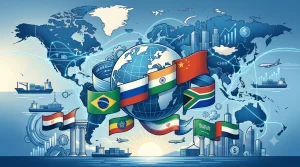
As of 2026, BRICS has 11 full members:
| BRICS Country | Region |
|---|---|
| Brazil | South America |
| Russia | Europe and Asia |
| India | Asia |
| China | Asia |
| South Africa | Africa |
| Egypt | Africa |
| Ethiopia | Africa |
| Iran | Asia |
| Saudi Arabia | Middle East |
| United Arab Emirates | Middle East |
| Indonesia | Southeast Asia |
Egypt, Ethiopia, Iran, Saudi Arabia and the UAE joined during the major expansion that took effect in 2024. Indonesia became a full member in January 2025.
The group also has a partner-country category. Partner countries can participate in selected BRICS activities but are different from full members.
The expansion has made it more geographically diverse, giving the group a wider presence across Asia, Africa, the Middle East and Latin America.
Why Was the Group Created?
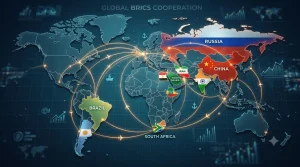
The BRICS purpose is to strengthen economic, political, and diplomatic cooperation between member countries while giving emerging and developing economies a greater voice in international affairs and global decision-making.
Its areas of cooperation include:
- Trade and investment
- Economic cooperation
- Development finance
- Technology and innovation
- Climate change
- Healthcare
- Education
- Agriculture
- Energy
- International financial reform
One major objective is to encourage greater representation of developing countries in international institutions and decision-making bodies.
For example, it members have regularly discussed reforms to institutions such as the International Monetary Fund and the World Bank, arguing that the global financial system should better reflect the changing weight of emerging economies.
However, it is not designed to make all members follow the same economic or foreign policy. Each country continues to make its own decisions based on its national interests.
How Does BRICS Work?
It does not have a permanent central government or a president who leads the group indefinitely.
Instead, the BRICS presidency rotates among member countries. The country holding the presidency generally sets priorities for the year and organizes meetings and the annual summit.
BRICS activities involve much more than meetings between national leaders. There are discussions involving:
- Foreign ministers
- Finance ministers
- Central banks
- Business groups
- Academic institutions
- Scientists
- Health officials
- Other government representatives
This allows cooperation to take place across different sectors.
Another important institution connected with BRICS is the New Development Bank (NDB). Established in 2015 by the original members, the bank finances infrastructure and sustainable development projects in member and other developing countries.
The NDB is an important example of practical financial cooperation.
The Debate Around a Common Currency
The idea of a BRICS currency has attracted considerable attention, particularly because of discussions about reducing dependence on the US dollar in international transactions.
However, an important distinction needs to be made:
BRICS does not currently have a single common currency.
There have been discussions among BRICS countries about increasing the use of national currencies for trade and improving cross-border payment systems. These efforts are different from creating a new currency shared by all BRICS members.
For example, countries may explore settling certain trade transactions using their own national currencies instead of converting every transaction through the US dollar.
A common currency would be a much more complicated project. It would require extensive coordination of monetary policy, banking systems, exchange rates, financial regulations and economic policies.
Therefore, claims that it has already launched a currency that replaces the US dollar are incorrect.
The current focus is more closely related to local-currency settlements and financial cooperation.
Does BRICS Have a Headquarters?
Another common question is about the BRICS HQ.
The simple answer is: It does not currently have a permanent headquarters.
Unlike organizations that have a fixed international headquarters, it operates through a rotating presidency. The country holding the presidency takes responsibility for Organization major activities during its term.
It also does not have a permanent secretariat like some formal international organizations do.
There have been discussions and proposals regarding a permanent headquarters. However, these proposals should not be confused with the establishment of an officially recognized permanent headquarters.
Therefore, if you see a claim that a particular city is already the official BRICS headquarters, it is important to check whether it refers to a proposal, an institution associated or an actual permanent headquarters.
BRICS and Its Importance for India
India has particular importance in the group because it was one of the original four members
The grouping provides India with a platform to engage with major economies across different regions and discuss issues affecting developing countries.
India’s interests in BRICS include areas such as:
- International trade
- Economic development
- Energy security
- Technology
- Climate change
- Development finance
- Global governance
- Financial cooperation
The group also gives India an opportunity to strengthen its economic and diplomatic relationships with countries that are outside traditional Western-led groupings, helping India expand its international partnerships and engagement.
At the same time, India’s participation in BRICS reflects its BRICS purpose of strengthening cooperation with emerging and developing economies and does not mean that it has abandoned its relationships with the United States, Europe, Japan or other international partners. India maintains relationships with a wide range of countries and organizations.
India assumed the BRICS presidency in December 2025 and is leading the grouping in 2026, with a focus on advancing the BRICS purpose of strengthening cooperation, supporting economic development, and giving emerging and developing economies a greater voice in global affairs. This makes BRICS especially relevant for Indian readers during the current year.
BRICS and the Global Economy
The growing importance of BRICS is partly linked to the economic weight of its members.
The group includes some of the world’s largest economies and several major producers and consumers of energy, commodities and manufactured goods.
Its members also represent a very large share of the world’s population.This gives relevance to global discussions about: This gives relevance to global discussions about trade, investment, energy, development and international economic cooperation, even though the economic structures and national priorities of its members remain very different.
and national priorities remain very different.
Key Challenges Facing BRICS
Although the group has expanded, its larger membership also brings new challenges, particularly when it comes to coordinating the interests and priorities of all member countries.
Different National Interests of BRICS countries
Members do not always agree on foreign policy, trade, or international security issues, making it difficult to reach a common position.
Economic Differences
The economies of the member countries vary significantly in size, structure and development. Some are major industrial economies, while others depend heavily on energy, commodities or agriculture.
Decision-Making
As membership grows, coordinating discussions among more countries can become more complicated.
Common Currency Challenges
A common BRICS currency would require significant financial and monetary integration. Differences in inflation, interest rates, exchange rates and economic policies make such a project highly complex.
Balancing Expansion and Cooperation
Adding more members can increase its global reach, but a larger group can also make consensus and practical cooperation more difficult.
These challenges mean that its long-term influence will depend not simply on how many countries join, but on how effectively its members can cooperate.
Frequently Asked Questions About BRICS
What does BRICS stand for?
BRICS originally stood for Brazil, Russia, India, China and South Africa. The name remains BRICS even though the group has expanded beyond these five countries.
How many BRICS countries are there?
There are currently 11 full BRICS members: Brazil, Russia, India, China, South Africa, Egypt, Ethiopia, Iran, Saudi Arabia, the United Arab Emirates and Indonesia.
Does BRICS have a currency?
No. There is currently no common currency. Members have discussed increasing the use of national currencies and improving cross-border payment systems.
Where is the BRICS HQ?
It does not currently have a permanent headquarters. Its presidency rotates among member countries.
What is the main purpose of BRICS?
The BRICS purpose is to promote cooperation among emerging and developing economies and strengthen their participation in global economic and political discussions.
Is BRICS an alliance like NATO?
No. it is primarily a cooperation and coordination
ton platform. It is not a military alliance like NATO.
Conclusion
The group has evolved from a small alliance of emerging economies into a broader platform involving 11 member countries from different regions of the world.
Its importance comes from the economic size, population, resources and regional influence of its members. The group provides countries such as India with another platform to discuss trade, development, finance and global governance.
At the same time, it is important to separate established facts from speculation. The group does not currently have a common currency or permanent headquarters, although members continue to discuss financial cooperation and the use of national currencies.
For students, working professionals and anyone interested in international affairs, understanding the group provides useful insight into how the global economic and geopolitical landscape is changing.
As the group continues to expand and develop, its ability to turn cooperation into practical outcomes will be one of the factors determining its future influence.