
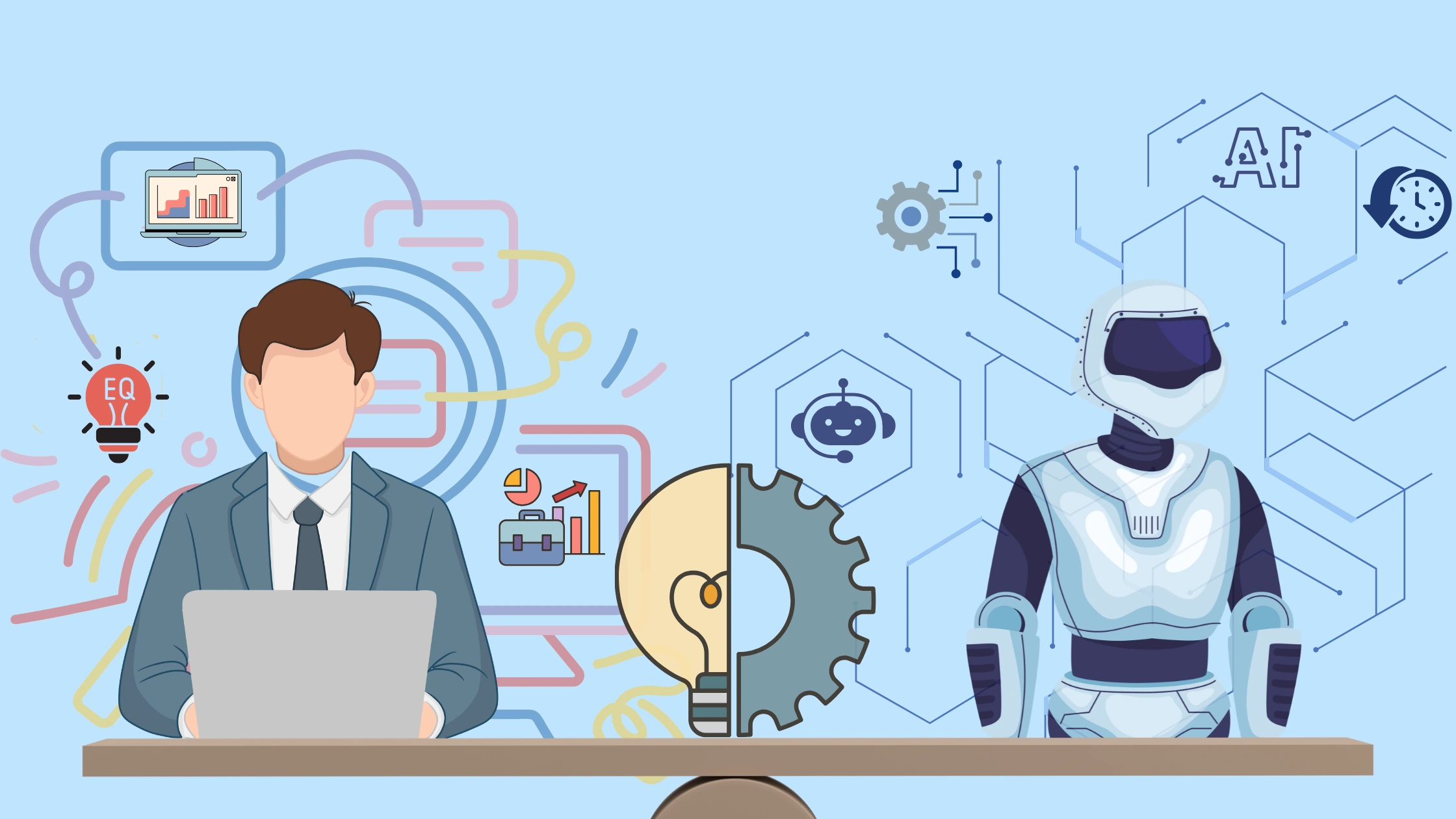
Can Humans Beat AI in Creative Tasks? Exploring the Edge | Ipsita Das

In 2022, an AI-generated painting called “The Next Rembrandt” shocked the art world by merging styles from the Dutch master’s paintings into a new portrait that sold for thousands. This piece raised debates everywhere. It begs the big question: can machines really outdo us in making art?
But the core issue here is rather simple: AI copies patterns from data it learns. But does it hold the real fire of human ideas that push boundaries? We are going to look at what AI can do now in creative work, then spot what makes humans stand out, and finally think about teaming up with AI for better results.
Generative Models: Speed and Scale
Tools like DALL-E 3 and Midjourney spit out images in mere seconds. You type a description, and voilà—art appears. GPT-4 does the same for text: writing essays or code in one night.
These work by spotting patterns in data. They combine bits from what they have seen. In one study, DALL-E can generate 100 images per minute. That’s way faster than any hand-sketching artist. Scale matters. AI does endless tweaks without getting tired. Humans take breaks, but machines churn on.
Mimicry vs. Innovation: The Style Replication Metric
AI shines at copying styles. Ask it to write like Shakespeare, and it nails the old English flow. For art, it nails down perfect swirls of Van Gogh.
Take, for instance, the event when an AI created a whole symphony in Beethoven’s style; some listeners were fooled at first, but scratch deeper, and it is just remixing well-known tunes.
Is that really innovation? The AI predicts some future value based on the previous data. It seems incapable of breaking new ground.
Measuring “Creativity”: Quantitative Benchmarks
The Intangible Human Advantage: Emotion, Intent, and Lived Experience
Machines do not have bodies or true feelings. They process information but cannot taste their joy or pain. The gap shapes why humans take the lead in deep creative acts.
The Role of Embodiment and Lived Experience
Your creativity comes from life. A painter draws from lost love or a wild hike. AI? It scans books and pics but never feels rain on skin. Philosophers such as John Dewey argue that creation must have a valid real-world connection; else, it is an empty creation. Think of Picasso’s Blue Period—born out of sorrow AI cannot experience.
We weave personal stories into work. That raw edge sets us apart.
Intentionality and Subtext: Meaning Beyond the Output
AI crafts a grief poem matching words from others’ pain. You write one from your own tears. The difference? Real intent adds layers. Subtext is hidden in human art. A novel might hint at politics without saying it. AI outputs are surface-level; it follows prompts, not hidden drives.
Deliberate choices count. Humans introduce ambiguity to provoke thought. Machines optimize for clear fits.
The Spark of True Conceptual Breakthroughs
Rule-breaking gave us big shifts like jazz or relativity. Humans question norms. AI extrapolates—extends what’s there. This limit is pointed out by experts like Douglas Hofstadter. Algorithms are great at tweaks, not at leaps. Cubism shattered flat views; AI alone cannot invent that. We dream worlds anew. That is our unbeatable spark.
The Metrics of Victory: When Does “Good Enough” Become “Beating” Us? Success with creativity moves along with needs. Speed and cost often win over soul, while in some places AI takes over the lead.
Commercial Viability and Efficiency Gains Stock photos? AI floods the sites with cheap images; no shoots by models are needed. Basic ads get written in minutes, saving firms cash.
The data says so: Adobe says AI reduces design time by 50%. And email copywriting? Humans lose to bots in terms of volume. Even without depth, AI art fits business goals. Efficiency trumps perfection here.
The “Turing Test” for Art and Storytelling
Can you tell which stories are AI-generated? In blind tests, people correctly identify the human-generated story 60% of the time. With better AIs, this decreases.
Why does the maker matter if viewers love it without knowing? In movies or books, audience reaction is the rule. Human “wins” fade if impact matches.
But authenticity attracts fans. Signed human art sells big. The test evolves.
Case Study: AI in Music Production
Film scores nowadays use AI. Composers like AIVA create tracks to fit moods really fast. Directors, in turn, make tweaks in hours, not weeks.
Game background tunes? AI does genres just right. According to one report, it replaced 20% of entry-level jobs this year, 2023. Humans still lead complex scores. For quick needs, AI competes hard.
Collaboration Over Competition: The Centaur Model of Creation
Forget fighting. Couple to win with AI. Humans guide, machines build. The combination fuels productivity.
AI as the Ultimate Creative Assistant
Stuck for a plot? Ask AI for ideas. It spits out 10 twists, quick. Writers use it to beat blocks.
Designers prototype logos in seconds; coders draft apps, then refine. It’s like a tireless helper.
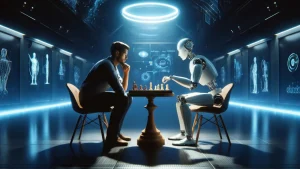
Tips: Start with broad prompts. “Give wild story ideas about lost cities.” Refine from there.
Prompt Engineering: The New Human Skillset
Now, it’s all about crafting. Good prompts are gold; bad prompts bomb.
You learn to add details: mood, style, and twists. It’s directing a band. One class saw skills boost output 3x. It does, however, keep humans central: we are at the helm.
Refining and Curation: The Human Gatekeeper AI writes, and you edit. Take the best bits, then add emotion. Editors notice bias or flaws.
Cultural fit? Humans decide. Ethics too—like fair rep in art.
Final touch: Your eye for relevance. AI provides raw ore; we forge gold.
Conclusion:
Affirming Human Values in the Era of Synthesis
Takeaway one:
AI masters mixing patterns and speed, while humans possess true originality from life and feelings.
Takeaway two:
Wins come from guiding tools, not solo grind. Curation rules now.
The future is redefining creativity. Execution goes to the machines; vision remains ours. Welcome to the flip. Use AI in your next project and see how it inspires your best. Where will you start?