
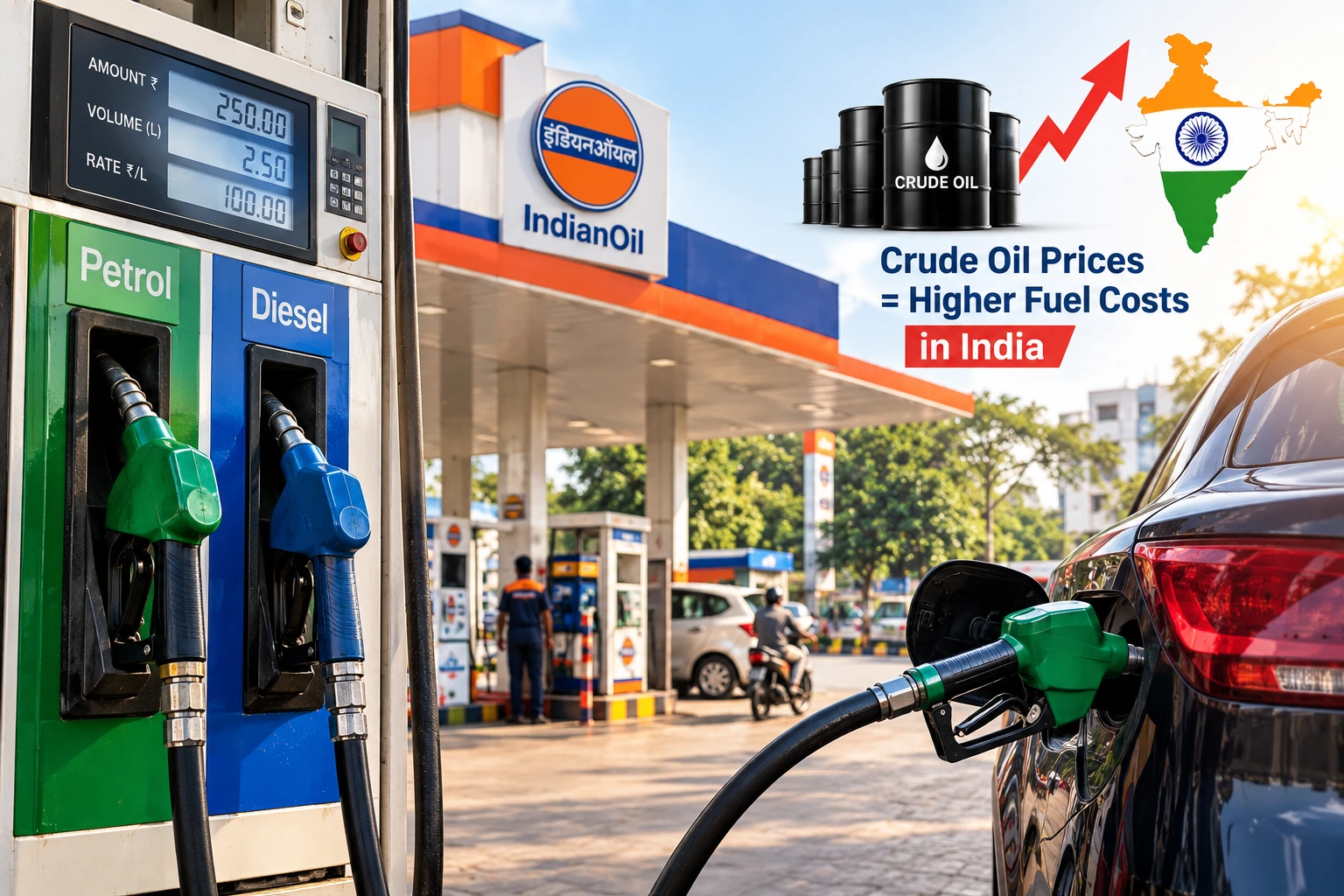
Crude Oil Prices Impact on India: What Rising Oil Costs Mean for Your Money 2026

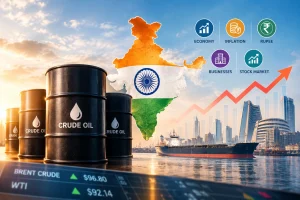
Crude oil prices impact on India is becoming an increasingly important issue for businesses, investors and policymakers as global oil prices rise sharply amid geopolitical tensions. As of September 7, 2026, Brent crude oil share price was trading around $96.80 per barrel, while WTI crude was around $92.14 per barrel. Brent had gained about 7.8% during the previous week as concerns over oil-supply disruptions through the Strait of Hormuz intensified. For India, higher crude oil prices can have consequences far beyond petrol and diesel. crude oil impact on inflation in India , the rupee, transportation costs, corporate margins, the current account and the stock market.
Why Crude Oil Prices Matter to India
Crude oil is one of the most important commodities for the Indian economy. India uses petroleum products across transportation, manufacturing, aviation, agriculture, logistics and several industrial sectors. Since India imports a large portion of its crude requirements, changes in international oil prices can directly influence the country’s import bill.
The Petroleum Planning & Analysis Cell (PPAC), under the Ministry of Petroleum and Natural Gas, tracks India’s crude oil imports, exports and petroleum-product data. Its official portal was updated on September 3, 2026. When global crude prices rise, Indian businesses therefore need to watch not only the price of oil but also the rupee-dollar exchange rate.
How Rising Crude Oil Prices Impact India’s Inflation
One of the biggest concerns from rising crude oil prices is inflation. Higher oil prices can increase costs throughout the economy.
Higher Transportation Costs
Petrol, diesel and other petroleum products are closely connected to transportation. If fuel-related costs rise, logistics companies, truck operators, airlines and other transport businesses can face higher operating expenses. Those additional costs can eventually move through supply chains.
Higher Prices for Goods
A product does not need to contain petroleum to be affected by crude oil prices.Manufacturers need to transport raw materials. Retailers need to move finished products. Farmers need transportation and agricultural inputs. Therefore, higher energy and logistics costs can increase the final price of goods.
Impact on Business Margins
Businesses have two choices when costs increase:
- Absorb the additional cost.
- Pass the cost to customers.
Companies with strong pricing power may be able to increase prices. Businesses operating with low margins may have less flexibility. This makes crude oil particularly important for businessmen planning budgets and forecasting profitability.
Crude Oil Prices and the Indian Rupee
Another major crude oil impact on India comes through the currency. India purchases much of its imported oil in US dollars. When crude becomes more expensive, the country may need more dollars to pay for the same quantity of oil.
That can create additional pressure on the Indian rupee. On September 7, Reuters reported that Brent crude was around $97 a barrel and that the rupee was expected to open around ₹94.46–₹94.50 per dollar. The Reserve Bank of India has been supporting the currency through market intervention. A weaker rupee can make imported commodities more expensive, creating another potential inflationary effect.
Impact of Crude Oil Prices on India’s Economy
Higher oil prices can affect the broader Indian economy through several channels.
1. Higher Import Bill
When crude prices rise, India’s expenditure on oil imports can increase.
This can put pressure on the country’s trade balance and current account.
2. Inflationary Pressure
More expensive energy can raise transportation and production costs.
3. Pressure on the Rupee
Higher dollar demand for oil imports can create currency pressure.
4. Lower Consumer Spending
If fuel and essential goods become more expensive, households may have less money available for discretionary spending.
5. Pressure on Corporate Profitability
Companies that cannot pass higher costs to customers may experience lower margins.
The impact becomes more significant when crude prices remain elevated for an extended period rather than rising briefly.
Crude Oil Prices Impact on the Indian Stock Market
The relationship between crude oil prices impact stock is not straightforward. Different sectors respond differently to oil-price movements.
Sectors That Can Face Pressure
Some industries are particularly sensitive to higher energy and transportation costs.
These include:
- Airlines
- Logistics
- Transportation
- Paint companies
- Tyre manufacturers
- Chemicals
- Petrochemical companies
- Energy-intensive manufacturers
For airlines, for example, fuel is a major operating expense. Higher fuel costs can therefore put pressure on profitability

Oil and Gas Companies
Oil-related companies can have very different outcomes. Upstream producers may benefit from higher crude prices because the value of their production can increase.
However, refiners, fuel marketers and petrochemical companies can experience different effects depending on refining margins, product prices and input costs.Therefore, investors should not assume that every crude oil share price will rise when crude prices increase.
Crude Oil Share Price India: What Does It Mean?
The keyword crude oil share price India can be misleading. Crude oil itself is a commodity, not an Indian company’s stock.
Investors searching for this term may actually be looking for:
- Indian oil company share prices
- Crude oil futures
- Energy-sector stocks
- Oil-related ETFs or funds
- Brent crude prices
- WTI crude prices
The share price of an Indian oil company depends on much more than crude oil.
Company earnings, refining margins, government policy, taxes, exchange rates and market expectations can all influence the stock price.
India Crude Oil Reserves
India crude oil reserves represent oil resources that can potentially be commercially recovered. However, having oil underground does not automatically mean it can immediately replace imported crude.
Extraction requires:
- Exploration
- Investment
- Technology
- Infrastructure
- Commercial viability
- Regulatory approvals
Therefore, increasing domestic reserves and production is a long-term energy-security strategy.
Production of Crude Oil in India
Higher production of crude oil in India can reduce some dependence on international markets.
However, developing new fields takes time. India’s exposure to global crude prices will therefore remain important even as domestic exploration expands.

Unexplored Oil Reserves in India
The phrase unexplored oil reserves in India should also be interpreted carefully. A geological resource is not necessarily a proven commercial reserve.
Before an oil discovery can contribute significantly to India’s energy supply, companies need to establish its size, quality, recoverability and economic viability. This means unexplored resources should not be treated as an immediate substitute for imported crude.
Strategic Oil Reserves in India
India’s strategic oil reserves are designed to provide a buffer against major supply disruptions. The government has commissioned strategic petroleum reserves at Visakhapatnam, Mangalore , with a combined Phase-I capacity of 5.33 million metric tones, according to PPAC. These reserves can improve India’s energy security during serious supply disruptions.
However, strategic reserves cannot permanently protect India from high international crude prices. They are primarily a buffer against supply shocks.
Why the Strait of Hormuz Matters to India
The current oil-price situation highlights the importance of the Strait of Hormuz. Around one-fifth of global oil transit normally passes through this strategically important waterway. Recent attacks and disruptions have reduced shipping activity through the Strait and increased concerns about global oil supplies.
For India, prolonged disruption could mean:
- Higher crude prices
- Higher shipping costs
- Greater insurance costs
- Higher import bills
- More pressure on the rupee
- Increased inflation risks
This is why geopolitical developments in the Middle East can quickly become an economic issue for Indian businesses.
Live Crude Oil Price in Dollar
Businesses and investors tracking live crude oil price in dollar should pay attention to the major global benchmarks.
Brent Crude
Brent is one of the most important international crude-oil benchmarks and is particularly relevant when assessing global oil-market movements.
WTI Crude
West Texas Intermediate, or WTI, is another major benchmark and is closely associated with the US crude market. On September 7, Brent was around $96.80 per barrel and WTI was around $92.14, according to Reuters. Prices can change rapidly during geopolitical events, so businesses should use current market data rather than relying on outdated prices.
Trading View Crude Oil: What Should Investors Track?
People searching for Trading View crude oil are generally looking for live charts, price movements and technical data.
When monitoring crude oil, investors can track:
- Brent crude
- WTI crude
- Daily price movement
- Support and resistance levels
- Trading volume
- Futures contracts
- Currency movements
- Major geopolitical developments
However, a crude oil chart should not be considered in isolation. For Indian investors, the relationship between crude oil, the rupee and domestic equities can be equally important.
Who Benefits When Crude Oil Prices Rise?
Not every company loses when crude becomes expensive.
Potential beneficiaries can include some:
- Upstream oil producers
- Oilfield service companies
- Energy producers
- Businesses with strong pricing power
However, the actual impact depends on the company’s cost structure and business model.
Who Loses When Crude Oil Prices Rise?
Companies that use large quantities of fuel or petroleum-based inputs can face greater pressure.
Potentially vulnerable sectors include:
- Airlines
- Logistics
- Transport
- Paints
- Chemicals
- Petrochemicals
- Energy-intensive manufacturing
The impact also depends on whether a company has hedging arrangements or can pass higher costs to customers.
What Should Indian Businesses Do When Oil Prices Rise?
For businessmen, the biggest question is not simply whether crude oil prices are rising. The more important question is how long they will remain high. A temporary price spike may be manageable. A prolonged period of expensive crude can affect:
- Operating costs
- Transportation expenses
- Working capital
- Product pricing
- Profit margins
- Consumer demand
Businesses with significant fuel exposure should monitor crude prices, the rupee-dollar exchange rate and domestic fuel costs together. They can also review supplier contracts, logistics efficiency, inventory planning and appropriate risk-management strategies.
What Happens If Crude Oil Share Price Stays Above $100?
A sustained move above $100 per barrel would create a larger challenge for oil-importing economies such as India.
The potential effects could include:
- Higher import costs
- Greater inflation pressure
- Increased transportation expenses
- Pressure on the rupee
- Lower corporate margins
- Greater pressure on oil-sensitive stocks
- Higher household expenses
However, the actual impact would depend on the duration of the price increase and government policy responses.
Final Takeaway
The crude oil prices impact stock India goes far beyond petrol and diesel. Higher crude prices can increase India’s import bill, pressure the rupee, raise transportation and production costs and create challenges for businesses and investors . The latest market situation demonstrates how quickly geopolitical events can affect energy prices. On September 7, Brent crude remained near $97 per barrel after a sharp weekly rise linked to escalating US-Iran tensions and concerns over shipping through the Strait of Hormuz.
For Indian businesses, the key issue is therefore not just the current crude oil price . It is whether elevated prices remain temporary or become a prolonged cost shock. For investors, the same principle applies: rather than assuming that rising crude automatically benefits or hurts the entire stock market, it is important to examine individual sectors, company margins, currency movements and the broader economic environment.
Frequently Asked Questions
How do rising crude oil prices impact on inflation in India?
Rising crude prices can increase India’s oil-import bill, transportation costs and inflationary pressure. They can also put pressure on the rupee and corporate profit margins.https://www.indmoney.com/blog/stocks/why-nifty-down-4-percent-as-crude-oil-near-100
Why does crude oil impact on inflation India?
Crude oil influences fuel, transportation and production costs. Higher costs can eventually feed into the prices of goods and services.
How do crude oil share price affect the Indian rupee?
Higher oil prices can increase India’s demand for US dollars to pay for imports, creating pressure on the rupee. RBI intervention can help moderate this pressure.
Which sectors are most affected by rising crude oil prices?
Airlines, logistics, transportation, paints, tyres, chemicals and other energy-intensive industries can be particularly sensitive to higher oil prices.
What are strategic oil reserves in India?
Strategic petroleum reserves are government-controlled stocks of crude oil impact stock maintained as a buffer against major supply disruptions. India’s Phase-I strategic reserves have a combined capacity of 5.33 million metric tonnes.
Does India produce crude oil?
Yes. India has domestic crude oil production and reserves, but it continues to depend significantly on imported crude.
What is the difference between Brent and WTI crude oil?
Brent and WTI are two major global crude-oil benchmarks. Brent is widely used as an international pricing reference, while WTI is primarily associated with the US market.
Where can I check the live crude oil impact stock in dollar?
Investors can monitor Brent and WTI prices through established financial-market data platforms. however Prices can change throughout the trading session, particularly during major geopolitical events.