
Digital Twin Technology: Uses, Benefits & Future

This is being used throughout organisations for monitoring equipment in factories, planning smarter cities. As the technology behind the internet of things, artificial intelligence and cloud technologies improves, digital twin technology is becoming more useful across multiple sectors. How do they work? And will they become part of our daily lives?
What is Digital Twin Technology?
Digital twin technology is the creation of a virtual replica of assets, places or processes. This can then be linked to real life data to help monitor, simulate and make informed decisions.
For example, a factory could create a digital twin of an item of equipment. Sensors on the physical equipment would capture data such as temperature, vibrations, speed and energy usage. This data can be used to show how the equipment is working.If the system detects any abnormal vibrations or raised temperatures then engineers can investigate issues.
Unlike a regular simulation, digital twins can be used to link to the real life system and update. However, depending on the technology used the connection can be more or less detailed.
How Digital Twin Technology Works
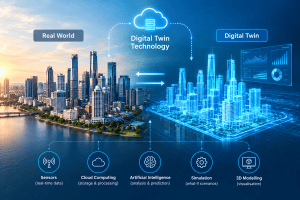
Digital twins use a combination of technologies.Digital Twin Technology combines sensors, artificial intelligence, cloud computing, and digital modelling to create a virtual representation of real-world systems. These technologies help organisations monitor performance and make informed decisions.
Internet of Things Sensors
The Internet of Things can be used to connect physical objects to digital technology. Sensors can be used to collect data including temperature, movement, pressure and energy.This can help to show how the physical object is working.
Artificial Intelligence & Data Analysis
This can be used to analyse the captured data, find patterns and predict any potential issues. For example, if there is an industrial digital twin it could pick up signs of wear and tear and help to plan maintenance.
Cloud Computing
This provides storage and processing ability to support the large amount of data. It can also allow authorised teams to access the digital twin systems from various locations.
Digital Modelling
The data from the physical object or system can be shown on a computer generated model. Depending on what is needed, users can view models of machines, buildings or towns on dashboards and 3D models.
Using all these technologies together can help create a useful tool for organisations.
Digital Twin Technology in Multiple Sectors
Digital twins aren’t just used by big tech companies but have many useful applications across key sectors.Digital Twin Technology has several practical applications across different industries. From smart cities to healthcare and transportation, it helps organisations analyse data, improve efficiency, and understand how complex systems operate Digital Twin Benefits.
Digital Twin Technology in Smart Cities
Cities are complex environments with lots of elements to manage, such as roads, water, electricity, public transport and buildings.
Digital twins can be used to help understand how systems are working by combining data from traffic sensors, databases, weather systems etc.
For example, city officials can look at how a new road change will impact the Digital Twin Benefits traffic flow. Or see how heavy rain will affect drainage systems. Or look at how different developments might affect energy needs.This can help organisations with planning however the accuracy of the predictions will depend on the quality of data.
Digital Twin Technology in Healthcare
Digital twins can help make better decisions in healthcare. Hospitals can use a digital twin of their facilities, equipment and processes to improve resource management and maintenance.
Researchers are also looking at creating individual digital twins using medical data combined with computer modelling to help investigate treatment options or understand how certain conditions may develop.
However, having a digital twin Applications of a single patient isn’t the same as having a fully accurate virtual person. When used in clinical settings they must be thoroughly validated, protected and monitored by medical professionals.
Digital Twin Technology in Manufacturing
Manufacturing is one of the most common uses of digital twin technology.
Factories can create digital versions of their production lines, robots and equipment Engineers can then use this data to test changes.
Manufacturers can use digital twins to see how a new production schedule would work and see where bottlenecks may happen. The maintenance team can monitor the performance of equipment and plan maintenance to avoid any serious issues.This can reduce unexpected downtime, improve quality control and improve resource efficiency.
Digital Twin Technology in Transportation
Transport can also benefit from digital twins. Manufacturers may create digital twins to understand how their vehicles will perform. Railways can monitor their equipment.
Airports can monitor how their passengers move around to see where there are high areas of activity. Transport planners can look at different ways they can manage traffic.
This can help with planning and increase efficiency. If the data is accurate and up to date.
Benefits of Digital Twin Technology
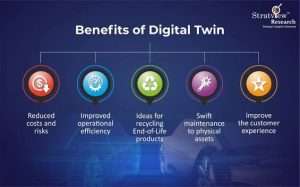
Digital twins can provide many benefits if designed and implemented well.
Predictive Maintenance
By monitoring equipment data organisations can see signs of issues and schedule maintenance.
Cost Savings
By simulating changes digitally there is less need for expensive prototypes.
Better Decision Making
By using digital models teams can look at different options.
Improved Efficiency
Businesses can see where bottlenecks are, monitor resource use and improve processes.
Reduced Risk
Organisations can look at potential failure points without experimenting on critical systems.Depending on the application, cost of implementation and accuracy of the twin.
Challenges of Digital Twin Technology
There are some issues with Digital Twins.Although Digital Twin Technology offers many advantages, organisations must consider implementation costs, data accuracy, privacy, and cybersecurity before adopting it.
Cost
Gathering and maintaining accurate data can be expensive. There can be a lot of investment required for sensors, connectivity, computing and specialised software.
Security
As these systems can be connected they can contain sensitive data relating to the business or critical infrastructure. If not secured well they could be accessed by unauthorised users.
Privacy
If personal data, medical data or location data is being used then organisations must ensure they have the right security in place, access restrictions and correct data handling.
Accuracy
If the data isn’t complete or realistic then the predictions may be inaccurate.
Digital Twin Applications Smaller businesses may not see the benefits of using digital twins due to the cost and complexity of implementing. It is vital to carefully plan this technology.
Future of Digital Twin Technology
In the future digital twins are likely to become more integrated with AI, sensors, automation and visualisation.
With AI they could help to identify abnormal patterns quicker and compare different solutions. Better connectivity can help keep the system up to date quicker. Improvements in computing could mean more advanced models can be used by smaller organisations.
Digital twins could help building managers reduce their energy use, manufacturers improve their production and city planners make better decisions regarding infrastructure.
However, they won’t be a solution to everything. They will only be useful if the data is accurate, well designed, secure and human knowledge is used.
Conclusion
Digital twin technology is changing how organisations understand and manage real life objects, machines, buildings and infrastructure. By using real life data and digital models organisations can monitor, simulate and identify potential issues.
They can be used across many sectors such as smart cities, research in healthcare, manufacturing and transport. However there are issues such as cost, privacy, security and accuracy.Digital Twin Technology has the potential to transform industries by connecting real-world data with digital models.Digital Twin Applications Its future success will depend on reliable information, secure systems, and effective implementation.
As connected devices and AI improve digital twins could become an important part of our everyday technology. However they will be most valuable when accurate digital data is combined with informed human decisions.The Future of Digital Twins looks promising as technology continues to advance. The Future of Digital Twins will involve greater use of artificial intelligence, smart sensors, and cloud computing to improve efficiency across industries. As businesses adopt these innovations, the Future of Digital Twins could transform smart cities, healthcare, manufacturing, and transportation by enabling better predictions and smarter decisions.
FAQ
What is Digital Twin Technology?
Digital twin technology involves creating a digital version of a real life object, system or process. It can use real life data to help monitor and simulate.
What are the common uses of Digital Twin Technology?
Common uses include manufacturing, smart cities, building management, transportation, infrastructure planning and research in healthcare.
How are they different to 3D Models?
A standard 3D Model will just show the shape of an object. A digital twin can be used to link to real life data and update.
Can they use AI?
Yes, they can use AI to help analyse data, identify abnormal patterns, predict potential failures and help with decision making.
Are they going to become more common?
They are likely to become more common as sensor technology, computing and data analysis improves. However it will depend on cost, practicality, security and industry requirements.