

Dry Fruits and Seeds: Nutritional Value, Health Benefits & More

Dry fruits, dates, and seeds have been part of our food traditions for generations, and modern nutrition research gives us good reasons to keep them there. Walk into almost any Indian kitchen, and you will find a steel dabba of something crunchy, chewy, or sweet hidden at the back of the shelf, usually guarded from snackers. This guide covers what each one offers, how much to eat, and how to buy them without being fooled by shiny packaging.
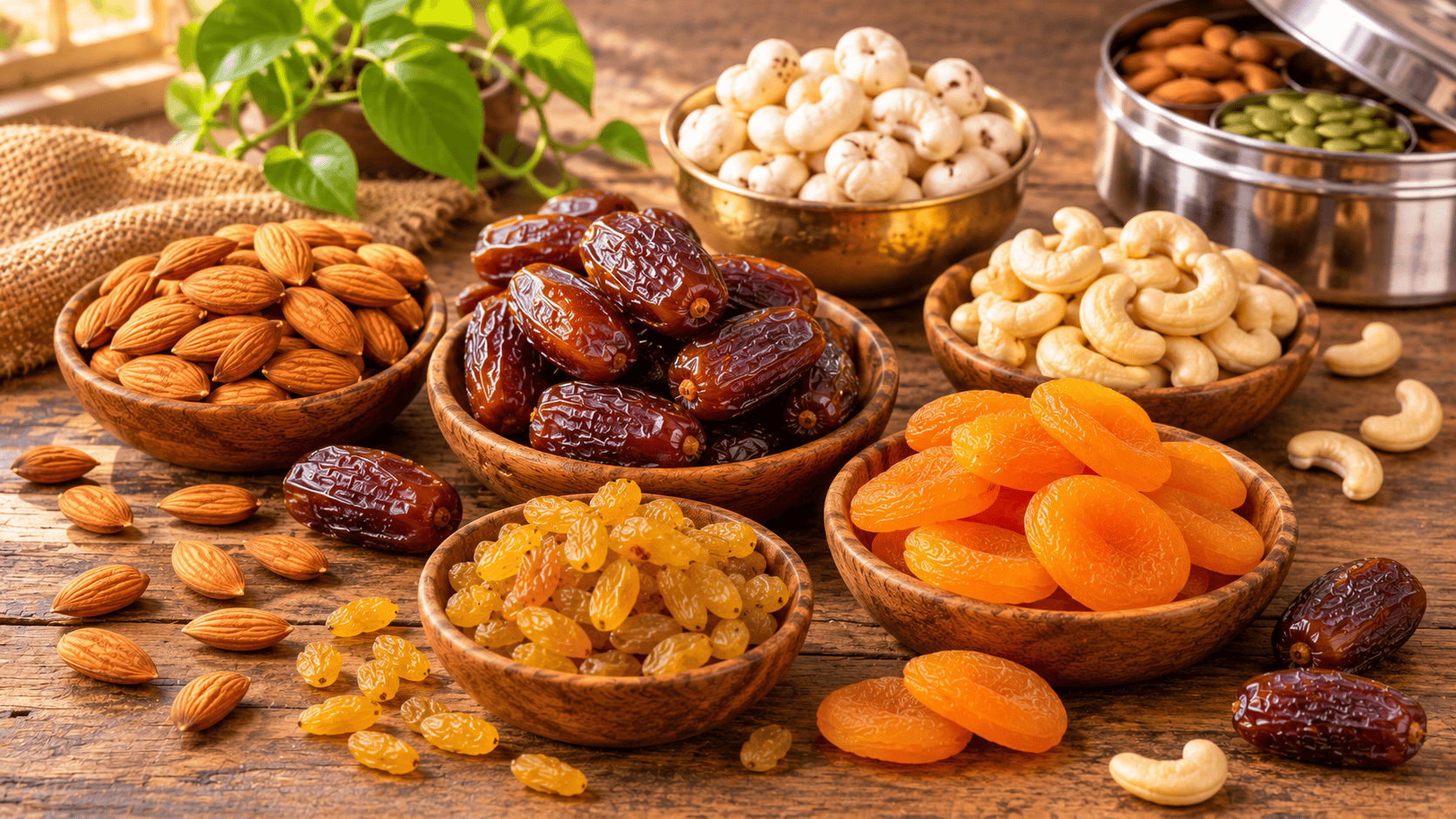
Image source: ChatGPT
What Are Dry Fruits and Seeds? (Dry Fruit in Hindi: Sukha Meva)
In Hindi, the whole category is called sukha meva (सूखे मेवे). It covers dried fruits like dates and raisins, tree nuts like almonds and cashews, and edible seeds. They are calorie-dense, which is exactly why they are so nutritious in small amounts: a single handful packs fibre, healthy fats, minerals, and plant antioxidants. The flip side is that portions matter.
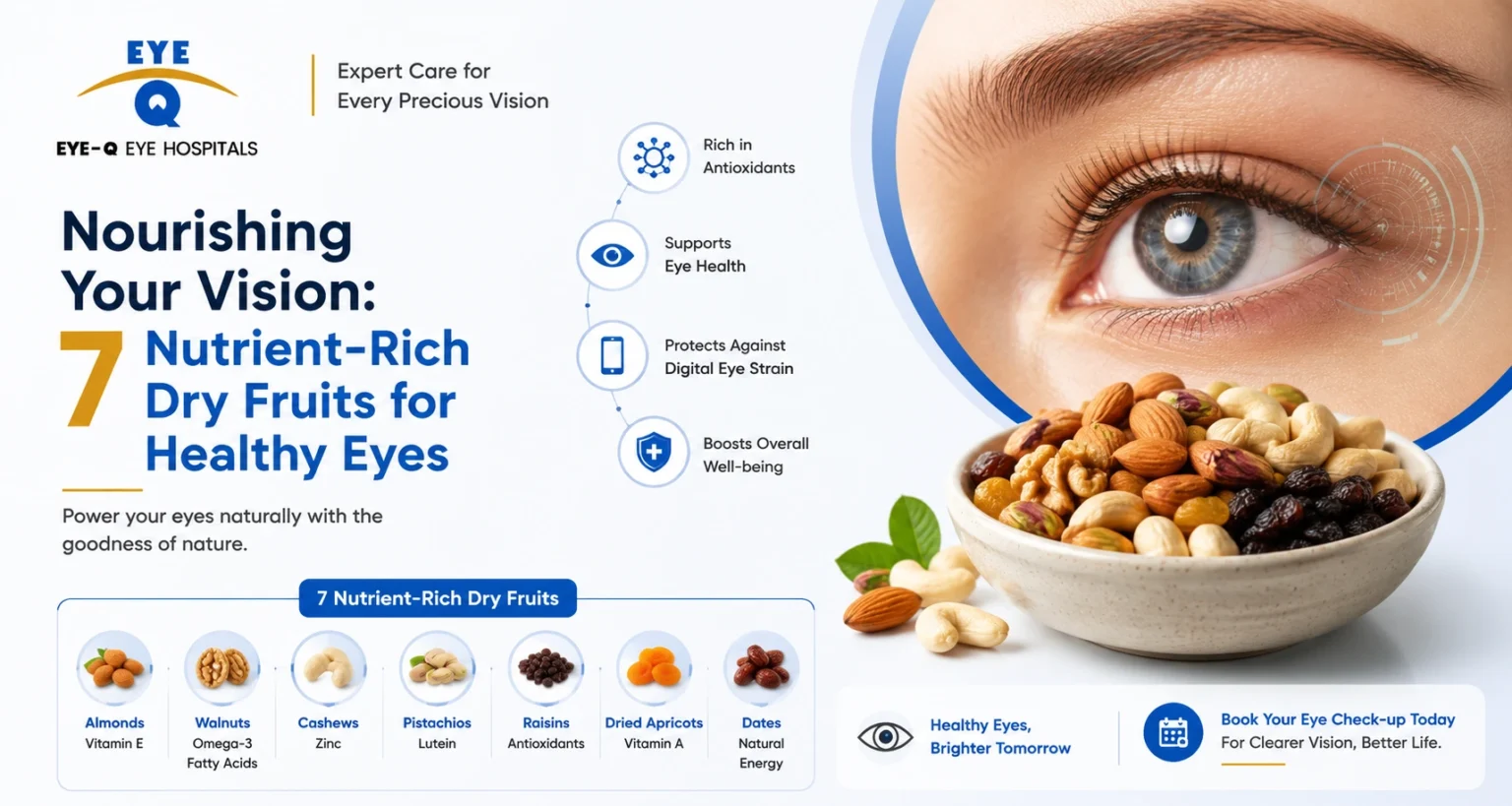
Image source: Eye-Q Eye Hospitals
Dates, Apricots and Raisins: Nature’s Sweet Energy
Dates are rich in fibre and potassium and give quick, natural energy, which is why they are the traditional way to break a fast. Two or three can replace a sugary biscuit. They are still concentrated sugar, though, so people managing diabetes should check portions with their doctor.
Apricots (dried) provide beta-carotene, which the body converts into vitamin A, along with potassium and a little iron. Many commercial ones are treated with sulphites to keep their bright orange colour. If you are sensitive, look for unsulphured, darker brown apricots.
Raisins are small but useful sources of potassium and polyphenols. Soaking them overnight makes them softer and gentler on digestion, a habit many families follow for good reason.
Raw Almonds, the Almond Tree, Cashew Nut, Dry fruits and Kath Badam
Raw almonds come from the almond tree (Prunus dulcis), and what we eat is actually the seed inside the fruit’s stone. A small handful gives you vitamin E, magnesium, fibre, and heart-friendly monounsaturated fats. Soaked or unsoaked, both work. Most of the antioxidants sit in the brown skin, so peeling is optional and mainly a matter of digestion and taste.
Cashews hold a surprise. The cashew nut fruit is really the cashew apple, a juicy, vitamin C-rich fruit with the nut hanging beneath it. The nut offers copper, magnesium, and zinc, and it is creamier and lower in fibre than almonds. Cashews are never sold raw in the shell, because the shell contains irritating oils, so what you buy has already been processed safely.
And then there is kath badam, which in Bengal means peanut. Technically a legume, it delivers protein, folate, and niacin at a fraction of almond prices. Healthy eating does not have to be expensive.
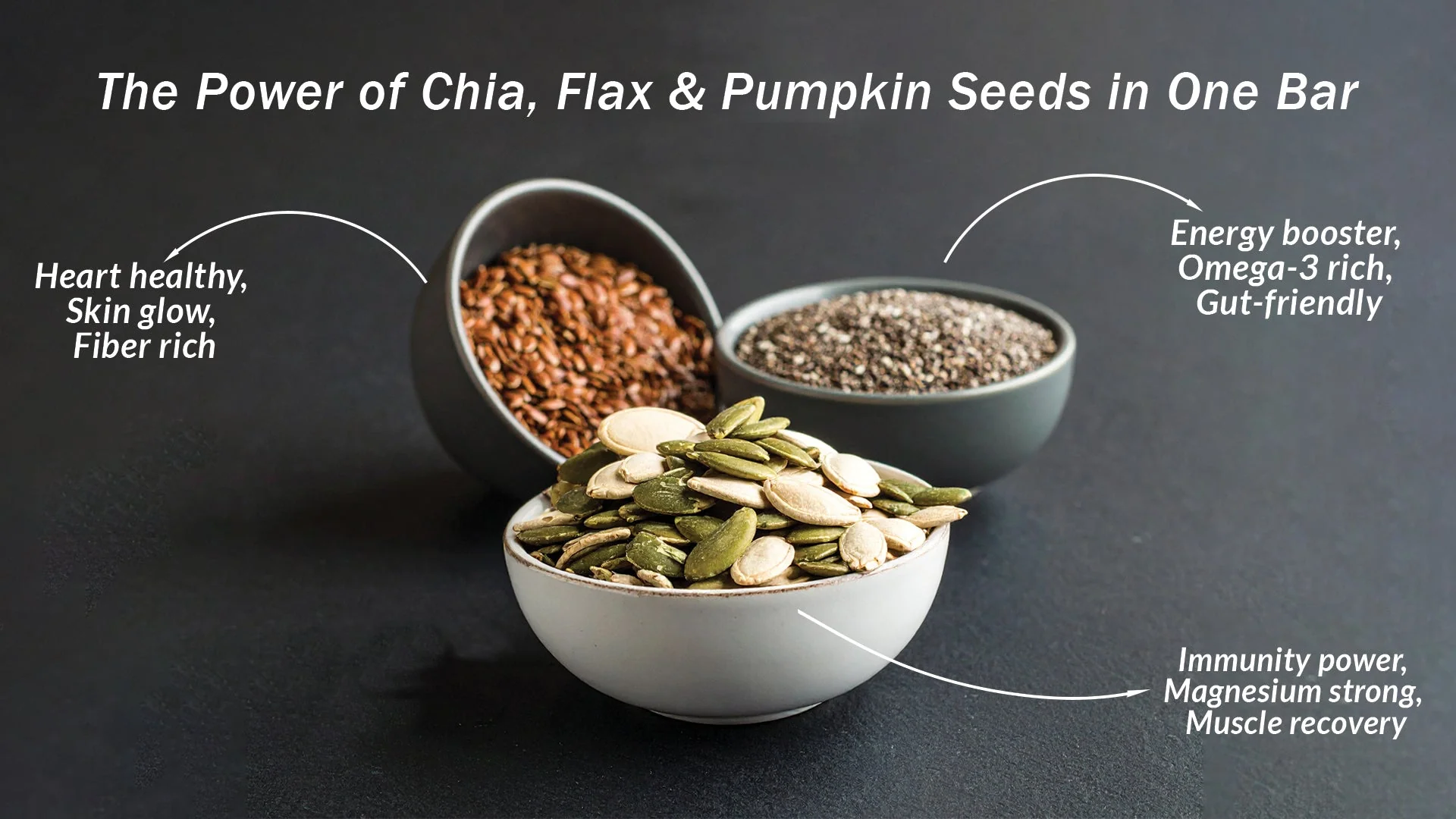
Image source: Nomi Flavours
Flax Seeds, Pumpkin Seeds: Use and Why Seeds Deserve a Spot
Flax seeds are a plant source of omega-3 (ALA), plus fibre and lignans. Whole seeds often pass through the body undigested, so grind them fresh and store the powder in the fridge. Add a teaspoon to rotis, curd or smoothies.
Pumpkin seeds are among the best everyday sources of magnesium, zinc and iron. Pumpkin seed use is wonderfully flexible: roast them as a snack, scatter them over salads, or blend them into chutneys. One or two tablespoons a day is plenty. Dry fruits
Chia Seeds for Weight Loss: What Actually Works
“Chia seeds for weight loss” is one of the most searched phrases in nutrition, so let us be honest: they help, but they are not magic. A 28-gram serving contains roughly 10 grams of fibre, and chia absorbs many times its weight in water, forming a gel that can keep you full for longer. That may help you eat less at the next meal. Research on chia and body weight is mixed, so treat it as a useful part of a balanced diet, not a shortcut.
Soak one tablespoon in water, milk, or curd for 15 to 20 minutes before eating, and never swallow dry chia on its own, as it swells quickly. Dry fruits
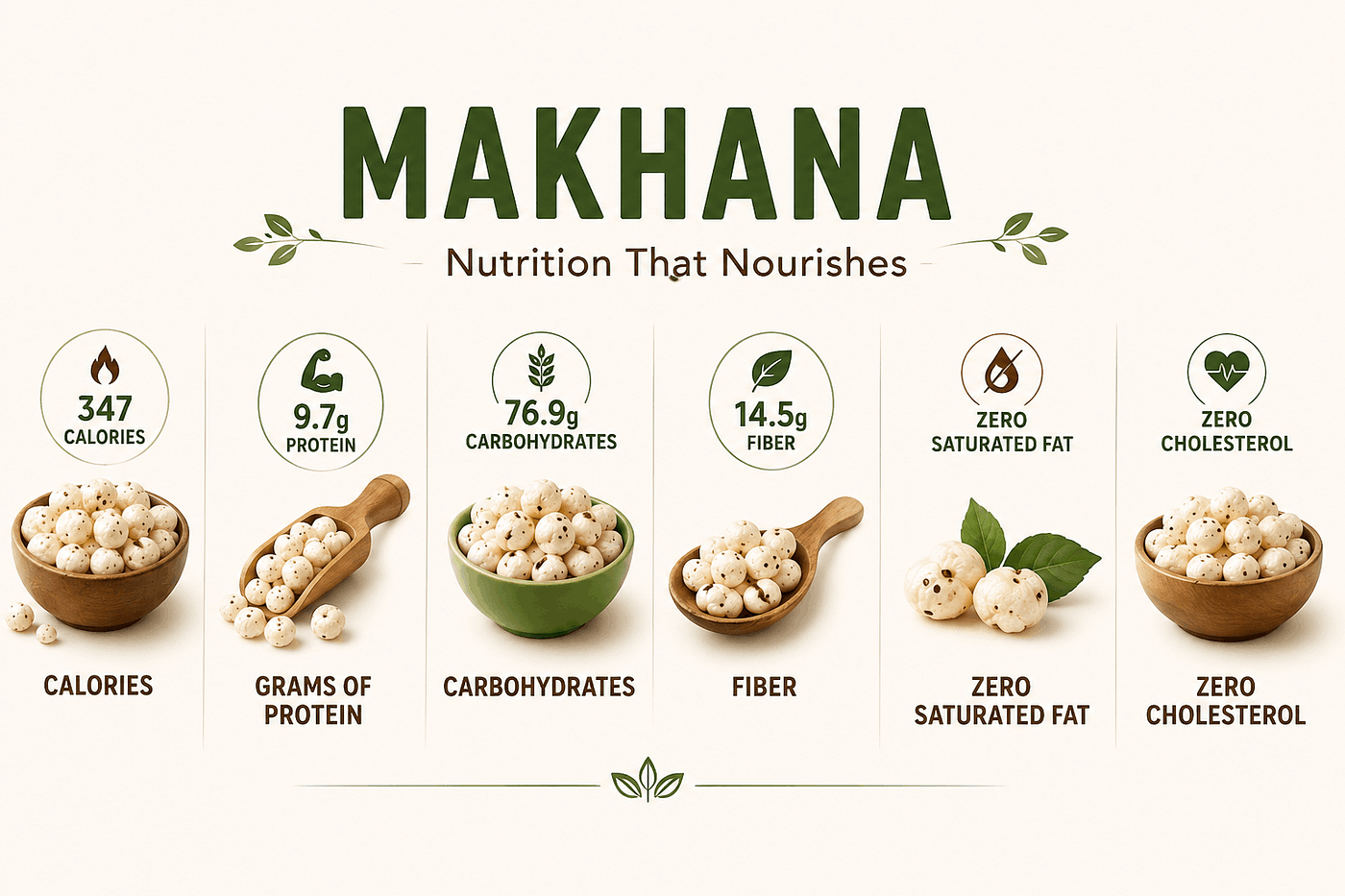
Image source: Medium
Makhana in English: Fox Nuts
Makhana in English is fox nuts, also called lotus seeds or gorgon nuts. They are light and crunchy, low in calories and fat, and provide magnesium, potassium, and some plant protein. Dry-roast a cup with a teaspoon of ghee and a pinch of rock salt for an evening snack that easily beats packaged chips. Makhana is also a traditional food during fasting days across India. Dry fruits
How Much Dry Fruits and Seeds Should You Eat?
A practical guideline is about 30 grams, a small handful, of nuts and seeds per day, plus one or two servings of dried fruit. Variety matters more than quantity: rotate almonds, peanuts, seeds, and makhana rather than relying on one. Keep everything in airtight containers away from heat and moisture, and refrigerate ground seeds and nuts in humid weather to prevent rancidity.
Image source: ChatGPT
Buying Smart: Dry Fruits Near Me and the Dry Fruit Mart
Search “dry fruits near me,” and you will find dozens of options, so here is how to choose. A good dry fruit mart will let you smell and sample before you buy. Look for:
- A fresh, nutty aroma. A bitter, paint-like smell means the oils have gone rancid.
- Even colour with no oily patches, mould, or tiny holes.
- No added sugar, syrup, or artificial colour on dried fruits.
- A packing date and FSSAI licence number on packaged products.
- Smaller quantities, bought more often, rather than bulk stock that sits for months.
Final Thoughts
Dry fruits, dates and seeds are not miracle foods, but they are among the most practical, affordable and satisfying ways to improve everyday nutrition. Start with a small, varied handful, watch your portions, and buy fresh. The nutrient figures mentioned here align with commonly cited references such as USDA FoodData Central and ICMR-NIN dietary guidance.
Please note: “If you have a nut or seed allergy, diabetes, kidney problems, or are on medication, consult a doctor or registered dietitian before changing your diet”.