Electric Cars and Price in India: Best EVs Under 10 Lakhs

Electric cars are transforming India’s roads and minds. As eco-conscious consumers, female drivers, regular commuters, and budget-minded individuals look for cleaner and more affordable travel options, electric cars and price in India have become a hot topic. With increasing government support and falling EV pricing, electric vehicles (EVs) are no longer luxury items—they’re the future of EV pricing mobility and the very cheapest EV.
Let’s explore the world of electric cars in India under 5 lakhs and discover the best electric cars under 10 lakhs available today and the very cheapest EV.
Architecture of Electric Cars
Image Source : carwale
Core Components of Electric Cars
Every electric car has four main components:
-
Battery Pack – Stores the electrical energy that powers the car.
-
Electric Motor – Converts electricity into motion.
-
Controller – Regulates power flow between the battery and motor.
-
Charging Port – Connects to an external power source for charging.
Together, these parts define how EVs deliver smooth, efficient driving without conventional fuel.
How Electric Cars Work in Practice
When you press the accelerator, power flows from the battery to the motor, which drives the wheels. Since there’s no gearbox, electric cars offer instant torque and quiet acceleration. Regenerative braking also recovers energy when you slow down, making every drive efficient.Electric cars run on electricity instead of petrol or diesel. They use a rechargeable battery pack that powers an electric motor, which turns the wheels. When you press the accelerator, electricity flows from the battery to the motor, providing instant power and smooth acceleration.
Examples of Electric Cars in Action
Main Types of Electric Cars (With Examples and Use Cases)
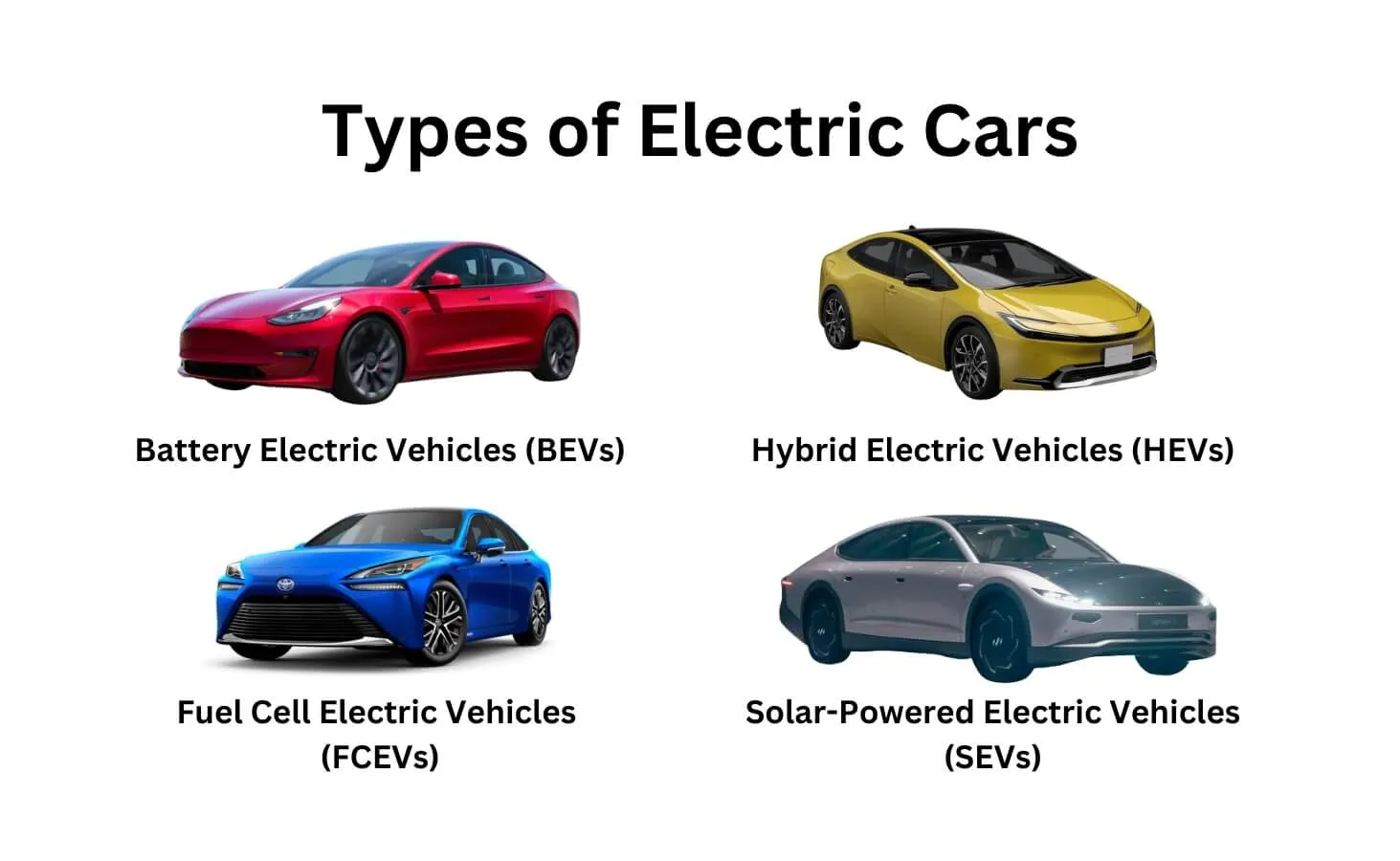
Image source : Vehiclesuggest
Type 1: Battery Electric Vehicles (BEVs)
Fully electric and powered only by batteries.
Example: Tata Tiago EV — ideal for city commuters and families.
Type 2: Plug-in Hybrid Electric Vehicles (PHEVs)
Combine a traditional engine with a battery-powered motor.
Example: Toyota Prius Plug-in — perfect for long drives with charging flexibility.
Type 3: Hybrid Electric Vehicles (HEVs)
These recharge through regenerative braking, not external charging.
Example: Honda City e:HEV — great for those who want better mileage without charging anxiety.
Type 4: Micro Electric Cars
Compact and budget-friendly, made for short distances.
Example: PMV EaS-E — a smart choice for urban female drivers.
Type 5: Two-Wheeler and Compact EVs
From scooters to rickshaws, these are India’s fastest-growing EVs.
Example: Ola S1, Hero Electric Optima.
Specialized / Advanced Electric Car Concepts
With EV pricing becoming competitive, India is witnessing rapid progress in battery technology. Solid-state batteries and AI-based battery management systems improve range and reduce costs.
A common question people ask is, “Do electric cars have gears?” The answer: No—most EVs use a single-speed transmission that delivers instant acceleration.This simplicity greatly reduces maintenance and makes driving smoother, safer, and more comfortable—especially for new or female drivers. Additionally, electric cars offer quiet operation and cheapest EV running costs, making them an excellent choice for modern, eco-conscious commuters.
Real-World Examples of Electric Cars
-
Tata Tiago EV: Starting at ₹7.99 lakhs, this is one of the best electric cars in India under 10 lakhs, offering up to 250 km range.
-
MG Comet EV: Compact yet stylish, perfect for city rides. Priced around ₹8 lakhs.
-
PMV EaS-E: India’s most affordable EV, priced under 5 lakhs, targeting first-time buyers and daily commuters.
These models are proof that electric cars and price in india now align with India’s budget-conscious consumers.
How to Build or Implement Electric Car Technology (Step by Step)
Here’s a simplified breakdown of how manufacturers and engineers create EVs:
-
Design the Battery System — Choose lithium-ion or solid-state cells.
-
Assemble the Electric Motor — Typically an AC induction or permanent magnet motor.
-
Integrate the Power Controller — Manages current and voltage flow.
-
Develop a Lightweight Chassis — Reduces energy consumption.
-
Install Regenerative Braking — Captures kinetic energy.
-
Conduct Safety and Range Tests — Ensures performance and compliance.
-
Add Smart Features — Infotainment, mobile apps, and real-time charging data.
This engineering process is shaping the EV industry’s sustainable future.
Tips for Learners, Students, or Professionals About Electric Cars
If you’re a learner or aspiring professional in digital marketing, engineering, or automotive fields, here’s how you can benefit from the EV boom:
-
Learn EV fundamentals — battery management, charging infrastructure, and energy efficiency.
-
Create content about EV pricing trends and green energy for digital platforms.
-
Explore certifications in electric mobility or sustainable transport.
-
Work on projects — analyze the cheapest EV in India or design mock marketing campaigns for EVs.
-
Join communities — online forums or local cheapest EV events to stay updated.
Key Takeaways on EVs
-
EVs price in India have become accessible to all income groups.
-
Government incentives and reduced fuel dependency make EVs practical.
-
EV pricing continues to drop as technology advances.
-
Most EVs don’t have gears, making them easier to drive.
-
Top options: PMV EaS-E (under ₹5L) and Tata Tiago EV (under ₹10L).
-
Future growth will depend on better battery life and wider charging networks.
Final Thought: The Future of Electric Cars in India
Electric cars are not just a trend—they’re a movement. As more people embrace eco-friendly lifestyles, India will soon see the cheapest EVs dominating every segment — from compact city cars to premium luxury sedans. Moreover, with rising fuel prices and growing environmental awareness, consumers are now shifting toward sustainable transportation. In addition, government incentives, improved charging infrastructure, and advances in battery technology are making EV pricing more affordable and practical. As a result, the future of mobility in India looks electric, clean, and efficient — promising a greener tomorrow for everyone.
So, whether you’re an eco-conscious driver, a daily commuter, or someone exploring the cheapest EV pricing options, the time to switch to electric is now. Moreover, with rising fuel costs and increasing environmental awareness, electric vehicles offer a smart and sustainable alternative. In addition, government incentives, improved charging infrastructure, and longer battery life make owning an EV more convenient than ever. Therefore, investing in an electric car not only reduces your carbon footprint but also saves money in the long run. Ultimately, going electric is a step toward a cleaner, greener, and more efficient future of driving. The road ahead is silent, smooth, and sustainable.