
How to Pick Right Lipstick Shade for Your Skin Tone

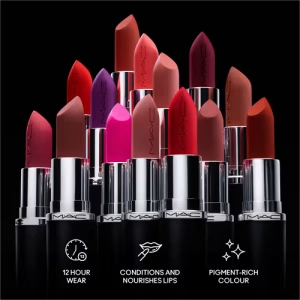
Picking a lipstick shade that flatters you (rather than just what you like) is part science, part art. Here’s a guide to help you make smarter choices — and still leave room to experiment.
1. Understand your lipsticks on your skin undertone (not just your surface tone)
This is the hidden “hue” beneath the surface of your skin, and it plays a big role in how colors (like lipstick) “sit” on you. There are three main categories:
Cool undertones lipsticks
your skin has hints of blue, pink, or red.
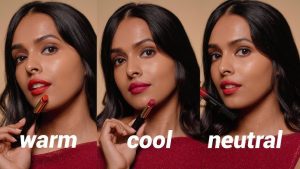
Warm undertones
your skin leans yellow, peachy, or golden.
Neutral undertones
you don’t strongly read as cool or warm; you can often carry both sides.
How to tell your undertone (Right Lipstick Shade for Your Skin Tone)
Here are some easy tests you right lipstick shade for your skin tone:
| Test | What to look for | What it suggests |
|---|---|---|
| Vein test | Look at veins under natural light (on your wrist) | Blue or purple — cool; greenish — warm; hard to tell — neutral |
| Jewellery test | See whether gold or silver looks better on you | Gold flatters warm undertones; silver flatters cool; both may suit neutral |
| Sun reaction | Do you tan easily or burn first? | Tans easily often suggest warm; burns first may indicate cool |
| White vs off‑white | Wear pure white vs off‑white clothing and see which brightens you more | If off‑white or ivory looks better, you might lean warm; if stark white suits you — cool |
Once you know your undertone, you can choose lipstick shades that harmonize rather than clash.
2. Match lipstick undertones to your undertone
Here’s a broad guide:
| Your Undertone | Lipstick Undertone “Family” | Examples or suggestions |
|---|---|---|
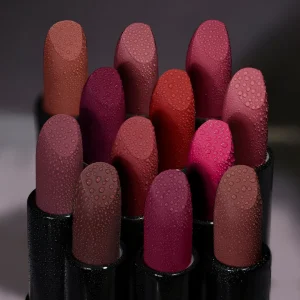
| Cool | Blue-based reds, berry, mauve, pinks, purples | Try berry wine or soft rose on fair‑cool skin |
| Warm | Coral, peach, orange‑reds, terracotta, warm browns | For Indian or medium brown skin with warmth, brick reds, coppery browns are flattering |
| Neutral | A lot works — balanced pinks, “true” reds, muted mauves or browns | You have flexibility to go both warm or cool directions |
Tip: Even among reds, there are blue-based reds, orange-based reds, or neutral reds. Pick the red-family that aligns with your undertone.
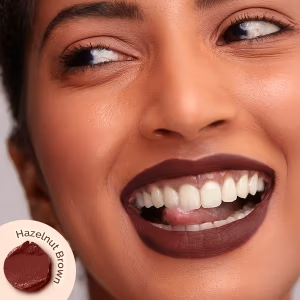
3. Consider your surface skin tone (fair, medium, tan, deep) as a guide
Your undertone gives the direction; your surface tone decides how light or deep the shade should be.
Fair / light skin tones
Soft pinks, peach, light corals, muted roses — these add color without overpowering you.
For nudes: choose a shade just a little deeper or warmer than your lip color to avoid a “washed out” look.
Medium / olive / wheatish tones
These tones are quite versatile. You can play with richer peaches, berries, mauves, warm reds, terracotta — depending on your undertone.
Deep / dusky / dark skin tones
Bold, rich colors shine here. Deep berries, burgundies, chocolate browns, wine reds, deep plums — especially those with warmth or balance — are often very flattering.
With nude shades, avoid very pale nudes (which may look ashy). Go for deeper nudes with red or brown undertones
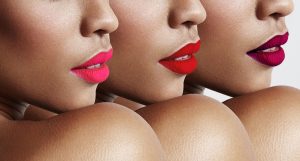
4. Use a “test trick” before committing
-
Swatch on your lips (or at least your arm) in natural daylight, not under harsh store lighting. The right shade should seem to blend:It should “disappear” into your lips in a flattering way (not stand out too much or look chalky).
-
Compare your bottom lip with and without the lipstick. If one side looks drastically off, that shade may not be right.
-
If possible, test with your foundation or skin tone side-by-side. Lipstick should complement rather than compete with your overall face tone.
5. Don’t forget finish, lighting, and confidence
-
Matte finishes tend to be more dramatic, but they can emphasize dryness or fine lines. Creamy or satin finishes are more forgiving.
-
In warm lighting (evening, indoor), many shades shift in appearance, so always step into daylight (or natural light) to re-check your choice.
-
Ultimately: if you love a shade and feel confident wearing it, that’s a big part of the equation. The “rules” are guides, not strict laws.
Choosing the perfect lipstick shade isn’t about following rigid rules — it’s about understanding your unique canvas and using that knowledge as a guide, not a limitation. Start by identifying your skin tone and undertone, experiment with swatches in natural light, and use “safe bets” (like a neutral or universally flattering red) as your baseline. Over time, you’ll build confidence in what works for you — and nothing looks better than wearing a shade with conviction. At the end of the day, the best lipstick shade is the one that makes you feel beautiful, radiant, and unapologetically yourself.