

It’s Happening: AI Grabs Human Jobs Now

Introduction:
Index Of Contents
ToggleA large global bank cut 2,000 positions last month. Not for any fall in profits or the closing of branches, but because its new AI system handles customer chats faster, cleaner, and with greater precision than any human staff.
This isn’t a sci-fi movie, and it certainly is not a “future possibility.”
Itis replacing human jobs right now in industries we thought were safe. The shift is already shaking up workplaces, forcing workers to rethink their skills and career strategies. Factories, offices, marketing teams, law firms-nothing has been left untouched. Now, if you want to stay ahead, you must understand what’s going on and respond before it’s too late.
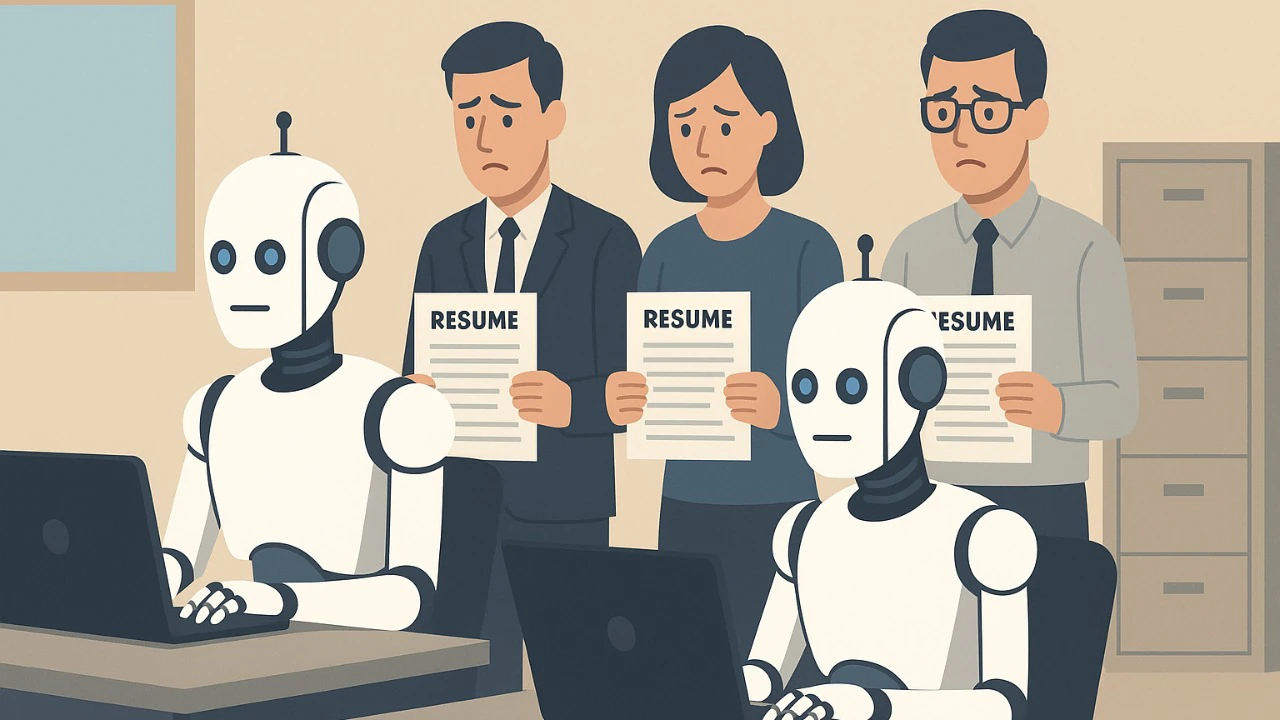
Image Source: Indiatoday
Sector Spotlight: Where AI is Replacing Human Labor Today
AI tools are showing up everywhere, taking over routine, repetitive, and time-based work that humans used to do. Companies love ,because it saves time, cuts mistakes, and reduces salary costs. Here’s where the impact is strongest.
1. Administrative and Data Entry Positions in AI
Robotic Process Automation (RPA) has become the new office intern—except faster, error-free, and never tired.
-
It fills invoices
-
Updates spreadsheets
-
Moves data between systems
-
Schedules meetings
Tasks that took hours now finish in seconds.
Firms report 90% fewer errors and productivity that’s three times faster. Entry-level admin roles are disappearing because bots do the same job without breaks, salaries, or sick leaves.
2. Content Creation and Entry-Level Creative Work With AI
Large Language Models (LLMs) can now:
-
Draft emails
-
Write blogs
-
Make social media captions
-
Summarize news
-
Generate ad copy
And for basic content, It is “good enough.” Small teams often cut junior writers because tools can produce fast drafts that humans only need to polish.
Studies suggest 20% of content jobs may shift to AI within a short time.
3. Customer Service and Technical Support With AI
Gone are the days when only humans could handle customer queries.
AI chatbots now respond instantly, 24/7, and handle thousands of conversations at once. Voice bots troubleshoot tech problems, book appointments, track orders, and guide users step-by-step.
Companies like Amazon and Delta have already reduced call center staffing by almost 50% after deploying support systems.
Humans now handle only high-level, complex issues.
The White-Collar Vulnerability: AI Grabs opportunity
Desk jobs were once considered untouchable. Not anymore. It is now invading the world of suits, ties, and professional expertise.
1. Legal and Paralegal Support
Legal research that took junior associates days now takes AI minutes.
-
It scans thousands of documents
-
Flags errors or clauses
-
Finds precedents
-
Helps with contract review
The dreaded “document review” stage is now mostly automated. Paralegals train artificial intelligence models instead of reviewing files themselves, and firms reduce billable hours, lowering the need for large teams.
2. Finance and Accounting Functions
In finance, AI is becoming the super-analyst.
-
It detects fraud patterns instantly
-
Automates audit trails
-
Files compliance reports
-
Enters accounting data with 99% accuracy
Routine tasks once handled by bookkeepers are now fully automated. Audits that required teams working for days are completed in hours.
3. Software Development and Coding Assistance
Even tech jobs aren’t safe.
Tools like GitHub, Copilot can:
-
Write boilerplate code
-
Predict next lines
-
Detect bugs
-
Suggest better logic
Junior devs who once handled repetitive tasks now watch artificial intelligence do it in seconds. The role shifts from coding to problem-solving, planning, and system design.
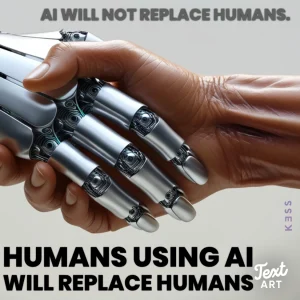
Image Source: Reddit.com
Economic Realities: Data That Confirms the Displacement
The numbers prove that AI-driven job loss is not a myth—it’s unfolding already.
Analyzing Current Labor Market Data
-
McKinsey estimates that 45% of current work tasks can be automated immediately.
-
The World Economic Forum predicts 85 million jobs will vanish by 2025 due to automation.
-
At the same time, 97 million new roles may emerge—but mostly for skilled workers.
-
Low-skill roles like data entry face a 70% risk of automation.
-
Even white-collar workers may lose up to 30% of their weekly tasks in the next few years.
The message is clear: your field might be next.
Case Studies: Companies Leading the Automation Wave
Real companies have already made real cuts:
-
IBM laid off 7,800 employees, openly stating that artificial intelligence would handle HR and operations tasks.
-
Duolingo reduced its team of translators after improving its AI-driven language tools.
Both companies reported higher productivity even with fewer employees. Their success encourages other corporations to follow the same model.
The Skill-Gap Chasm
Here’s the brutal truth:
-
High-paying jobs open for people who can build, train, or manage it.
-
But low-skill workers have almost no place to go.
Those who lose routine jobs rarely have the technical skills required for new roles. This creates a widening skill gap—one that only continuous learning can bridge.
Future-Proofing of Career: Navigating the New Landscape
Don’t panic.
AI isn’t your enemy. But ignoring it definitely is.
To stay relevant, you must focus on what machines can’t do—and learn to work with AI, not against it.
1. Embrace “Human-Only” Skills: The Four Cs
AI is powerful, but it struggles with emotions, nuance, and relationships. That’s your superpower.
Focus on:
Creativity
Think of fresh ideas, campaigns, strategies. Machines remix old data—you create original value.
Critical Thinking
Question data, analyze insights, and spot what AI misses.
Complex Communication
Leading meetings, persuasive messaging, negotiations—It cannot build trust or empathy.
Collaboration & Relationship Management
Businesses run on people. Human connections win deals.
Practical tips:
-
Join brainstorming sessions
-
Practice pitching ideas
-
Network offline
-
Lead discussions
These skills keep you irreplaceable.
2. Become an AI Collaborator, Not a Competitor
Learn to use AI as a tool.
-
Master prompt writing
-
Let AI generate drafts
-
Edit and refine its outputs
-
Use AI for research and productivity
-
Maintain human quality control
Workers who know how to combine It with human judgment often become 10x more productive.
3. Continuous Reskilling and Micro-Credentials
You don’t need a new degree—just new skills.
Short courses in:
-
Data literacy
-
Cloud computing
-
AI basics
-
Digital marketing
-
Cybersecurity
Platforms like Coursera, edX, and Google Career Certificates offer credentials in weeks. Update your skills every six months—because that’s how fast the job market evolves now.
Conclusion: Action Over Anxiety
AI is replacing human jobs—from reception desks to legal floors to coding labs. The data is undeniable, and companies like IBM and Duolingo prove that automation is already in full swing. But this isn’t the end of the career.
It’s the beginning of a new one—if you’re ready to adapt. Sharpen the human skills.
Learn to collaborate with AI tools.
Reskill regularly.