
Living Root Bridges Meghalaya: Nature’s Living Art

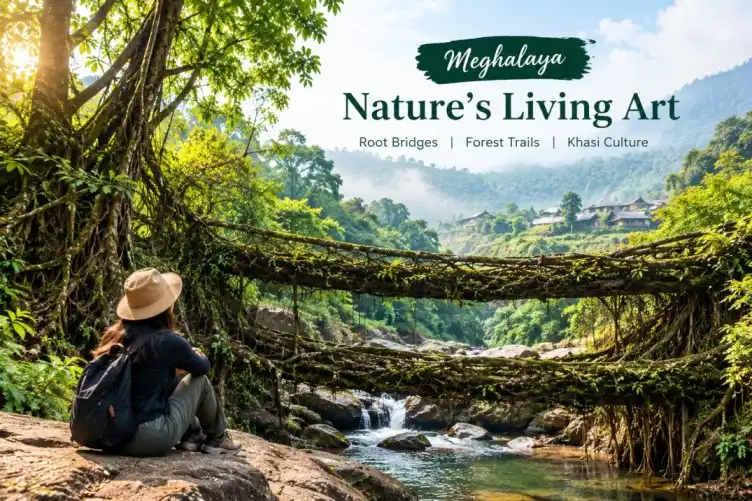
Imagine wandering through the moss-covered forests of Meghalaya, listening to babbling brooks and discovering a natural bridge made from living tree roots. These incredible structures are a beautiful example of how nature and Khasi culture come together. Among the most famous attractions is the Double Decker Bridge, located near the Nongriat living root bridge trail, which attracts nature lovers and adventure seekers from across the world. If you are planning a trip, knowing the best time to visit Meghalaya can help you enjoy the living root bridges, explore lush green landscapes, and experience the region’s rich cultural heritage.
The living root bridges made by the Khasi people in the misty landscape, thick forests and picturesque villages of Meghalaya are not simply unique attractions of the region – they symbolize the centuries of knowledge and hard work of the local people, as well as their respect towards the forest and its strength. Unlike standard bridges of cement or metals, living root bridges grow over time forming natural pathways over rivers and streams.
Choosing the best time to visit Meghalaya can make your journey to the living root bridges more enjoyable, whether you prefer pleasant trekking weather or the dramatic greenery of the monsoon season.
What Are Living Root Bridges?
Living root bridges are natural structures formed using the aerial roots of the rubber fig trees. Locals utilize a local technique to guide the roots into the desired positions across the rivers of the region.
As the roots keep on growing, more and more roots are woven together forming a network and a solid bridge which can support adults. Sometimes, the roots are even placed on specially positioned stones to make the walk firmer and safer.Unlike the common bridges constructed using cement or concrete, living root bridges require care and tend to be formed over hundreds of years. Though the bridges are living, their existence is quite fascinating because they do not fight the environment, but live with it and grow with it.
How These Natural Wonders Became Famous
Meghalaya, the ‘Abode of Clouds is known to receive plenty of rain, causing a number of complications for the locals. Though the scenery of Meghalaya is beautiful, with its hills, forests and plenty of streams, during the monsoon season, the wooden bridges that used to connect different villages and areas were severely damaged. Thus, the building of the living root bridges began.
The living root bridges are famous among the residents of the Khasi and Jaintia Hills because of their unique structure, as well as the fact that they represent a local traditional technique that has been passed through generations.
Living root bridges are an important part of Meghalaya’s natural heritage, connecting remote communities while showcasing the remarkable relationship between people and the forest environment.
Exploring the Famous Double-Decker Bridge
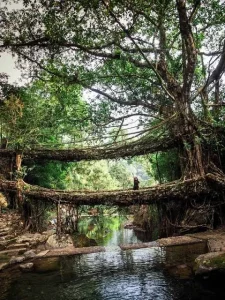
One of the most popular living root bridges is the Double Decker Living Root Bridge of the renowned reputation. This is one of those sights you have to witness while on a trip to Meghalaya. The living root bridges located near the Nongriat village in East Khasi Hills and takes quite an effort to get to – hence, only those particularly determined and athletic can make to the viewpoint.
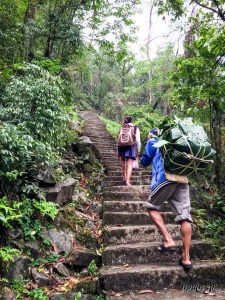
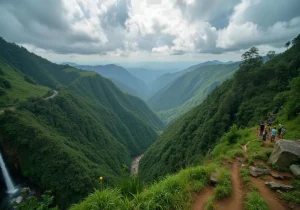
Among Meghalaya’s most remarkable attractions, the living root bridges of Nongriat offer visitors an unforgettable combination of forest trekking, flowing streams, and traditional engineering. The journey to the bridge is long and tiring – to get there, you would have to make a long way through the forests to Tyrna and then you would have to descend several steep stairs down the mountain. On your way you would see villages, plenty of streams and forests – all of which contribute to the breathtaking scenery.
On your way up, you will have to retrace your steps and you will see even more stunning views than before. The bridge, which takes after your local tradition, is quite a reminder of the value of preserving nature, as well as the efforts that go into such preservation.
There are certain things to consider before embarking on the journey to the Double Decker Living Root Bridge.
Nongriat Village: A Hidden Natural Paradise
Nongriat living root bridge is quite popular among nature lovers. The scenic village of Nongriat boasts not only the famous living root bridge, but the dense forests, steep cliffs and pretty waterfalls as well. The village is surrounded by forests with waterfalls flowing down the mountains – in fact, the beauty of the journey is experienced during the long walk along the mountains. Visitors can gain a deeper appreciation of Khasi culture by observing village life, respecting local customs, and learning about the relationship between the community and its surrounding forests. The steps leading to the bridge are numerous and steep – hence, your pace should be well-thought through.The natural attractions offer their visitors a chance to explore both the beauty of the region and its culture.
A lot of visitors find the Nongriat experience to be incredibly valuable because it serves as a reminder not to rush, but rather slow down and appreciate the journey and the beauty of the place. Instead of trying to get to multiple destinations as quickly as possible, it is better to stop for a while and take in the scenery of the village and the lush forests surrounding it.
The bridges of Meghalaya are famous for a good reason. However, what exactly makes them outstanding is their unique construction.
How Nature and Human Skill Create These Bridges
The living root bridges are real masterpiece – it requires years and even decades of dedication to be formed and fully taken use of. First of all, a tree with aerial roots is necessary for constructing a living root bridge. Khasi culture demonstrates how practical knowledge can be passed from one generation to another, allowing communities to guide and maintain living roots over many years.
Such roots grow downwards at an angle and hold well on the ground. The construction of a living root bridge includes guiding the young roots across the stream, shaping the bridge and letting it grow. Khasi culture demonstrates how practical knowledge can be passed from one generation to another, allowing communities to guide and maintain living roots over many years.
The process of constructing the bridge includes selection of proper trees, rooting of trees in the required direction, shaping the tree to form a bridge.
The Khasi Heritage Behind This Living Art
The bridges are deeply intertwined with the Khasi way of life and khasi culture. They reflect the local traditional practices, as well as the observations of the locals concerning the forest around them. The people of Meghalaya used their experience in the field and created the first living root bridges. The bridges, furthermore, are a testimony to the dedication and hard work of the locals.
Living root bridges provide an inspiration and motivation to take a deeper look into the traditions of the fascinating region of Meghalaya. These living works of art show the value of learning how to maintain and respect the environment around us, rather than destroying it.
Best Time to Visit Meghalaya’s Living Root Bridges
The best time to visit Meghalaya depends on your preferred weather, trekking ability, and whether you want comfortable hiking conditions or lush monsoon landscapes.
For many travellers, the best time to visit Meghalaya is between October and April, when conditions are generally more suitable for exploring the Nongriat living root bridge.
If you are deciding on the best time to visit Meghalaya for waterfalls and intensely green forests, consider the monsoon scenery while checking trail safety and local weather conditions.
It is important to keep in mind that during the rainy season, slippery steps, forest paths and rocky ground present certain hazards. The monsoon season is particularly dangerous when it comes to the trails the living root bridges. Before leaving for an adventure, it is a good idea to contact the local authorities and / or rangers to know your options on the day of your visit. A trail that was accessible last week maybe temporarily closed by your arrival date.
Travel Tips for Visiting Living Root Bridges
Before choosing the best time to visit Meghalaya and living root bridges, check the forecast and confirm that the Nongriat trekking route is accessible, particularly after heavy rainfall.
- Wear suitable and comfortable shoes – such as running / athletics shoes with a good sole
- Remember to bring a supply of clean water with you
- Pack light
- Leave early enough in the morning – keep in mind that getting down from Nongriat, having the sightseeing experience and getting back up again require quite a bit of time
- Take into consideration the weather forecast
- Do not litter or damage the bridge
- Support the local communities by following their guidelines and hiring local guides, if available
- Plan your journey according to your fitness level – remember to keep in mind that both the descent and the ascent require considerable effort
In this respect, the major idea is that one must not treat visiting this bridge as an adventure aimed at getting some pictures. One should try to obtain some information about it.
Why Living Root Bridges Matter for Sustainable Tourism
Living root bridges of Meghalaya offer an insight into the lives and traditions of the local people as well as their relationships with the environment. Moreover, the very existence of the bridges signifies a number of positive aspects in terms of ecological awareness.
However, an increasing number of tourists visiting the bridges pose a growing threat to the forest’s sustainability. The increased amount of visitors damages the living root bridges, as well as the khasi culture. The nearby natural pools and falls receive way too much attention from people wanting nothing but a picture. Thus, it is essential to support the region by practicing sustainable tourism.
While on the living root bridges, one should always bear in mind certain ethical and sustainable tourism considerations.
These are as follows.
- Abide by the visitor quotas when applicable
- Follow the local rules and / or guidelines when visiting the bridge
- Avoid damaging the living root bridges and destroying the root network
- Support the local community without disrupting them
Living root bridges are a symbol not only of Meghalaya’s tradition, but local ecological sustainability as well. Therefore, environmental respect is one of the most significant things to bear in mind while on the bridge.
Conclusion: Where Nature Becomes Architecture
Living root bridges of Meghalaya along with khasi culture provide one with unique chances to enjoy the harmony between nature and human mind. The majestic Double Decker Living Root Bridge as well as the dense forests leading to the Nongriat village are some of the many hidden gems of the region. The famous living root bridges of Meghalaya, therefore, offer much more than a simple travel experience – they are the result of the hard work and dedication of numerous people throughout generations.