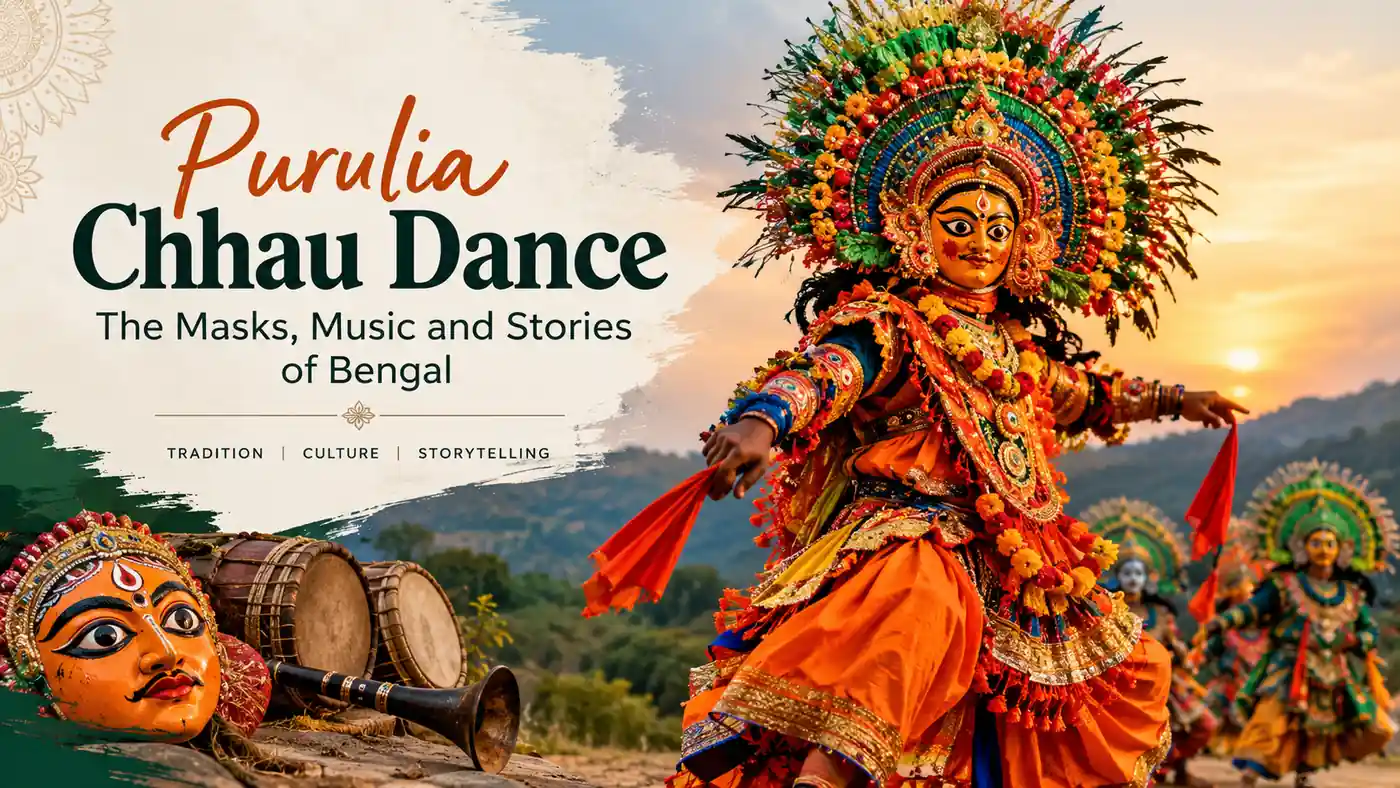
Purulia Chhau Dance: The Masks, Music and Stories of Bengal

Introduction to Chhau dance: A living Art of Bengal
India has many traditional dance styles, and each one tells a unique story. Among them, different types of Chhau dance especially Purulia Chhau stands out for its bold movements, bright costumes, powerful music, and dramatic storytelling. The Chhau dance origin in Bengal. It blends folk customs, martial arts, and theatre to create a memorable stage performance.
Purulia Chhau comes from the Purulia district of West Bengal. It features colourful masks and stories about gods, demons, and legendary heroes. For young dancers and actors, this folk art offers a chance to explore movement, rhythm, expression, and performance skills.
Local customs, martial practices, and festive celebrations helped shape this tradition. Today, performers share their skills at festivals and cultural events. For many artists, it also provides a livelihood and a way to celebrate their community’s heritage.
Purulia Chhau dance
Chhau Dance Origin: How The Tradition Began
The early history says the Chhau dance origin is form remains uncertain. However, many scholars connect its development with martial practices, local rituals, and folk celebrations across eastern India.
The word Chhau also has several proposed origins, and no single explanation has gained universal agreement. Over time, performers developed distinct styles that combine music, masks, costumes, and expressive movements. Today, communities in West Bengal, Jharkhand, and Odisha continue to practise this traditional art.
Chhau Dance and the Stories of Indian Mythology
Many performances draw inspiration from the Ramayana, the Mahabharata, and stories about Hindu gods and goddesses. Others explore local legends and tales about demons, heroes, and mythical creatures.
Instead of relying on spoken dialogue, performers use movement to tell these stories. As a result, audiences can follow the action even when they speak different languages. This makes different types of Chhau dance a powerful form of visual storytelling.
Purulia Chhau Dance: The Unique Masked Tradition of Bengal
Purulia Chhau stands out for its dramatic masks, elaborate costumes, and energetic choreography. Dancers perform jumps, turns, and powerful gestures to bring legendary characters to life.
Moreover, the tradition brings different members of the community together. Mask makers create the characters’ faces, musicians provide the rhythm, and costume designers prepare the performers for the stage. Together, these artists preserve a valuable part of West Bengal’s cultural identity.
Types of Chhau Dance and Their Unique Styles
There are three diffenent types of Chhau dance:
1.Purulia Chhau
2.Seraikella Chhau
3.Mayurbhanj Chhau
Each style has its special movement, costume and mask-making traditions.
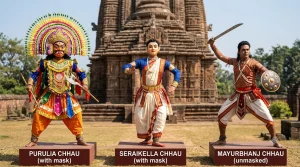
Purulia Chhau Dance: The Masked Dance of Bengal
Purulia Chhau is widely known for its large, colourful masks and vigorous movements. The masks portray gods, demons, warriors, and other figures from traditional stories.
Because the masks cover the performers’ faces, dancers rely on posture, gestures, and rhythm to express emotions. Their jumps and turns add drama to each scene. Consequently, this style offers valuable lessons for young actors who want to develop their physical storytelling skills.
Seraikella Chhau Dance: Grace and Control
Seraikella Chhau developed in the Seraikella region of Jharkhand. Like its Purulia counterpart, it uses masks, but its movements often appear more controlled and subtle.
Performers combine carefully shaped poses with graceful gestures. Therefore, each movement helps the audience understand a character’s mood and intention. This style shows how small changes in posture can communicate meaning on stage.
Mayurbhanj Chhau Dance: Expression Without Masks
Mayurbhanj Chhau comes from Odisha and does not use masks. Instead, performers rely on facial expressions, body language, and precise footwork to tell their stories.
Its choreography combines athletic movements with expressive gestures. In this way, Mayurbhanj demonstrates how regional customs can shape different forms of the same broad dance tradition.
Chhau Dance Masks, Music and Costumes in Purulia Chhau Dance
The appeal of Purulia Chhau, as well as its music and costumes is worth noting. All parts of the performance come together to make a show that people of all ages can enjoy.
Chhau Masks: The Art Behind Purulia Chhau Dance
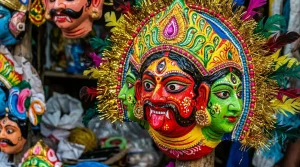
The colourful masks of Purulia rank among the most recognisable features of this folk art. Local artisans traditionally make them using materials such as clay, paper, and cloth.
First, the artisans shape the base of each mask. Next, they add painted details, bright colours, decorative ornaments, and expressive eyes. Each design represents a character and helps audiences recognise the role on stage.
The village of Charida in Purulia is particularly famous for its mask-making tradition. There, skilled artisans pass their craft from one generation to the next. Their work supports local livelihoods while keeping this important cultural skill alive.
Chhau Dance Music: The Rhythm of Traditional Drums
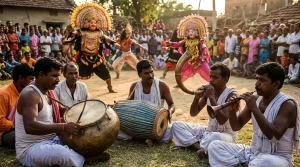
Music gives the performance its energy and pace. Traditional ensembles may feature instruments such as the dhol, dhamsa, and shehnai.
The drums guide the dancers through jumps, turns, and changes in movement. Meanwhile, wind instruments create different moods, from excitement to tension. As a result, musicians and dancers work together to build a lively performance.
For young performers, rhythm matters just as much as technique. Practising with music helps them improve timing, coordination, and teamwork.
Purulia Chhau Dance Costumes and Physical Storytelling
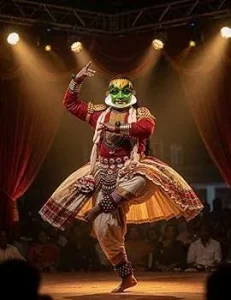
Performers wear colourful fabrics, decorative ornaments, and elaborate headpieces. These costumes help distinguish characters and make each scene visually striking.
However, the masks prevent dancers from showing facial expressions clearly. Therefore, they use their whole bodies to communicate feelings and intentions. For example, an upright posture may suggest courage, while a lowered stance may express fear or caution.
This approach makes the art especially interesting for students of dance and theatre. It shows how movement alone can communicate a character’s personality and emotions.
Learning Chhau Dance: Skills for Young Dancers and Actors
Young people can learn valuable performance skills through this traditional art. Regular practice helps develop rhythm, coordination, balance, and awareness of space.
However, beginners should learn difficult movements gradually under a trained instructor. Proper warm-ups, rest, and suitable practice can help them build confidence while reducing the risk of injury.
Chhau Dance as a Way to Tell Stories Without Words
Actors often use expressions and body language to show feelings on stage. In Purulia chhau the performers’ faces are hidden behind masks. They must rely on body language and other nonverbal signals to communicate with each other and with the audience learn. It is the portion of the production that would most interest someone who wishes to improve their dancing ability or act as a dancer. In addition to the fact that children are given an opportunity to attend dance classes, they might be taught Chhau dance origin along with acting so that they can demonstrate emotions and act out stories through their actions and movements.
Preserving Chhau Dance Through Its Artists and Traditions
Chhau dance is not only a dance, but also the reflection of our history, folklore, skills and the creative talent of the entire nation. Children and young people can help to preserve our tradition by viewing, on local Chhau dance performances and learning from professional Chhau dance artists.Moreover, they can also help to preserve the Chhau dance origin and this dance by spreading information about this on the Internet and raising awareness about this style.
UNESCO recognition has let people over the world learn about this exciting Chhau tradition. However young people must remember that preserving heritage needs the effort of many people. For example local artists need support so that they can teach people the origin of Chhau, its moves and pass on their skills. In addition young people should aim to reach their goals and promote their interests. In the dance form this could mean inviting master artists to run training sessions. Finally promoting this dance form requires an attitude and respect for this art and its creators.
The Future of Purulia Chhau Dance in Modern India
Chhau dance continues to reach new audiences through cultural festivals, performances, and digital media. UNESCO included this dance on its Representative List of the Intangible Cultural Heritage of Humanity in 2010.
Young people can support this tradition by attending performances, learning about local artists, and sharing accurate information online. Supporting dancers, musicians, and mask makers also helps preserve the skills behind this remarkable art.
Why Chhau Dance Deserves to Be Celebrated
Different types of Chhau dance creates shows that capture the hearts of dance lovers and people who have never seen it before. The performances in Purulia are special because of their amazing masks and the energetic moves of the dancers. Local. Customs influence its dance music and the costumes of the performers. Thus this dance reflects the history of the region. Moreover it offers chances, for young people who want to join this art. Whether you are a dancer or simply a fan of these spectacular shows your support will help keep it alive.