
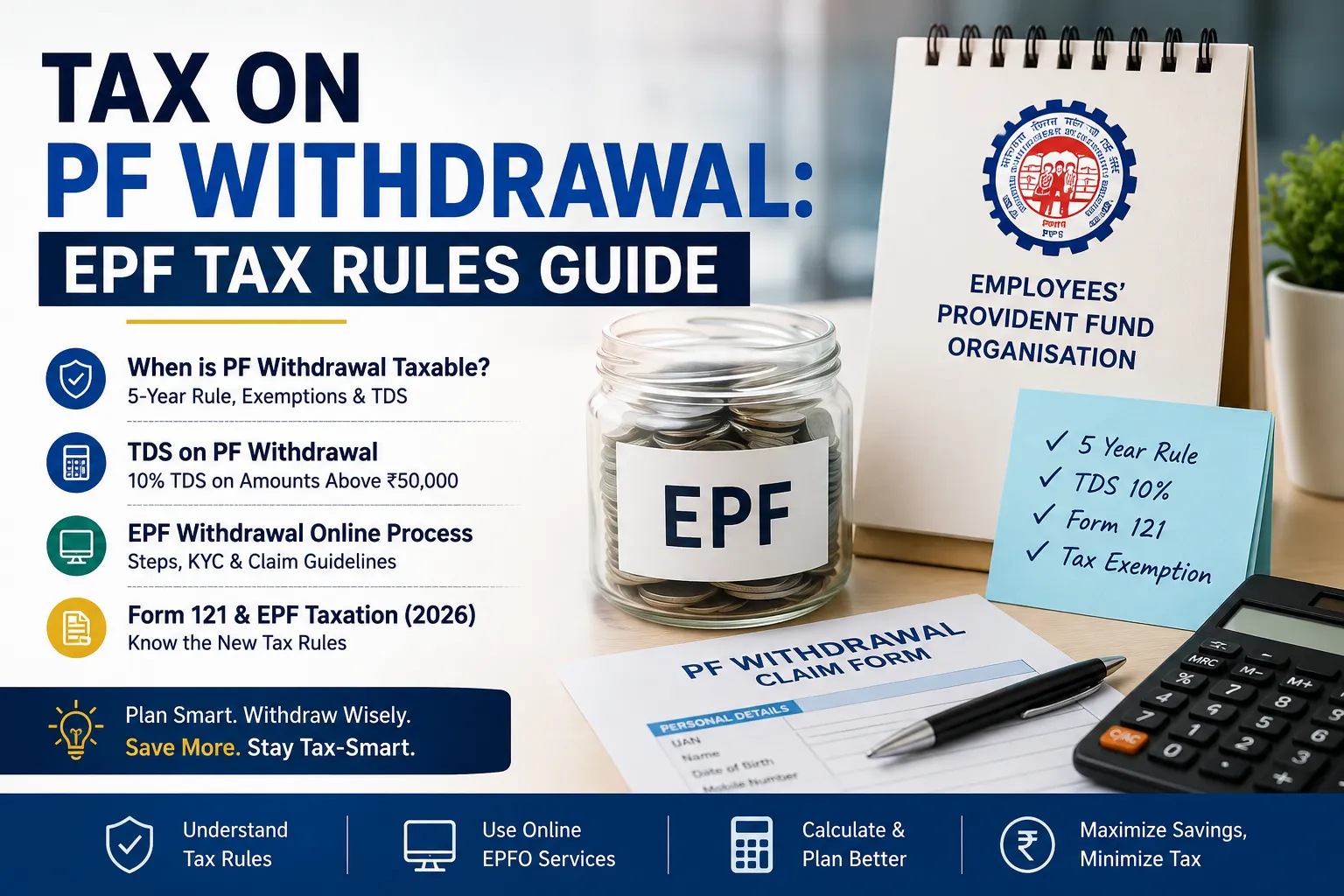
Tax on PF Withdrawal: EPF Tax Rules Guide 2026

For most salaried employees, EPF is a long-term savings tool for retirement. But when you withdraw the money before completing the required service period, EPF taxation rules may apply and you might start asking yourself is PF taxable or not. So, understanding tax on PF withdrawal can help you avoid unexpected deductions and plan your finances better before you put and EPFO claim online.
What Is Tax on PF Withdrawal?
The good news is that an EPF withdrawal is not automatically taxable. The EPF taxation depends on factors such as your continuous service, the type of withdrawal, and whether your PF is transferred to a new employer. The epf withdrawal online process has also made claims easier, but tax rules still need careful attention.
The Income Tax Department states that withdrawals from a recognised provident fund after five years of continuous service are generally exempt. However, withdrawals before five years can have different tax consequences.
When Does Tax on PF Withdrawal Apply?
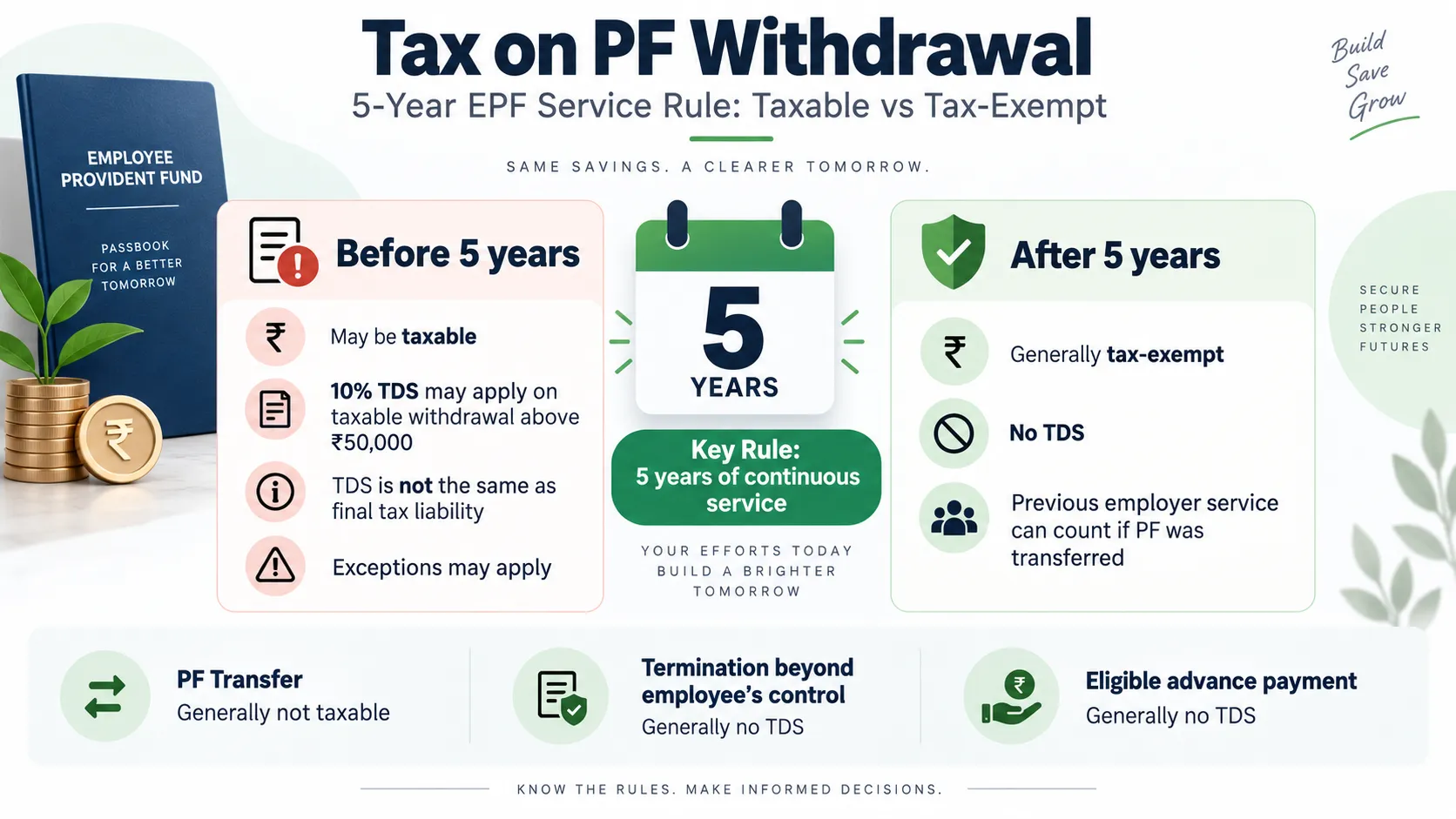
The key factor is five years of continuous service. If you complete five years of continuous service, your EPF withdrawal is generally exempt from tax. Your service with a previous employer can also count when the PF balance is transferred to your current employer.
If you withdraw your EPF before completing five years, the withdrawal may become taxable. This is where epf taxation can become confusing because TDS and final income-tax liability are not always the same thing.
Tax on PF Withdrawal Before Five Years
A withdrawal before five years may be taxable, especially when the conditions for exemption are not met. The tax treatment can involve the taxable portion of the accumulated PF balance being included in your income.
However, there are situations where the five-year condition does not apply in the usual manner. For example, EPFO guidance lists termination because of reasons beyond the employee’s control, such as ill health or closure of the employer’s business, among cases where TDS is not deducted.
Tax on PF Withdrawal After Five Years
If you have completed five years of continuous service, then as per EPF taxation rules the accumulated PF withdrawal from a recognised provident fund is generally tax-exempt.
Importantly, the five-year period can include service with previous employers when the PF balance has been transferred. Therefore, changing jobs does not necessarily reset your service period if you transfer your PF correctly.
Is PF Transfer Taxable?
A PF transfer is different from a cash withdrawal. When you transfer your EPF balance from your previous employer to the recognised provident fund of your new employer, it generally does not trigger TDS under the applicable EPF rules.
This is one reason transferring your PF when changing jobs can be more tax-efficient than withdrawing the entire balance soon after leaving an employer.
How Much TDS Is Charged on PF Withdrawal?
TDS applies to certain taxable EPF withdrawals. Under Section 192A, the current rule provides for 10% TDS on a taxable accumulated EPF balance when the applicable payment exceeds ₹50,000.
This does not mean every PF withdrawal above ₹50,000 automatically attracts tax. The five-year service rule and other exemptions must first be considered.
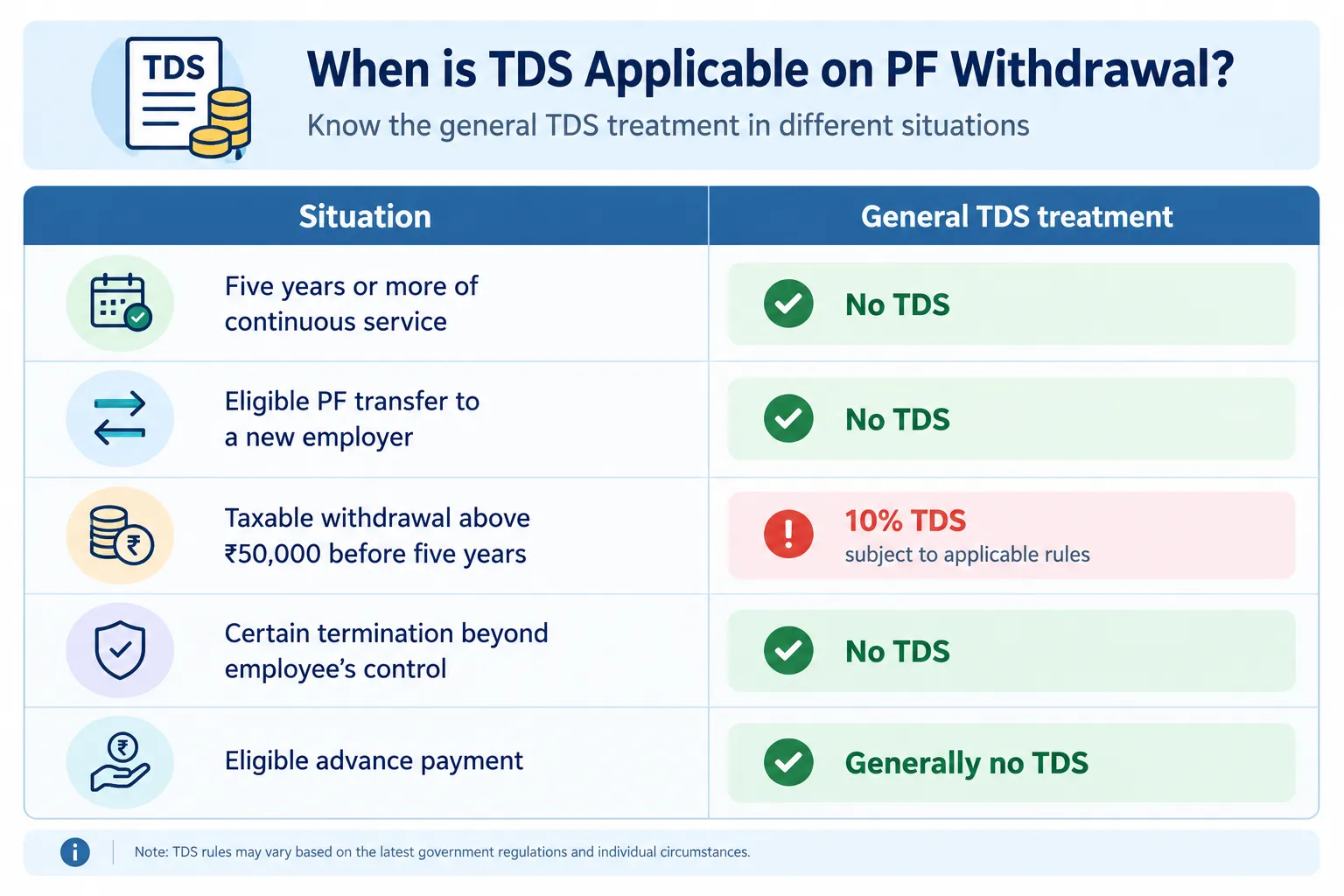
EPFO also states that previous and present employment can be combined when determining the five-year service period.
Is EPF Taxable Even If TDS Is Not Deducted ?
No. TDS is not the same as final tax liability.
TDS is simply tax collected at the time of payment. Your actual tax liability depends on the applicable income-tax rules and your overall income for the relevant tax year. For example, a situation where EPFO does not deduct TDS does not necessarily mean that every part of the transaction is automatically exempt from tax. Similarly, TDS deducted from your PF payment does not always mean that the deducted amount represents your final tax liability.
Therefore, check the tax treatment of your specific withdrawal when filing your income-tax return.
EPF Taxation and Form 121: What Changed in 2026?
One important change for taxpayers in 2026 is the transition to the Income-tax Act, 2025. The new framework replaced the earlier Forms 15G and 15H with a consolidated Form 121 for eligible declarations relating to specified payments where the taxpayer meets the conditions for non-deduction of TDS. EPFO has also issued a 2026 circular regarding the transition from Forms 15G/15H to Form 121 for TDS-exempted incomes.
Eligible taxpayers should therefore avoid relying on older articles that only mention Form 15G or Form 15H. Always check the latest EPFO and Income Tax Department instructions before submitting a declaration.
How to Plan PF Withdrawal and Reduce Tax Issues
Before starting a PF withdrawal, check your employment history and PF records. Make sure your UAN, Aadhaar, PAN, bank account and employment details are correctly linked.
If you have changed jobs, consider transferring your existing PF balance instead of withdrawing it immediately. A correct transfer can help preserve your continuous service record and may help you qualify for tax exemption after completing the required period.
You should also keep documents related to previous employment and PF transfers. These records can become useful if there is a mismatch in your service history or if the tax treatment of a withdrawal needs clarification.
Can an EPF Tax Calculator Give the Exact Tax?
An EPF tax calculator can help you estimate the possible tax impact, but it should not replace the official tax rules.
The result can depend on your service period, withdrawal amount, taxable income, PAN details and the nature of the transaction. Use calculators as planning tools and verify the final treatment using current government guidance or advice from a qualified tax professional.
EPFO Claim Online: What Should You Check First?
The epfo claim online facility allows eligible members to submit claims digitally. Before submitting your claim, check that your KYC details are complete and that your bank account and other records are accurate.
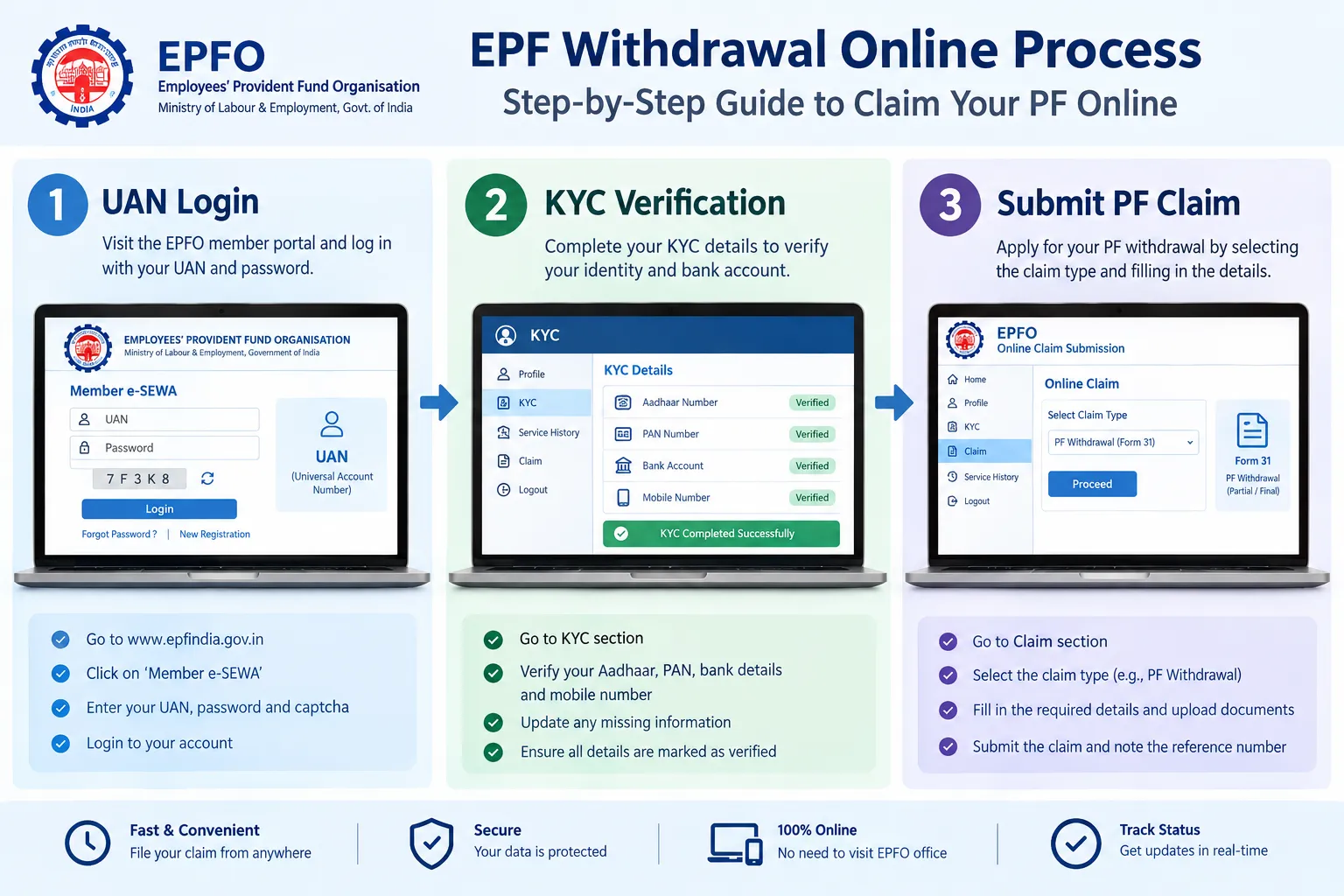
You should also review your EPF passbook and employment history. Errors in dates of joining or exit can create problems when the system assesses your service period.
If you are eligible for a PF transfer rather than a final withdrawal, consider that option before submitting an EPFO claim online. This can be particularly important if you are close to completing five years of continuous service.
Common Questions About Tax on PF Withdrawal
Is PF taxable after five years?
Generally, withdrawal from a recognised provident fund after five years of continuous service is exempt from tax, subject to the applicable rules.
Is PF withdrawal taxable before five years?
It can be. If you withdraw before completing five years and no exemption applies, the withdrawal may have tax consequences and TDS may apply where the statutory conditions are met.
What is the TDS rate on taxable PF withdrawal?
The current TDS rate under Section 192A is 10% for a taxable accumulated PF balance where the applicable payment exceeds ₹50,000
Should I withdraw PF after changing jobs?
Not necessarily. If you have joined another employer, transferring your PF can be preferable to withdrawing it, particularly when preserving continuous service is important for tax treatment.
Final Thought: Understand Tax on PF Withdrawal Before You Claim
PF is designed as a long-term financial benefit, so withdrawing it without understanding the tax implications can lead to surprises. The most important points are simple: check your continuous service, understand whether your withdrawal is taxable, keep your KYC and employment records accurate, and distinguish between TDS and your final tax liability.
As EPFO services become increasingly digital, employees have more control over their PF accounts than before. So, before you start the epf withdrawal online process, ask yourself one question: Do you need to withdraw your PF now, or would transferring it help you protect your long-term savings and tax position?