Top Temples to See in Bishnupur’s Past

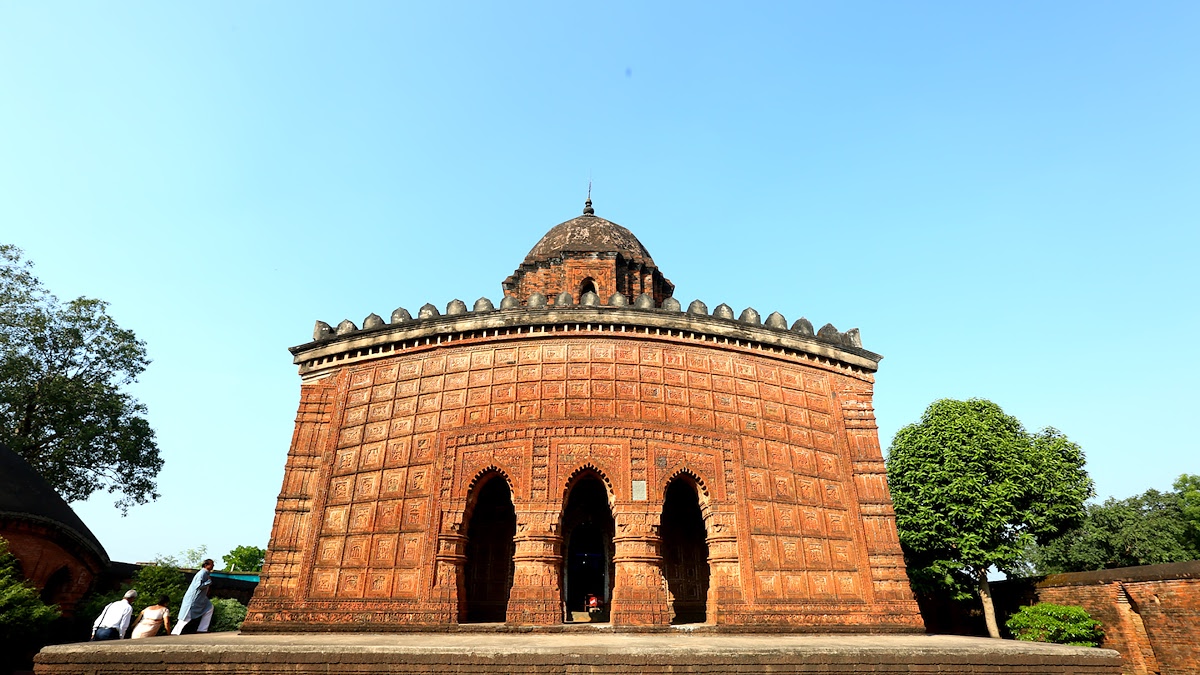
Image Source : Wikipedia
Introduction
Imagine the terracotta walls of Bishnupur’s temples at sunset, when each tile catches a ray of warm light, as if holding a memory of its own.Devotion, art, and power speak through these structures of the 17th century.More than 50 terracotta temples still stand across this quiet town, drawing close to 100,000 visitors every year. If you are planning to explore Bishnupur’s past, then this guide walks you through the five key sites that bring its past alive.
A Glimpse into Bishnupur’s Temple Roots
Between 1600 and 1800, the Malla dynasty of Bishnupur erected heritage temples, fostering terracotta art that became integral to their construction. This style wasn’t just decorative;These terra cotta panels represent, in incredible detail, life, local myths, and epic fights. Historians believe these factors strengthened the structures to withstand floods, conflicts, and the passage of time.
Of the ancient temples originally built in Bishnupur, some 80% stand intact to this date. As the historian Dr Amita Sen says: “These walls forgotten tales of devotion.”
Hint: Bring a small notebook with you. Drawing the patterns in terracotta helps you to pay attention to things other visitors probably miss.
Rasmancha Temple: The Crown Jewel In Bishnupur’s Past
The town’s most iconic landmark is the asmancha Temple. King Bir Hambir built it in 1600, leaving behind the typical Hindu temple architecture with its pyramid-like structure with open arches on a wide platform and serving very well for festivals on a grand scale. Even to this day, the famous Rash Yatra draws crowds to this historic meeting place.
Architectural Highlights
The building rises with five spires and attains at its highest point a height of about 108 feet.The open hall once displayed idols on festive occasions, making it a single space where art, devotion, and community converged.
A restoration in 2023 replaced almost 20 percent of the damaged terracotta panels, preserving their fragile designs. The local guide Rajesh Kumar receives every visitor with the words: “Climb the steps, and you will feel the king’s vision.”
Takeaway: The soft light and quiet moments of dawn make Rasmancha best visited at this time. Carry water since this exposed building gets baking hot in the afternoon.
Jor Bangla Temple: Twin Towers of Faith In Bishnupur’s Past
The Jor Bangla Temple was constructed in 1655 and has a unique twin-village-hut structure that is dedicated to Krishna and Radha. It looks cozy with its excellent terracotta craftsmanship.
Design Secrets
The outer walls feature panels that depict scenes from the Ramayana, temple myths, and carvings inspired by everyday life.Covering nearly 5,000 square feet, the temple is larger than many of its peers.It has even welcomed modern touches.Tourists used VR applications in 2024 to view hidden corners and engravings that are difficult for the naked eye to observe.
“Look up,” says Priya Das, an archaeologist. “The roofs hide the best stories.”
Takeaway: Shoot side-view shots that show the full twin effect. Keep the no-flash rule in order to keep the work of art intact.
Shyam Rai Temple: A Five-Tower Wonder In Bishnupur’s Past
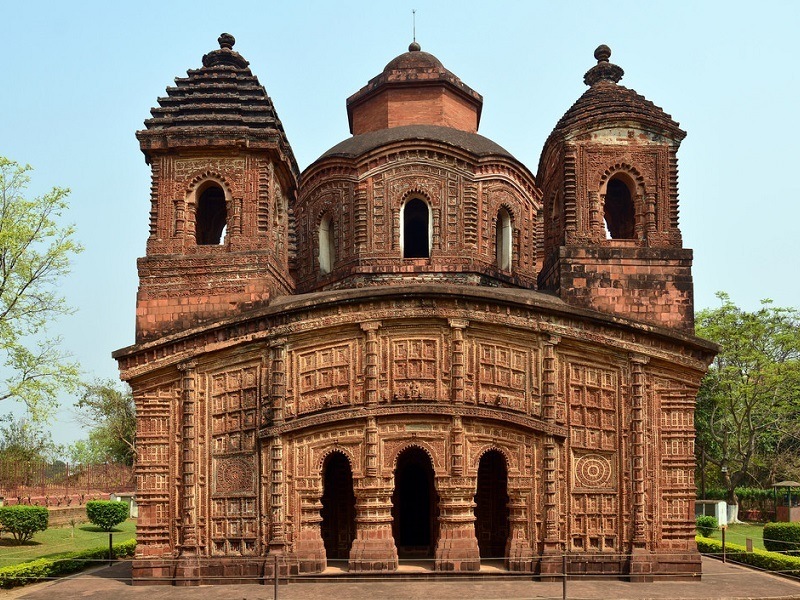
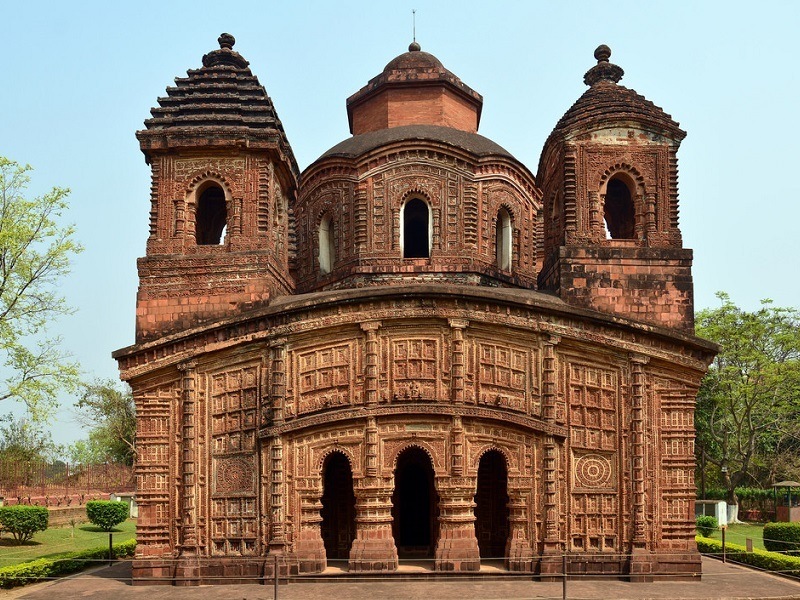
The Shyam Rai Temple of Bishnupur, completed in 1643, is one of the best examples of terracotta temples.The temple follows the Pancha Ratna style with five rising towers symbolizing Hindu elemental forces, landing it on UNESCO’s tentative list for cultural and architectural significance.
Image Source : Trawell
Unique Features
More than 2,000 terracotta tiles cover the surface of the temple, many showing Krishna motifs, love stories, and scenes from folklore.Standing at 70 feet, it endured two earthquakes without losing its character.In 2019, locals fundraised to safeguard the temple from erosion. Gopal, an artisan, described each tile as a clay prayer.
Takeaway: One joins a tour to spot the common Krishna motifs carved on walls.
Madan Mohan Temple: Hidden Gem of Devotion In Bishnupur’s Past
Madan Mohan Temple is a serene attraction in Bishnupur, built in 1694.The high base once protected the Eka Ratna design with one tower from floods.Gopal, the artisan, said every tile was a prayer in clay.
Standout Elements
Music festivals at the temple showcase traditional songs in its courtyard that connect visitors to melodies from centuries past.Various music festivals at the temple afford a platform where traditional songs reverberate in its courtyard, linking visitors to melodies that have survived across many centuries.During major festivals, over 15,000 pilgrims visit the temple to enjoy its tranquility compared to busier locations.
Takeaway: Wear comfy shoes for the climb, then meditate briefly in the tranquil inner chamber of Bishnupur.
Conclusion
Built by the Malla dynasty and local craftsmen, the Bishnupur temples preserve the folk tales in their terracotta panels.Closer to the confluence of art and resilience is a visit to these terracotta temples in Bishnupur.If you are planning a trip to Bishnupur, stay near the main sites so that you can make your own pace around the ruins. These carry lessons in devotion, creativity, and endurance.They’re worth seeing in person before time softens the details the clay still holds.