

Wind Energy in India: Powering a Cleaner Future

One of the fastest-growing sources of renewable power in India is Wind Energy. It produces wind power and Wind Electricity by using the natural movement of air. Unlike coal, petrol, or gas, this process does not require fossil fuels. As a result, it supports India’s transition toward a cleaner and more sustainable future.According to the Ministry of New and Renewable Energy (MNRE), India’s installed wind turbine capacity reached 56,436.59 MW as of 30 April 2026. This achievement reflects the country’s strong commitment to expanding green energy.
How Wind Energy Works – In Simple Terms
Wind Energy is generated through wind turbine generators. These systems use tall towers fitted with large rotors and blades. When the wind blows, the blades begin to rotate. This movement drives a generator, which then produces Wind Electricity.
Engineers must consider several factors. For example, they study blade design, tower height, wind speed, and turbine placement. Therefore, experts analyze wind patterns and dynamics before establishing any large-scale green energy project.
Wind Turbine Components
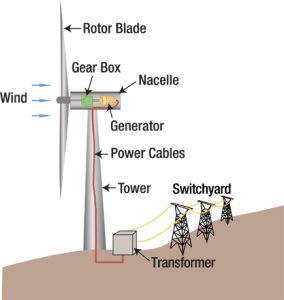
Source: wind solar USA
Wind Power and Grid Connection
Wind Energy does not operate independently. It works closely with the electricity grid.
The electricity grid receives power from different sources, including solar energy, hydropower, coal, and wind power. When wind speeds increase, the generation of Wind Electricity also rises. However, lower wind speeds may reduce output.
Wind Electricity for Daily Life
The Wind Electricity produced through wind power supports many daily activities. It powers lights, computers, industrial equipment, household appliances, and agricultural machinery.
In addition, Wind Energy supports the growth of electric vehicles, smart cities, and modern green energy industries. As technology advances, its applications continue to expand.
Several Indian states have already benefited from this renewable resource. For instance, Gujarat, Tamil Nadu, Karnataka, Maharashtra, Rajasthan, and Andhra Pradesh have successfully developed large-scale Wind Energy projects.
Benefits of Wind Energy in India
Wind Energy offers many advantages to India. It supports clean development and reduces dependence on fossil fuels. In addition, it creates employment opportunities across different sectors. Jobs are available in engineering, construction, maintenance, data analysis, and green energy management.
Clean and Renewable Source
One of the biggest strengths of Wind Energy is that it comes from a renewable source. It is generated from the natural movement of air. Unlike coal or oil, it does not run out.
Moreover, Wind Electricity generation does not release carbon dioxide during operation. This helps India reduce pollution and move closer to its climate goals. As a result, green energy plays a major role in protecting the environment.Therefore, wind power can provide long-term energy support.
Lower Fuel Dependence
Once a wind turbine is installed, it does not require fuel to generate electricity. This makes it different from thermal power plants, which depend on coal or gas repeatedly.
Because of this advantage, Wind Electricity can strengthen India’s energy security. Furthermore, the country can reduce fuel imports and rely more on domestic renewable resources.
Job and Career Possibilities
The Wind Energy sector requires skilled professionals from many backgrounds.
Engineers design wind turbine systems and electrical networks. Technicians inspect and maintain wind farms. Data analysts monitor turbine performance and identify efficiency improvements.
Project managers coordinate land acquisition, financing, operations, and regulatory processes. Meanwhile, environmental experts assess project impacts and ensure compliance.
Challenges to the Development of Wind Energy Technology
Although Wind Energy offers enormous potential, several challenges remain.
However, these challenges do not indicate weakness. Instead, they highlight areas where innovation, planning, and policy support are needed.
Wind Energy Is Dependent on Weather
Wind conditions change throughout the day and across seasons.
Some days produce strong winds and higher electricity output. On other days, generation levels may decline. Consequently, forecasting systems become essential for balancing supply and demand.
Energy storage solutions can also help. For example, battery storage systems can store excess electricity for later use.
Solar panels generate electricity during the day, while Wind Energy can continue producing Wind Electricity during periods of higher wind speeds, including nighttime hours.
Transmission and Grid Pressure
India also needs stronger transmission infrastructure.
Electricity generated in windy regions often needs to travel long distances to reach major demand centers. However, limited transmission capacity can slow the adoption of renewable energy.
Better transmission systems, expanded storage capacity, and flexible power networks will help India maximize the benefits of green energy.
Wind Energy from Offshore Locations
Offshore wind power uses wind turbine systems installed in the sea. Wind speeds over oceans are often stronger and more consistent than those on land. As a result, offshore projects can generate large amounts of Wind Electricity.
Therefore, offshore Wind Energy could become an important part of the country’s renewable energy strategy in the coming years.
Hybrid Wind Power Projects
Hybrid systems utilize Wind turbine generate Wind power and along with solar energy, batteries, or any other form of energy source. Because it is a reliable option. As well it assists the grid and getting better quality energy for a longer duration of time. Such as instance, the hybrid power system can use solar energy during daylight and wind energy during increased wind speeds. This reduces dependence on one source compared to onshore projects.
Smart Wind Electricity Management
Modern Wind Energy projects use advanced technologies to improve performance.
These technologies include sensors, artificial intelligence, and data analytics. They monitor wind speed, track wind turbine conditions, measure energy output, and predict maintenance requirements.
Students and professionals from information technology, electrical engineering, mechanical engineering, and data science backgrounds can contribute to the future of green energy.
Future Prospects for Wind Energy in India
The future of Wind Energy in India looks promising.
According to the Ministry of New and Renewable Energy (MNRE), India’s wind power capacity increased from approximately 21 GW in 2014 to 56.44 GW in 2026.
According to the GWEC Global Wind Report 2026, total global wind power capacity reached 1,299 GW. Furthermore, India continues to be recognized as one of the world’s major Wind Energy markets.
These efforts will help ensure that Wind Electricity remains reliable, affordable, and accessible.
Conclusion:
Wind Energy is important for many reasons. It generates electricity, supports cleaner air, strengthens energy security, creates jobs, and promotes sustainable growth.
India needs more energy to support homes, schools, businesses, industries, and modern technologies.
green energy provides these benefits while causing less harm to the environment than traditional energy sources.
For today’s students and professionals, this is the right time to learn about Wind Electricity, renewable energy technologies, and career opportunities in the expanding green energy sector.
As India moves toward a cleaner future, Wind Energy will continue to shape the nation’s economic growth, environmental goals, and long-term energy security.


