

Aerospace Engineering Career Guide

Aircraft that traverse continents and rockets that venture into space are a result of an aerospace engineer’s work. Aerospace engineers are those individuals who design, test, and develop aircraft, satellites, missiles, and space crafts. Aerospace engineering is one career path that every aspiring aviator and engineering enthusiast should consider. An aerospace engineer is an individual who uses physics, mathematics, and technology to develop safe and efficient flying machines. For that they must choose best aerospace engineering colleges. From flying airplanes to space travel, this career path is creating the future of aviation. Aerospace engineering is one of the career paths with high demand, high aerospace engineering salary and a career in the aviation industry.
This career path has aircraft, space technology, and engineering. So it is important to understand if it is the right career path for you.

The role of an Aerospace engineering in the Aviation Industry
Their role is to design or improve vehicles that fly or travel to space. They deals with complex systems or materials. The aim is to design aircraft that are faster and safer.
Aerospace engineers are normally specialized either as aeronautical engineers or astronautical engineers.
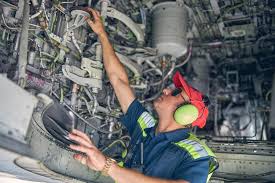
Aircraft system design by Aerospace Engineering
One of their tasks is designing aircraft structures and systems. This includes creating blueprints for aircraft wings, engines, navigation systems and control systems.
To ensure that their design is perfect. They use computer simulations to test their design before they start making a real model.
Also they may work with software experts and manufacturing personnel, who will ensure that their design works well in real life.
The Role of Testing and Improvement in Aerospace Engineering Technologies
In aerospace engineering technology, testing is a key component. An aerospace engineer tests a technology by simulating it or by testing it in a wind tunnel or during flight.
The tests include evaluating the technology’s speed, air flow, fuel efficiency, or stability. After testing the technology, the aerospace engineer improves it if necessary.
The improvement process ensures that aircraft remain reliable and safe for air travelers.
Maintenance of Safety Standards in Aerospace Engineering
Safety is the primary concern for aviation. Aerospace engineers are required to maintain safety standards according to the regulations.
They check the materials, the mechanical stress, etc. This requires a high level of detail.
Because of the safety requirements, aerospace engineers are expected to maintain the accuracy of the work at every step of the development.
Skills needed to Become a Aerospace Engineer
They need both technical and analytical skills. Students must have a strong knowledge in science and engineering fields.
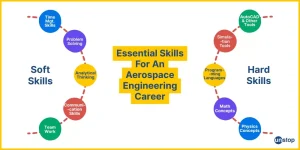
Technical Skills for this Careers
Mathematics and physics are the basis for them. Aerospace engineers use these skills while designing aircraft structures and propulsion systems.
Programming skills also play a significant part in this field. Many aerospace engineers use programming skills for analysis.
Having a strong problem-solving skill helps aerospace engineers solve problems quickly.
Analytical skills for Aerospace Engineers
The aerospace engineer needs to analyse complex systems and detect minor errors. A minor error can affect the aircraft.
Engineers need to analyze large amounts of data and test results. Logical thinking helps them find the best possible solution for a problem.
The role of teamwork is also important for aerospace engineers because the projects require a huge team of engineers.
Aerospace Engineering Salary and Career Opportunities
The career success for an aerospace engineer remain strong across many industries. It all start with aerospace engineer salary which attracts people across the world. Aviation companies, defense organizations and space research agencies all hire them. they provide a handsome package as aerospace engineering salary.
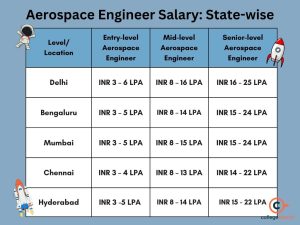
Average Aerospace Engineering Salary
The aerospace engineering salary varies depending on experience, country and organization.
Basic level they often earn competitive salaries compared with many engineering fields. With experience the salary increases.
Industries That Take Aerospace Engineers
A competent aerospace engineer has a wide range of industries that he or she can work in. And they pay good amount of Aerospace engineering salary.
These industries include:
Aircraft manufacturing companies
Space research organizations
Defense and military technology industries
Satellite and communication technology industries
Aviation research laboratories
These industries provide a wide range of options for aerospace engineers. Some engineers work on aircraft technology, while others work on spacecraft or drone technology.
Best Aerospace Engineering Colleges for Future Engineers
The selection of good aerospace engineering colleges is the main factor in the development of a successful career. Good colleges help students get a better education.
Top Aerospace Engineering Colleges to Consider
A number of countries provide high-quality education. They study subjects like aerodynamics, propulsion systems, aircraft structures and flight mechanics. Research work is also a part of aerospace engineering.
Choosing a aerospace engineering college that has a strong connection with industries helps students get internships.
What to Look for in Aerospace Engineering Colleges
In choosing a aerospace engineering college for the course, a number of considerations must be taken into account:
The accreditation and reputation of the institution
The availability of research facilities
The opportunity for internships
The opportunity for placements
Good aerospace engineering colleges do not only impart knowledge; it also equips the student for the challenges that exist in the real world.
Specialized or Advanced Concepts
Advanced engineering has so many specializations. This is the area that is advancing the limits of flying and space exploration.
Propulsion Systems in this field
The propulsion system is the component that serves the power to move an aircraft. The aerospace engineer designs an engine that has a high power output while ensuring that it is efficient in the use of fuel.
The engineer studies the combustion process. The heat generated, and the flow of the airflow to design a propulsion system.
Aerodynamics and Aircraft Performance
Aerodynamics is the study of the flow of the airflow around an aircraft. The aerospace engineer studies the lift generated and the drag forces.
The forces help the engineer to design a fast-moving aircraft.
Final Thought: Is Aerospace Engineer Right career for You?
The career of an aerospace engineer is one of those that combines science and innovation while achieving practical results. they help to create airplanes that connect the world.
For students interested in aviation and aspiring engineers, their presents a bright future and exciting challenges and opportunities for a rewarding the salary. But to succeed in this career one should be committed to mathematics and physics. If you are interested in technology and fascinated to airplanes and space exploration, this career is the perfect opportunity for you.


