Artificial Intelligence: How AI is Changing the Future Of Technology

In recent times, one of the most discussed terms in the world is AI, artificial intelligence. It is being used in every aspect, starting from phones to home devices, and even in the medical and business fields. What was earlier considered to be in the nation of science fiction is slowly turning out to be an integral part of our lives. It improves the AI technology.
AI is described as the power of a machine or computer system to perform tasks that are normally linked with human intelligence. These tasks include learning, reasoning, problem-solving, decision-making and understanding language. As our technology is becoming more advanced day by day, so it is the concept of artificial intelligence.
In the following blog, we will be discussing what AI, is, how it works, and its importance, and what the future holds for this revolutionary AI technology.
The Meaning of Artificial Intelligence
AI , is a field of computer science that assigns with developing intelligent machines that can execute tasks which need human thinking. It is created to process information, learn from it, and then make decisions or predictions.
Artificial intelligence uses algorithms and large amounts of data to allow machines to understand patterns and become better at tasks over time. It is also called machine learning, which is the part of modern artificial intelligence.
For instance, when you use voice assistants, recommendation systems, or face recognition software on your phone, AI artificial intelligence is at work to process the information and give you results.
Types of Artificial Intelligence
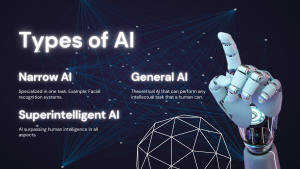
There are three types of AI are discussed below:
-
Narrow AI
Narrow AI is artificial intelligence designed to fulfill a particular function. Most of the artificial intelligence systems currently being used belong to this category. Examples of Narrow AI include voice assistants and chatbots.
Narrow AI, as a system, is very effective and efficient for the particular purpose for which they have been designed. However, they cannot execute anything outside their designed functions.
-
General AI
General AI, as a concept, includes artificial intelligence systems that have the capability to execute any intellectual function performed by humans. This concept of artificial intelligence, as discussed, is still theoretical and needs to be achieved by AI developers and experts.
-
Super AI
Super AI, as a concept, includes artificial intelligence systems that have the power to be better than human intelligence, including creativity, problem solving, and emotional understanding. This concept of artificial intelligence, as discussed, is still theoretical and needs to be achieved by AI developers and experts.
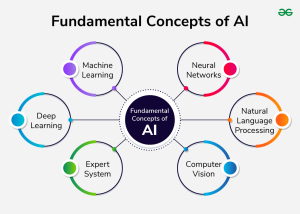
The Artificial intelligence operates based on some key technologies and processes:
1. Machine Learning Of Artificial Intelligence
Machine learning enables artificial intelligence systems to learn through the data and enhance their functionality without being explicitly coded to do all the tasks.
2. Natural language Processing Of Artificial Intelligence
NLP assists machines in the interpretation and understanding of human language. This is a technology that drives chatbots ,translators and voice assistants.
3. Computer Vision Of Artificial Intelligence
Computer vision is a computer technique that help’s machines to comprehend and analyze visual data like images and videos. It applies to facial recognition,medical imaging and autonomous vehicles.
4. Deep Learning Of Artificial Intelligence
Deep learning is a more developed type of machine learning that is also based on neural networks to process large volumes of data and identify complicated patterns.
Source: geeksforgeeks
Uses of AI Artificial Intelligence
The effect of AI artificial intelligence is evident in most industries. It is assisting companies become efficient, less costly and provide better services.
1. Healthcare
AI is also used in healthcare to diagnose diseases, process medical images, and prescribe treatment to doctors. Artificial intelligence is able to diagnose health problems at an earlier stage and provide better treatment to patients.
2. Business and Marketing
AI is applied to customer behavior analysis, marketing campaigns are tailored to customers, and the customer support is enhanced by the companies. AI-based chatbots have become essential in the answers to customer questions, which can now be answered instantly by many businesses.In the case of digital marketing agencies, and businesses offering customer service services, such as SEO and online marketing, AI artificial intelligence may be utilized to analyze data, optimize campaigns, as well as predict trends in customers.
3. Education
AI is also changing the education sector by offering individualized learning processes. Intelligent systems can examine performance of students and provide personalized learning programs.
4. Finance
AI is used by banks and other financial institutions to identify fraud, automatise trading, and to analyse financial data. The AI systems will be able to detect suspiciou’s behavior and safeguard customer data in a short time.
5. Transportation
AI technology is used to power self driving cars and smart traffic systems. AI assists vehicles to identify road hazards,obey road regulations,and navigate roads without accidents.
Advantages of Artificial Intelligence
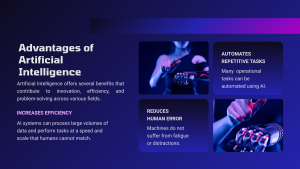
The fast development of AI based on AI has numerous benefits to people and companies.
1. Increased Efficiency
AI systems are able to execute repetitive functions in a much faster way in comparison to humans. This assists the organizations to save time and enhance productivity.
2. Better Decision Making
AI assumes vast volumes of data within a short period of time and delivers insights that can assist companies in making smarter decisions.
3. Automation of Tasks
AI enables companies to automate the repetitive work, which enables employees to devote more of their time to other, more creative and strategic tasks.
4. Improved Accuracy
Machine learning systems lower human error rates through data analysis and machine operation.
5. Increased Customer Experience
The AI-based chatbot and recommendation systems help numerous companies deliver more individualized and faster services to their customers.
Issues of Artificial Intelligence
Even though AI artificial intelligence has numerous advantages, there are some challenges associated with it as well.
1. Data Privacy Concerns
Artificial intelligence is a system that depends on data. Unless data is managed in a responsible manner, it may result in privacy and security concerns.
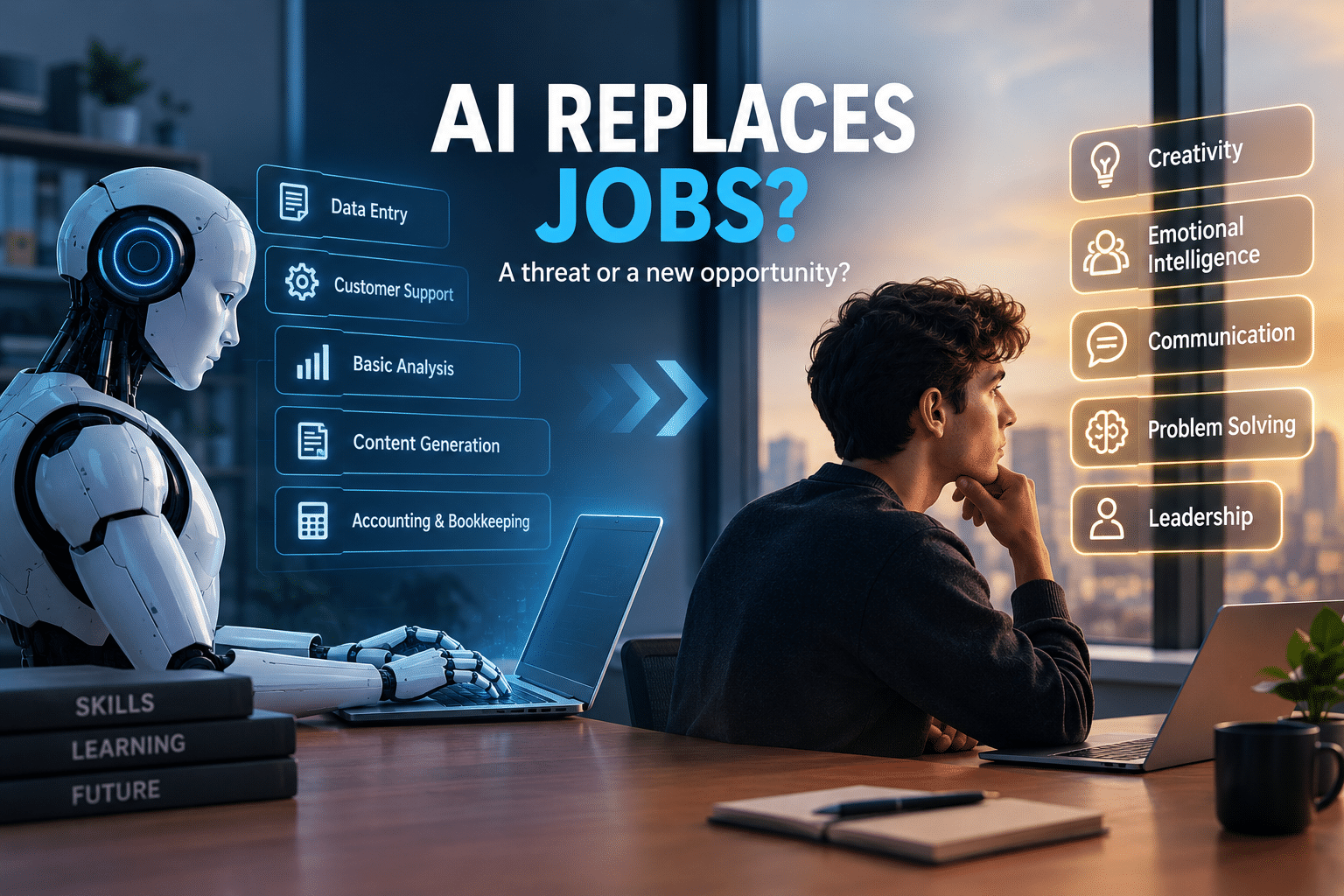
2. Job Displacement
The use of AI in automation can substitute some of the jobs that require repetitiveness. Nevertheless, it also opens new prospects in the sphere of technologies and AI development.
3. Ethical Issues
The decision-making systems based on AI should be developed with proper attention in order to prevent bias and provide fairness.
4. High Development Costs
Developing and sustaining advanced AI systems is expensive, demands experience, and infrastructure.
Future of Artificial intelligence
The future of the AI is very promising. With the development of technology, AI is likely to gain even greater penetration into the daily life of people.
In the coming years, we may see:
- Smarter virtual assistants
- Greater healthcare diagnostics
- Fully autonomous vehicles
- AI-powered smart cities
Companies in all sectors are already spending huge sums of money on AI technology as a way of remaining competitive. AI will continue to develop, and it may change the world of industries and develop new opportunities that have never been thought of before.
Conclusion
One of the strongest technological advances of the modern era is the AI . It is revolutionizing businesses, making them more efficient, and opening new opportunities both to the business and the individuals. AI is turning into a necessary means of getting the complicated issues solved and facilitating daily life, whether it is healthcare and finance, education and marketing. Although such issues as data privacy and ethical concerns are still present, the possible advantages of AI cannot be overestimated.With the further evolution of technologies, the significance of AI will become even more decisive in the future evolution of society, turning our world to be smarter, faster, and more connected.