Kalighat Painting: A Glimpse into Bengal’s Traditional Art

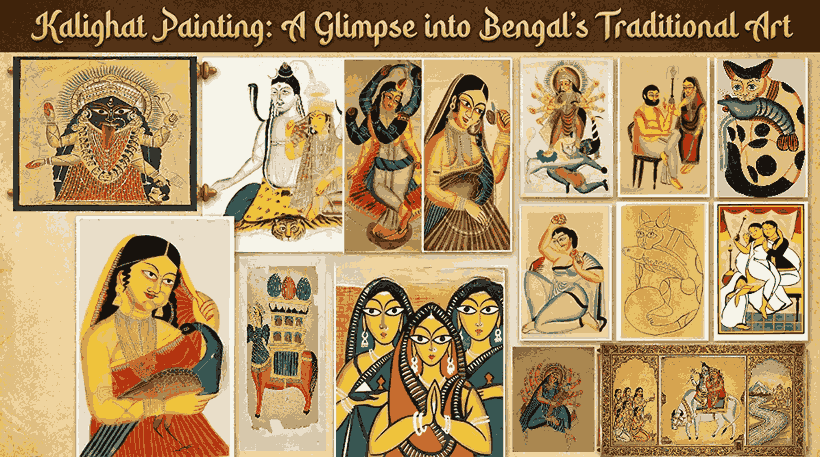
Bengal has a rich artistic and cultural history, reflected in its traditional paintings, crafts, music, and literature. Among its many art forms, Kalighat Painting holds a special place. Originating in nineteenth-century Kolkata, this unique style of Bengali Folk Art represents the creativity, beliefs, lifestyle, and social changes of Bengal.Kalighat painting developed near the famous Kalighat Kali Templhttps://www.sahapedia.org/kolkatas-kalighat-paintingse, where artists created colourful paintings for pilgrims and visitors. Initially, these artworks mainly featured Hindu gods and goddesses. Gradually, artists began portraying everyday life, social customs, and contemporary events.With its bold outlines, bright colours, and expressive figures, Kalighat painting became a distinctive form of Traditional Art of Bengal. Today, it is recognised as an important part of Bengal’s artistic legacy and Indian cultural heritage.Kalighat Painting is recognised for its distinctive artistic techniques and traditional Bengali style.
History and Origin of Kalighat Painting
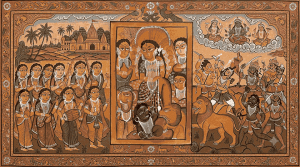
IMAGE SOURCE: https://en.wikipedia.org/wiki/Kalighat_painting
The history of Kalighat Painting dates back to the nineteenth century, when Kolkata was developing as an important commercial and cultural centre under British rule. During this period, many traditional artists from rural Bengal migrated to the city in search of better opportunities.These artists were commonly known as Patuas. They traditionally created scroll paintings called Patachitra, which used a sequence of pictures to tell religious and cultural stories. After settling near the Kalighat temple, they started producing smaller paintings on paper that pilgrims and tourists could easily purchase.In the beginning, religious subjects were especially popular. Artists painted Hindu gods, goddesses, and scenes from mythology. However, their subjects gradually expanded to include ordinary people, urban lifestyles, social customs, and contemporary events.This change helped Kalighat Patachitra develop a distinctive identity. It became more than a religious souvenir and emerged as an artistic expression of nineteenth-century Bengali society.The development of Kalighat Painting played an important role in the history of bengali folk art.
Unique Features of Traditional Kalighat Painting
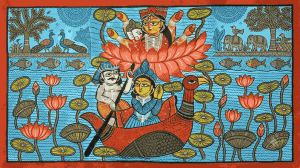
IMAGE SOURCE: https://en.wikipedia.org/wiki/Kalighat_painting
Kalighat painting is famous for its simple compositions and expressive artistic techniques. Unlike highly detailed traditional paintings, it focuses on bold outlines, flowing brushstrokes, vibrant colours, and carefully presented figures.
1. Bold Lines and Simple Designs
One of the most recognisable features of the Kalighat Art Style is its thick, smooth, and curved outlines. Artists used confident brush movements to create human figures, animals, and decorative elements.The backgrounds were generally kept simple so that the main subject could attract attention. This minimal approach gave the Kalighat paintings a distinctive appearance and made their visual storytelling more effective.These bold outlines and simple designs are important characteristics of the Traditional Art of Bengal. Kalighat Painting continues to be admired for its unique line work, simple compositions, and expressive artistic style.
2. Bright Colours and Artistic Patterns
Traditional Kalighat paintings often featured bright colours such as red, yellow, blue, green, and black. Artists used watercolours and different pigments to create attractive compositions.The combination of vibrant colours and simple backgrounds helped communicate emotions and highlight important details. These artistic choices made the kalighat paintings visually appealing and easy to recognise.
3. Expressive Human Figures
Human figures in Kalighat paintings are known for their large eyes, graceful movements, and expressive facial features. Artists used body language and gestures to communicate different emotions.These figures represented gods, goddesses, men, women, and characters from everyday society. Their expressive appearance helped transform simple paintings into interesting visual stories.These expressive figures reflect the creativity and storytelling traditions of the traditional art of bengal.
Popular Themes in Kalighat Paintings
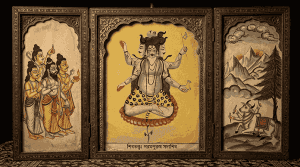
IMAGE SOURCE: https://en.wikipedia.org/wiki/Kalighat_painting
The subjects of Kalighat paintings reflect both religious beliefs and everyday Bengali society. Over time, artists expanded their themes to represent different aspects of life, culture, and social behaviour.
1. Religious and Mythological Stories
Religious subjects were among the earliest and most popular themes of Kalighat paintings. Artists frequently portrayed Hindu gods and goddesses such as Durga, Kali, Lakshmi, and Krishna.These artworks attracted pilgrims visiting the Kalighat temple. They also allowed visitors to take home colourful representations of religious stories and traditional beliefs.
2. Everyday Life and Social Issues
Beyond religious subjects, kalighat painting artists began portraying ordinary people, fashionable lifestyles, family relationships, and social customs. Their paintings reflected the changing urban culture of nineteenth-century Kolkata.Some artists also used humour and satire to comment on corruption, social behaviour, and the influence of Western lifestyles. Through these subjects, bengali folk art became a medium for observing and questioning society.Such kalighat paintings show how traditional art of bengal reflects everyday life and social changes.
Cultural Importance of Kalighat Painting in Bengal
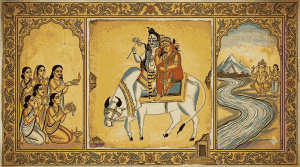
IMAGE SOURCE: https://en.wikipedia.org/wiki/Kalighat_painting
Kalighat painting is more than a decorative art form. It provides a visual record of the religious beliefs, social conditions, and cultural development of nineteenth-century Bengal.Through these paintings, viewers can understand aspects of traditional clothing, occupations, relationships, and urban lifestyles from that period. The artworks also demonstrate how local artists adapted their traditional skills to changing social conditions.As an important part of the Cultural Heritage of Bengal, Kalighat painting connects traditional storytelling with artistic creativity. It also represents the contribution of Bengali artists to the wider history of Indian Traditional Painting.Today, bengali folk art continues to represent the artistic traditions and cultural heritage of Bengal through paintings like Kalighat art.
How Are Kalighat Paintings Created?
Traditional Kalighat paintings were generally created on paper using brushes and watercolours. Artists first drew the main subject with bold outlines and then added colours, details, and expressive features to complete the artwork.In many cases, painting was a family activity. Different family members contributed to preparing materials, drawing outlines, applying colours, and finishing the paintings. This shared process helped artists produce artworks for the growing market around the Kalighat temple.The use of simple materials and distinctive brush techniques gave these kalighat paintings their unique visual character. Their artistic simplicity also helped make them accessible to a wider audience.
Modern Influence and Preservation of Kalighat Painting
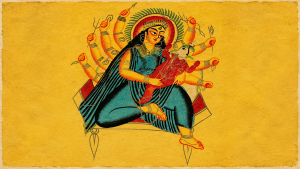
IMAGE SOURCE: https://en.wikipedia.org/wiki/Kalighat_painting
During the late nineteenth and early twentieth centuries, cheaper printed images became increasingly popular. As a result, the demand for handmade Kalighat paintings gradually declined. Many traditional artists moved away from Kolkata or explored other occupations.However, the influence of Kalighat painting did not disappear. Its bold lines, simplified forms, and expressive figures inspired modern Indian artists, including Jamini Roy, who developed his own artistic style while drawing inspiration from folk traditions.Today, museums, exhibitions, cultural organisations, and contemporary artists contribute to preserving this traditional art form. Its visual style also appears in modern illustrations, decorative products, and creative designs.These efforts help introduce Kalighat painting to younger generations and audiences beyond Bengal. They also demonstrate how a regional art form can continue to influence modern creativity.
Final Thoughts on Kalighat Painting
Kalighat Painting is a remarkable example of Bengal’s rich artistic and cultural heritage. Its bold outlines, vibrant colours, expressive figures, and meaningful themes make it a unique form of traditional Indian art. From religious stories to everyday social life, these paintings reflect the creativity and changing culture of Bengali society.Although the art form originated near the Kalighat temple in Kolkata, its influence has reached far beyond Bengal. Today, it continues to inspire artists and attract art lovers through its distinctive style and historical importance. Preserving Kalighat Painting means protecting an important part of Bengal’s artistic legacy and passing this valuable cultural tradition on to future generations.