Traditional Indian Art: Digital Preservation in the Modern Age

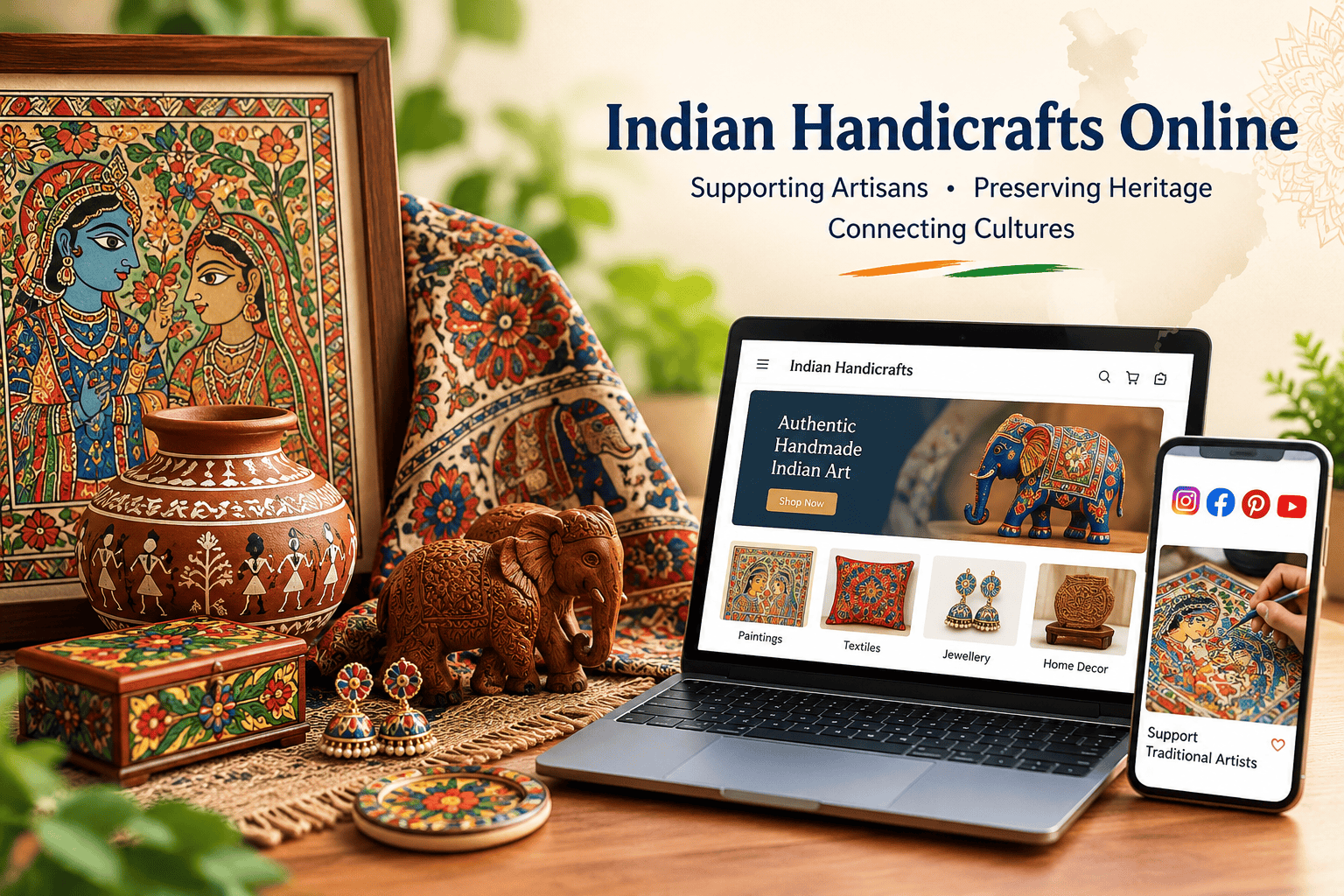
Indian handicrafts online platforms help traditional artists showcase and sell their unique creations, including Madhubani paintings, Warli artwork, Pattachitra paintings, and Kalamkari textiles, to customers across the world. At the same time, social media for traditional artists provides an effective way to promote their work, share creative processes, and connect with new audiences. By combining online marketplaces with social media platforms such as Instagram, Facebook, and Pinterest, Indian artisans can increase their visibility, develop new business opportunities, and preserve India’s rich cultural heritage for future generations.Traditional Indian art plays an important role in preserving India’s rich cultural heritage. Indian traditional art forms such as Madhubani, Warli, Pattachitra, and Kalamkari reflect the country’s history, religious beliefs, festivals, and daily life. Today, digital preservation of Indian art helps protect these unique artistic traditions through digital archives, photography, online exhibitions, and social media. Modern technology also allows artists to showcase their creativity to global audiences while preserving India’s cultural identity for future generations.
Digital preservation of Indian art plays an important role in protecting India’s rich cultural heritage. Traditional art forms such as Madhubani, Warli, Pattachitra, and Kalamkari reflect the country’s history, religious beliefs, festivals, and daily life. Today, digital technology helps preserve these unique artistic traditions and introduce them to audiences around the world. India is a country rich in culture and history, and Indian traditional art forms reflect its diverse heritage, religious beliefs, festivals, and daily life. Art forms such as Madhubani, Warli, Pattachitra, Kalamkari, and miniature painting represent India’s unique cultural identity and artistic creativity.
Luckily, technologies have come to the rescue. Social media, e-commerce, graphic design software, and online platforms enabled the art to reach millions of people around the world. Indian traditional art forms preserve the stories, traditions, and cultural values of different communities across India. The country’s cultural heritage and vibrant traditional art forms are now well presented in the contemporary world.
1. Understanding Traditional Indian Art
Traditional Indian art generally refers to Indian painting styles, handicraft, and textile painting, sculpture, and decorative painting, which has been developed and spread for centuries. There are also visual art forms that reflect India’s cultural legacy and unique creativity.
To begin with, Madhubani painting is a style of painting that originates from Bihar and is characterized by intricate brushwork as well as the use of bright colors, and it is usually decorated with natural motifs. The artistic style, which embodies the cultural background and lifestyle of Maharashtra, is referred to as the Warli, which typically incorporates various aspects of the village existence, animals, and rituals in symbolic manner. In turn, the artistic style of paining, which originated in Odisha, is known as the Pattachitra, which is characterized by the use of narrative motifs and detailed embellishments. Finally, the Kalamkari is another traditional art form, which is recognized for the application of natural dyes and hand painted or hand printed motifs on the fabric.
These art forms are unique and diverse, reflecting the cultural heritage of India. Traditional Indian art is a solid foundation of Indian culture, which has been enriched and further developed for centuries.. It is important to preserve them in order to tell the stories that represent India’s traditions, communities, beliefs and history.
The Role of Social Media in Promoting Traditional Art
Social media has become an important platform for traditional Indian artists Websites and applications, such as social media sites, enable artists to showcase their work for a massive audience, without the physical and market limitations of traditional exhibitions.Indian handicrafts online platforms are creating new opportunities for traditional Indian artists to showcase and sell their handmade products to customers worldwide. Through Indian handicrafts online stores, customers can explore beautiful Madhubani paintings, Warli artwork, Pattachitra paintings, handmade jewelry, and traditional textiles. Buying Indian handicrafts online helps artisans reach a wider audience and earn income while preserving India’s rich cultural heritage. Moreover, Indian handicrafts online marketplaces allow buyers to discover unique handmade products and learn about their cultural significance. By promoting Indian handicrafts online, we can support local artisans, protect traditional art forms, and encourage future generations to appreciate India’s artistic traditions.In addition, Artists can upload photos and videos, as well as tutorials and behind-the-scenes looks at their works. This allows them to demonstrate how long and how much effort they put into their handmade products.
In addition, social media allows young people to become familiar with traditional art. The use of traditional motifs combined with social media’s methods of presenting information provides an opportunity to attract new customers and promote art. Thus, social media provides artists with opportunities to increase the visibility of their work, leading to new business opportunities.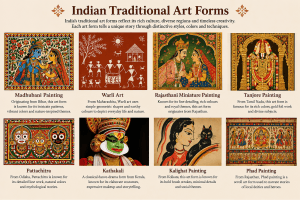
Online Marketplaces and New Business Opportunities
Thanks to online marketplaces, traditional artists can sell their works to a more extensive audience. The artists can address the customers from different regions via online marketplaces and independent sites offering to buy/sell commodities There is a high likelihood of enhancing the customer base and entering new markets by selling paintings, jewelry, home decoration, and other handcrafted items.
The artisans are no longer dependent on traditional ways of distribution, namely, local markets, to sell their products. Moreover, online marketplace enables the artists to directly contact the customers informing them of the cultural meaning and uniqueness of their works. However, the use of online marketplace involves such expenses as photographing items, packing, delivery, and customer service.Thus, artists need to consider these factors when selling their items online.
Digital Tools for Preserving Traditional Art
Modern technologies provide an opportunity to record and store traditional Indian art in different forms such as photographs, drawings, and online exhibitions. All of these techniques help to preserve the fragile pieces of art. Besides, museums, cultural centers, academic institutions, and artists can digitize collections of traditional motifs, methods, and history. Digital tools help document Indian traditional art forms and make their unique designs accessible to future generations. Thereby, online resources with Indian art collections allow artists, scholars, and art lovers to explore India’s unique culture and do in-depth research on traditional art and crafts.
Last but not least, artists can utilize digital design software to experiment with colors and shapes before creating the real picture or sculpture. However, it should be noted that digital technologies should be used to complete and develop conventional practices. The unique characteristics of traditional art will stay unique, and it is essential to remember that the uniqueness of each piece is in handmade items.Traditional Indian art in the digital age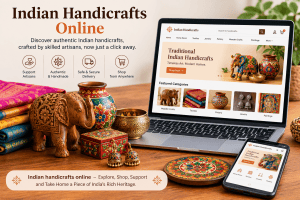
Online Education and Learning Opportunities
It is essential to educate people about Indian traditional art and introduce young people to this exciting experience. Educational institutions provide online courses and special sections with workshops on traditional motifs, methods, and techniques.
Indian traditional art and its characteristic features such as motifs, methods, and techniques can be learned online through video tutorials, forums, chats, and many other modern technologies. Therefore, online education is an effective way to educate people about India’s traditional art. Nevertheless, students who take online courses to learn to draw traditional Indian art should appreciate the educational value of traditional art and respect its history.
Artistic Practices in the Digital Age
Although technology provides traditional artists with many benefits, they may face several challenges in adopting it. First, artists may lack the skills and resources needed to use modern technologies. Second, Internet access may not be available or affordable for some traditional artisans. At the same time, Digital preservation of Indian art technical issues and misunderstandings of online sales mechanisms can limit artists’ opportunities to sell their products online. Finally, the issue of copyright violations is becoming increasingly relevant as artists’ digital content is shared without consent on different websites.
In addition, handmade items are underestimated from several points of view as well: considerable difference between the material’s quality and final cost is frequent, and cultural appropriation/misuse of traditional motifs, methods, and techniques is also widespread. Therefore, native artisans/artists should pay attention to these issues and raise awareness about the necessity of supporting their producers, valuing their traditional art, and respecting its cultural significance Traditional Indian art in the digital age.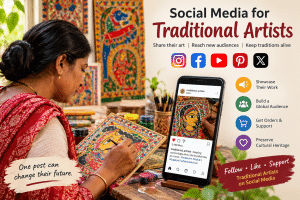
The Future of Traditional Indian Art in the Digital World
As long as its integrity is maintained, the future of traditional Indian art is promising. Its practitioners can take advantage of the opportunities created by the emerging technological trends to expand their customer base and at the same time, uphold the time-honored traditions.
The creative expressions such as artificial intelligence, the virtual exhibitions, and digital galleries might afford unprecedented opportunities to market the traditional arts to a greater extent and study them in greater detail Museums and related institutions might consider implementing the interactive approach to engage the audiences in an immersive experience that would enable the latter to obtain a deeper comprehension of the complex narratives of the respective heritages.
On the other hand, the digital transformation should be done with care, which would involve the principles of authenticity, ethics, and cultural sensitivity. Moreover, the artists should Digital preservation of Indian art protect their intellectual property and recognize the possibility that technology can amplify the value of their works Conclusion
Indian traditional art is on course to thrive in the new digital age. Social media is helping to increase the visibility of traditional handmade artists, online marketplaces are offering new business opportunities, digital tools are enabling digitization and online education is making it possible for people to learn traditional Indian art from the comfort of their homes. Traditional Indian art in the digital age.
Traditional Indian art and its cultural legacy can continue to thrive for centuries to come through digital means However, ethical issues, such as copyright infringement Social media for traditional artists, undercutting prices and a lack of digital literacy, must be addressed to ensure the survival of traditional Indian art in Digital preservation of Indian art the digital economy.By combining traditional knowledge with modern technology, Indian traditional art forms can reach new audiences and continue to thrive in the digital age. By combining traditional knowledge with modern technology, India has the opportunity to preserve its artistic legacy, introduce it to new audiences and ensure that traditional Digital preservation of Indian art Indian art is an important part of the country’s identity in the digital age.