Diwali Diyas: The Art of India’s Traditional Potters

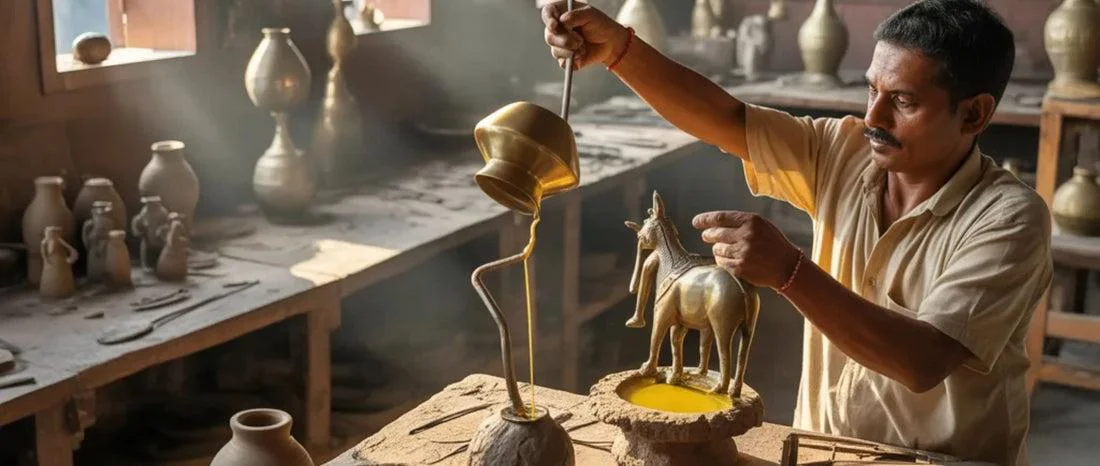
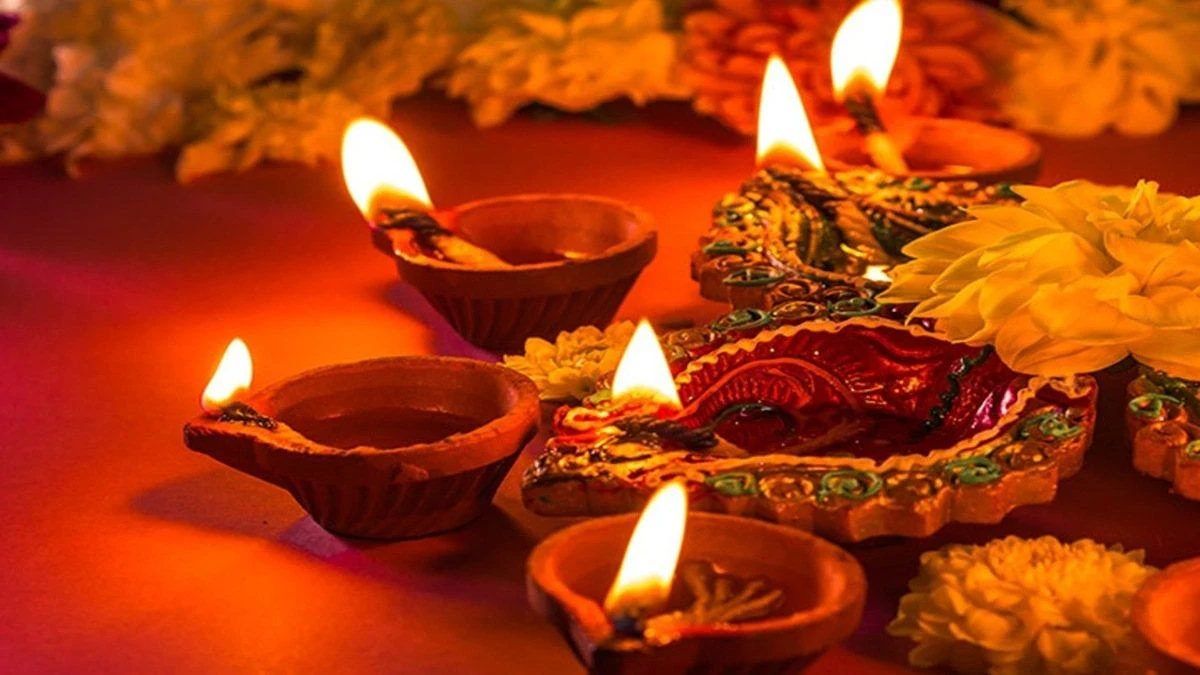
When the first little flames of Diwali appear at the windows of Indians, stories of families and their ancestors begin to live and continue their lives. Diwali diyas Made by hand, even the simplest Handmade Diwali decorations diyas are works of traditional art, each connecting the people who make them to their culture and heritage. The authors of these beautiful lamps are the potters, who devote their time and energy to mastering the art of Diya making process. The craft of making diyas seems to be surviving, Diya making process as it is being carried on from generation to generation despite the appearance of plastic or electric ones that are fun and bright. However, the artists strive to keep alive the Traditional clay diyas , Indian pottery art which has been a part of the country’s culture for centuries.
The Meaning and Importance of Diwali Diyas Essay
Diwali is a festival of lights, joy, sweets, family and friends. I remember evenings when my family would gather to decorate our home. Indian people prepare to celebrate Diwali by decorating their homes and streets with flickering lamps made of clay. Diwali diyas symbolize positivity, knowledge and prosperity.
While electrical illuminations cheer up the house a humble little diya will bring cosiness to every corner and warm every heart. I love how a single Diyali diyas can light up my room.. When growing up, children fondly remember evenings spent with their parents, who decorated the house for the festival. Elders narrate the Diwali nights of their childhood. All these rituals help Indian families to preserve the cultural significance of the festival in the memories of younger generations. Moreover, such family celebrations help to connect with potters’ skill and artistry, which are the basis of the Diyali diyas.
How Indian Potters Make Traditional Handmade Diwali decorations Diyas
The art of diya making is not as simple as it seems. While a naive craftsman may Diya making process that does not hold any oil, a real master will produce a lamp, which will keep burning for hours after being lit. Let’s see what the potters do with a lump of clay to make a shape worthy of a festival.
1. The choice of clay
The process begins with the selection of the appropriate materials
First I mix the mixture with water until it becomes plastic-like.
I must prepare the material carefully because the lamp lamp will look different at the end.
2. Forming the diya by hand or wheel
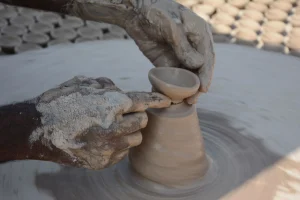
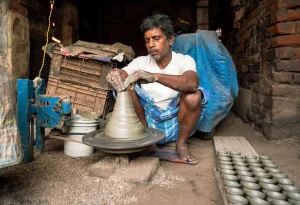
The next step is to shape the clay into a Diya making process. Some craftsmen form the lamps by hand, while others use a potter’s wheel or special tools to make more lamps at once. The master forms the body of the lamp and the small projection, where a cotton wick will be fixed in a later step.
It is important that the Handmade Diwali decorations diya received enough plasticity during the forming process. The walls of the vessel should neither be too thick nor too thin – the first case may cause the lamp to be too heavy, and the second – to break during the subsequent stages.
Experienced potters always do small adjustments by hand, even if they seem insignificant.
3. Drying.
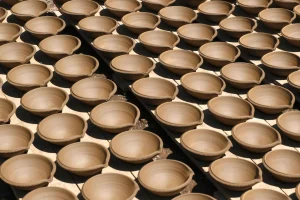
Potters then leave the lamps to dry. This process can take days, depending on the humidity and size of the diyas. It is crucial not to rush the process, as the premature firing of the lamp may lead to cracks and breakage.
Therefore, when the time for Diwali approaches, the craftsmen must have a sufficient stock of lamps in order to meet the high demand.
4. Kilning.
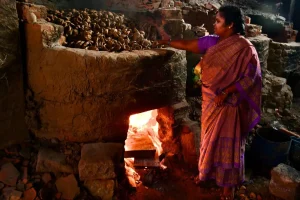
Once the lamp is properly dried, it is fired in a furnace to make it more durable This step too is of great importance, as the consistency and temperature of the flame have a direct impact on the final texture and quality of the diya.
5. Decorating and finishing.
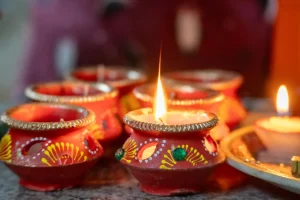
Lamps are usually left in their natural state. However, some potters devote more time and effort to creating intricate patterns, painting festive pictures and figures or carving beautiful reliefs for the lamps.
Thus, Indian potters not only preserve the traditional Indian pottery art of making clay lamps but also continue to develop and improve it.
The Masters Behind India’s Treasures of Pottery
The Indian pottery art is diverse and intriguing with dozens of unique schools that differ in materials, methods, and ornaments. Indian potters have been creating stunning sculptures and vessels made of clay for centuries.
In Kolkata, there is a whole village of sculptors and potters, Kumartuli, who specialize in making idols and other figures made of clay. Indian clays and the skills of local craftsmen create unique souvenirs and festive decorations, which are loved by locals and tourists.
While potters in other towns and villages specialize in making plates, Diyali diyas , bowls and other household goods, for the Diwali festival, they devote more time and effort to creating unique lamps of various shapes and sizes. Moreover, for many craftsmen, the production of Diya making process is seasonal.
The week or two before Diwali is when most of the artisans’ work takes place. While some dedicate themselves to the painstaking process of making lamps, other family members help out in the workshop or prepare the market stall.
How Indian Potters Make Traditional Diwali Diyas
Despite the rich history of Indian pottery, many craftsmen face the serious problem of finding customers and making a living In this regard, any help in promoting and supporting the Indian pottery art of Indian clays is significant.
Some of the problems facing Indian potters in the modern world include:
– Competition with industrial manufacturers of electric and plastic lights.
– Increasing costs of raw materials and production.
– Lack of interest among the youth in the art of pottery and the associated difficulties in finding successors.
– The narrow range of potential customers.
It is estimated that the demand for Handmade Diwali decorations diyas decreases by year as more and more people prefer to buy electric or plastic lights for Diwali. Moreover, the growing popularity of plastic and electric decorations puts Indian potters in a difficult position, as their products are much more expensive and more difficult to make. While machines help craftsmen to mass-produce lamps, Diya making process of plastic or metal are much lighter and do not require any special skills to care for them.
Another challenge for Indian potters is the increasing cost of raw materials and production in general. While craftsmen are forced to raise prices for their products, the potential customer base is shrinking, which significantly complicates the search for new clients. At the same time, the costs of storing unsold goods are also a burden for potteries, especially at the end of the Diwali season, when there may be a surplus of inventory.
The problem of potential customers is also due to the fact that many people only buy lamps for Diwali and do not want to invest in high-quality handmade products. For many people, the price is of great importance, as well as the ability to return the goods or exchange it for a cheaper one. The wide availability of cheap plastic and electric lamps is also a major problem for Indian potters.
Finally, the lack of interest in the Indian pottery art of pottery among young people is an inevitable consequence of the overall decline in the demand for handmade lamps. The painstaking process of making clay lamps and the associated risks are no longer of interest to the youth, who prefer more profitable and less physically demanding ways of earning money. Fortunately, the situation is gradually changing for the better, as more and more young people are beginning to understand the importance of preserving the cultural heritage of India.
Buying Handmade Diwali diyas: Why it Matters
Purchasing a Handmade Diwali decorations diya is a great way not only to decorate your home in preparation for the
Finding Customers for Handmade Diwali Diyas
festival but also to contribute to the preservation of India’s rich cultural heritage. Below are a few tips on how you can support Indian potters:
1.Buy Diwali Diyas from Local Artisans
if you are given an opportunity to choose the craftsman, whose product you will buy, try to select a small business. Moreover, it will be a cool experience to see how the lamps are made and maybe even choose a Diyali diyas on the spot.
2. Buy only what you need:
it is normal to want to buy several lamps or decorate all the rooms in your house with Traditional clay diyas. However, before making a purchase, it is important to remember that every extra lamp means an additional burden for the craftsmen and a waste of resources.
3. Finding Customers for Handmade Diwali Diyas
you can help Indian potters both by buying their products and by promoting their products on your social media. A photo of a handmade lamp and a few words about it will help potters find new customers and spread their reputation.
4. Explore Different Diwali diyas Designs
lamps made of natural clay and decorative paint are both interesting and unique. You can choose one of the options that best suits your taste and decoration style.
5. Learn who made the product:
it is always useful to know who exactly made a product, which you are going to buy. It could be helpful for you to share the information about a craftsman and let other people know about the existence of Indian potters on the market.
Thus, buying a handmade lamp is a great way to support India’s traditional crafts. Indian potters will be happy to know that there are still people, who appreciate their hard work and dedication to their craft.
6. Choosing the Right Clay for Diwali Diyas
However, the process of making lamps, their transportation, storage, use, and disposal determine if they will be entirely harmless or not.
That is why it is critical to treat Traditional clay diyas with care and dispose of them correctly. Thus, if the clay lamps are not decorated with any paint, they can be reused in a case of necessity. However, it is essential to remember that the presence of any varnishes, paint, or other materials can make them unusable.
When using clay lamps, it is vital to follow all the safety rules since Traditional clay diyas can be a source of fire hazard. Therefore, it is crucial always to place a burning lamp on a non-combustible surface and keep it away from flammable objects.
Keeping Cultural Heritage Alive Is Dependent on You
Indian cultural heritage is one of the richest and most valuable in the world. Traditional crafts play a huge role in it, as they are passed down through generations and usually represent a significant part of a nation’s identity. Indian potters have developed their skills in crafting clay into lamps and still continue with it despite all the challenges in the modern world.
The mastery and skill of Indian pottery have created an art piece that is full of history and splendor. All the intricate designs and vivid colors of the Handmade Diwali decorations diyas speak of the expertise of the potters in their works. Indian potters are always innovating and mastering new techniques so that they can create their unique and extraordinary lamps. Thus, Diya making process for Diwali diyas is not just a hobby for craftsmen – it is a way to express artistry, dedication, and passion.
The Diwali festival is a great opportunity not only to honor India’s rich cultural heritage but also to revive interest in traditional crafts, such as pottery. Buying handmade lamps from Indian potters is an investment in preserving the country’s traditional craft. Just one clay lamp can be transformed into a masterpiece by an experienced and innovative potter.
This Diwali, you can buy some handmade lamps and Diwali diyas from these talented local artisans to decorate your home with their radiance and coziness. While admiring the Traditional clay diyas glow on the night of Diwali, remember those behind the artistry and dedication to keeping the cultural legacy of India alive.