
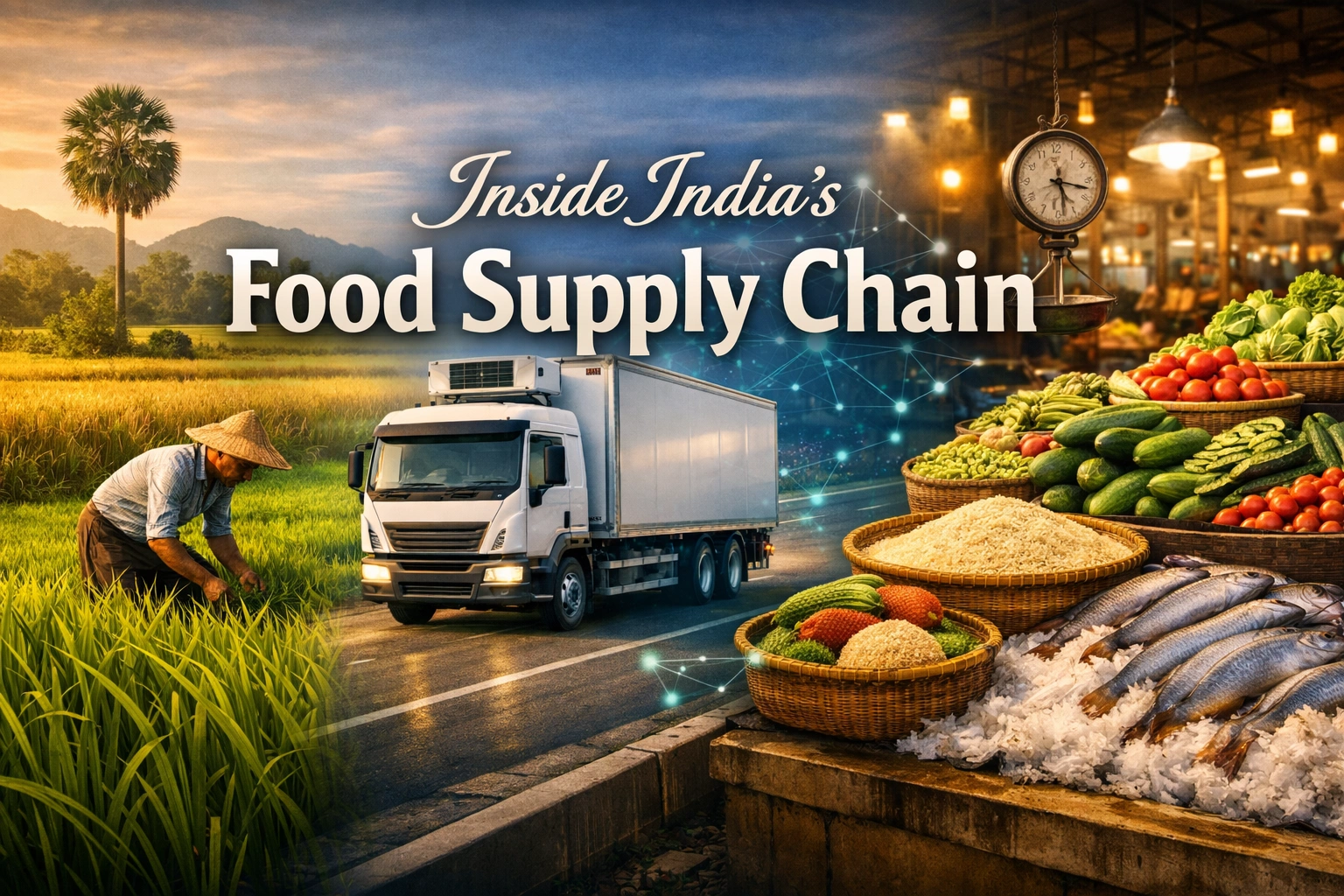
Inside India’s Complex Food Supply Chain System

India’s food chain is one of the largest and most complicated chains globally. This complex network ensures that food from farmers, traders, transporters, and other government bodies goes straight to the consumers’ plates throughout the nation. In West Bengal, which is predominantly an agrarian state, the importance of the food supply chain is much more prominent. Rice from Burdwan, vegetables from Hooghly, and seafood from Kolkata together make up the chain that maintains their daily activities. Food department and food supply departments work toward achieving a balance between the production and consumption of food and ensuring food security of the weak sections of society. Knowledge of this agrarian chain is useful to students, professionals, and marketing experts.
The Foundation of India’s Food Supply System
The backbone of the food supply in India comprises its farmers. Farmers in India do not merely farm; rather, farming is part of their daily routine. The predominance of small and marginal farmers in West Bengal is characterized by farming of rice, jute, vegetables, and fruits. At this initial stage, the produce serves as the raw material. From the farms, produce makes its way to mandis and other purchasing centers where traders buy them. Food is then transported to urban centres.The role played by transportation cannot be overlooked.
Major Phases in the Food Chain
In order to function efficiently, the food chain process requires proper coordination among the authorities, private organizations, and local communities. The farmers require procurement centers to offer them good prices whereas consumers need ration stores and retail outlets. It is the responsibility of transporters, warehouses, and wholesalers to play the role of connectors in this process.
Farm to Market: Agricultural Supply Chain
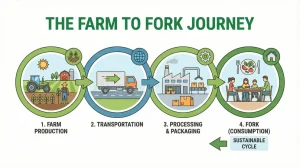
Agricultural supply chains act as the driving force behind the food economy of India. The process starts with procurement, where institutions such as the Food Corporation of India (FCI) and state authorities acquire food items including rice and wheat. Procurement of rice in West Bengal is essential for ensuring food security in the region by ensuring its continuous availability in ration shops and government programs.
 Source: dreamstime.com
Storage and Warehousing: Food Department’s Role
After acquiring the grains, they must be stored properly. This task is overseen by the food department, which operates warehouses and silos all over the nation. Cold storages play an especially crucial role in the case of West Bengal when it comes to storing vegetables and fish, which form an integral part of their diet.
Distribution Networks: Food Supply Department
The department of food supply manages the Public Distribution System (PDS). Through PDS, subsidized grains are supplied to millions of consumers. The ration shops in Kolkata, Howrah, and other rural areas supply rice, wheat, and sugar at controlled rates. This mechanism provides hope for poor people by providing them with necessities of life without any scarcity.

Problems Faced by India’s Food Supply Chain
India’s food supply chain, despite being massive, still faces a number of problems. Infrastructure deficiency has emerged as one of the biggest problems. Due to lack of proper road connectivity and lack of effective cold storage facilities, there is considerable wastage of fruits and vegetables. Researchers have found that up to 30% of perishable produce goes waste.
Specialized Concepts in Food Supply and Distribution
In addition to technology and policy changes, collaboration among stakeholder entities is rapidly becoming another important facilitator for change within the Indian food supply network. Cooperation among farmers’ cooperatives, private logistics firms, and even governmental organizations is increasing as these groups seek to streamline procurement and distribution processes. Aside from improving the efficiency of the process, collaboration makes the whole operation resistant to any potential disruptions, such as flooding, or any changes on the demand side of the equation. Within the West Bengal region, there are some pilot programs which directly connect local farmers to urban retailers, thus eliminating middlemen from the supply chain.
Digital Transformation in Food Supply
India’s food supply chain is undergoing changes due to technology. Farmers now connect directly to consumers through mobile and web applications. The use of digital ration cards in West Bengal has made the food department more transparent, where people can check their entitlements as well as make complaints about any anomalies. Blockchain is another technology that we can consider for food tracking.

Innovations in the Agricultural Supply Chain
Logistic innovations have revolutionized the agricultural supply chain by making food products reach the market in better condition and in less time than before through cold chains, smart warehousing, and GPS-driven trucks. Modern fish markets in Kolkata are using cold chain facilities and sanitary methods in response to rising city demand.
Food Security Policies
The food security department is greatly influenced by government policies. The NFSA makes sure that subsidized grains are provided to millions of households. In West Bengal, the NFSA acts for the welfare of poor communities, providing them with food despite economic struggles. This demonstrates the importance of government involvement in food security policies.
Conclusion: Significance of the Food Chain in India
Food distribution in India plays an important role in connecting farmers to consumers throughout the country. The food chain in West Bengal demonstrates the delicate interplay between the countryside’s productivity and urban consumption needs as vital food sources such as rice, vegetables, and fish find their way into household kitchens each day. Thanks to the work of the food department and the food supply department, the food chain ensures food security, while at the same time, modern technology reduces wastage and improves efficiency. Building a resilient food chain is about more than simply meeting today’s basic requirements; it is about preparing for the future.


