How to Get Early Retirement: A Woman’s Guide to Financial Freedom

Introduction
A few years ago, “early retirement” sounded like something only tech founders in California talked about. Not anymore. Scroll through any personal finance group on Instagram or Telegram today, and you’ll find Indian women in their late twenties and thirties asking the exact same thing: what would it actually take to retire early and make work optional instead of mandatory?Somewhere in that conversation, you’ll also hear the word FIRE come up a lot — because for a growing number of women, financial independence isn’t just a nice idea anymore, it’s the actual goal. Once, asking had felt like an indulgence. Now it’s just another Tuesday talk.
You Don’t Need to Have It All Figured Out
Here’s the reassuring part — you don’t need a six-figure salary or a finance degree to figure this out.
Honestly, you don’t even need to have it all figured out today. You need a plan, a little patience and the guts to start before you’re ready.
 Image Source: Your Story
This means that you’ve saved enough that your bills aren’t dependent on a paycheck. For most people, that happens somewhere between 10 and 20 years ahead of the usual retirement age of 60 — sooner if you’re aggressive about it. later if life gets in the way (and it usually does, at least a little).
Getting there really comes down to three things. You need a rough sense of what your future expenses will look like. This is the math at the heart of the FIRE approach: a rough sense of your future expenses, investments that actually grow your money instead of just parking it somewhere “safe.” And you need more than one income stream, so you’re not betting your entire future on one job staying secure.
Think of it as a more demanding cousin of regular saving. Most people chasing this goal put away somewhere between 40-60% of their income, and they lean hard into equity and mutual funds instead of fixed deposits, because fixed deposits simply don’t grow fast enough to get you there. Compounding rewards time far more than it rewards timing — which is why someone who starts at 25 has a genuine edge over someone who starts at 35, even if the person starting later is putting away more money each month.
Why This Looks Different for Women
 Image Source: Viveura
Retirement planning isn’t gender-neutral, even if the spreadsheets pretend it is. Career breaks for childbirth or caregiving, the gender pay gap, and simply living longer mean women often need a bigger retirement fund than men — while having fewer working years to build it.
A few things worth sitting with:
- You’ll likely live longer. Women tend to outlive men by 3-5 years, so your money needs to stretch across more years, not fewer.
- Career breaks add up. A two-year pause for maternity or eldercare doesn’t just cost two years of salary — it costs two years of compounding you don’t get back.
- The equity gap is real. Survey after survey shows women invest more conservatively than men, which quietly costs them long-term returns.
- Your own fund matters, married or not. Financial independence isn’t just about being single and self-reliant — it’s about not being financially stuck in any situation, good or bad.
None of this is meant to discourage you. If anything, it means your FIRE plan needs to account for these gaps from day one, instead of assuming your numbers will look like anyone else’s.
Five Steps to Actually Get Early Retirement
1. Figure out your number. Before you do anything else, work out how much you actually need. A rough starting point is the 25x rule: take your annual expenses and multiply by 25. That’s a reasonable estimate of the corpus you’re aiming for.
2. Cut the spending that isn’t adding value. This doesn’t mean giving up your coffee. It means going through your expenses honestly, noticing where lifestyle creep has crept in, and redirecting that money into investments instead.
3. Use tax-efficient options first. PPF, NPS, and ELSS mutual funds do double duty — they save you tax now and build wealth steadily over the years.
4. Don’t put all your money in one basket. Spread it across equity mutual funds, index funds, maybe some real estate, and a chunk of fixed income. Diversification won’t make you rich overnight, but it protects you from a single bad bet.
5. Automate it. Set up SIPs so the investing happens whether or not you’re feeling disciplined that month. Willpower is unreliable; automation isn’t.
None of these steps are dramatic on their own. What moves the needle is doing all five, consistently, for 15-20 years — which is really just the FIRE method applied with patience.
Stop Guessing — Use a Retirement Corpus Calculator
Here’s a mistake a lot of people make: they estimate their retirement number instead of calculating it. A retirement corpus calculator fixes that, and it’s one of the first tools most people use once they start taking FIRE seriously. Feed in your current age, the age you want to retire, your monthly expenses, expected inflation, and expected returns — and it gives you an actual figure to work toward.
What makes it genuinely useful:
- It replaces vague guesses with a number tied to your real life.
- It factors in inflation, which quietly eats into your money’s value every year.
- It tells you exactly how much you need to invest monthly to hit your target.
- It lets you compare scenarios — retiring at 45 versus 50 — so you can see what each choice actually costs you.
Most Indian banks and mutual fund platforms offer this free online. Ten minutes with one will probably tell you more than months of worrying about it in the back of your mind.
The FIRE Movement Is Growing in India — And Women Are Part of It
 Image Source: Quorum Federal Credit Union
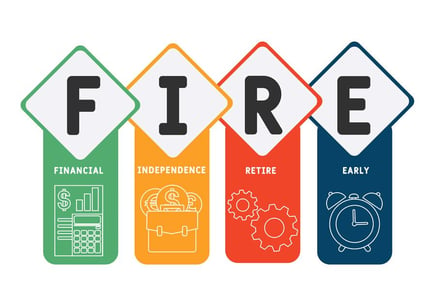
FIRE — Financial Independence, Retire Early — used to be a niche internet subculture. It’s now a real, growing conversation among urban professionals in India, and increasingly among women in metro cities.
What draws women to it isn’t just the money — it’s the control it hands back. Financial independence means being able to leave a workplace that isn’t working for you, take a career break without panicking about bills, or chase a passion project without your bank balance vetoing the idea.
The Different Flavors of FIRE: Lean, Fat, and Coast
Not everyone pursuing financial independence through FIRE wants the same life on the other side of it, which is why the movement has split into a few paths:
- Lean FIRE — a smaller corpus around a simpler, more minimal lifestyle. Good for those who are OK with cutting costs forever for the chance to get there sooner.
- Fat FIRE – a larger pool of resources, allowing for a more comfortable, less constrained life. It takes longer to build, but it gives you more breathing room.
- Coast FIRE- Save hard early on, then back off when your existing investments are on course to grow into your target corpus on their own. You can work at a lower stress level, take a job you actually like, or slow down without screwing your future.
Whether you’re into FIRE in one flavour or another, the heart of the matter is the same: save with intention, invest with patience and give your future self choices.
Is FIRE Right for You?
FIRE is not a one-size-fits-all and it’s worth being honest with yourself before committing to it. This is for those who care about time and flexibility more than constant lifestyle upgrades, who are willing to squirrel away a large portion of their income and want financial independence for years and don’t mind watching numbers as a plan unfolds.
If you feel like you’re being penalised for every rupee you spend, or if chasing a number becomes more important than living your life along the way, it’s not the right fit. The healthiest version of FIRE isn’t about deprivation, it’s about choosing where your money goes on purpose instead of by default.
Mistakes That Quietly Derail People
- Underestimating healthcare costs later in life.
- Forgetting that inflation will make today’s numbers look small in 20 years.
- Playing it too safe with investments early on, when you can actually afford some risk.
- Skipping an emergency fund, which means any crisis forces you to raid your retirement savings.
- Waiting to start. Even a five-year delay can significantly raise how much you need to save each month to catch up.
The Bottom Line
This isn’t about extreme sacrifice or living on rice and dal for a decade. It’s about making intentional choices and sticking with them long enough for compounding to do its work. Whether you’re just starting out or already a few years into your career, a clear plan gives you direction, a good calculator gives you a number to aim for, and a community of people doing the same thing keeps you honest on the days motivation runs low.
Start with whatever you can today — even if it’s small. Time will do more of the heavy lifting than you’d expect.