Kantha Embroidery: The Traditional Craft of Bengal

 Kantha embroidery is a magical way to tell a story with fabric. With the right skills you can create beautiful artwork with old cotton sarees, old dhotis and any old fabrics. Kantha embroidery is one of the most cherished traditional crafts from Bengal!
Kantha embroidery is a traditional art that uses delicate stitching to create beautiful and meaningful artwork. Originally a recycling craft, it is now a treasured form of art loved by many designers, fabric and fashion lovers.
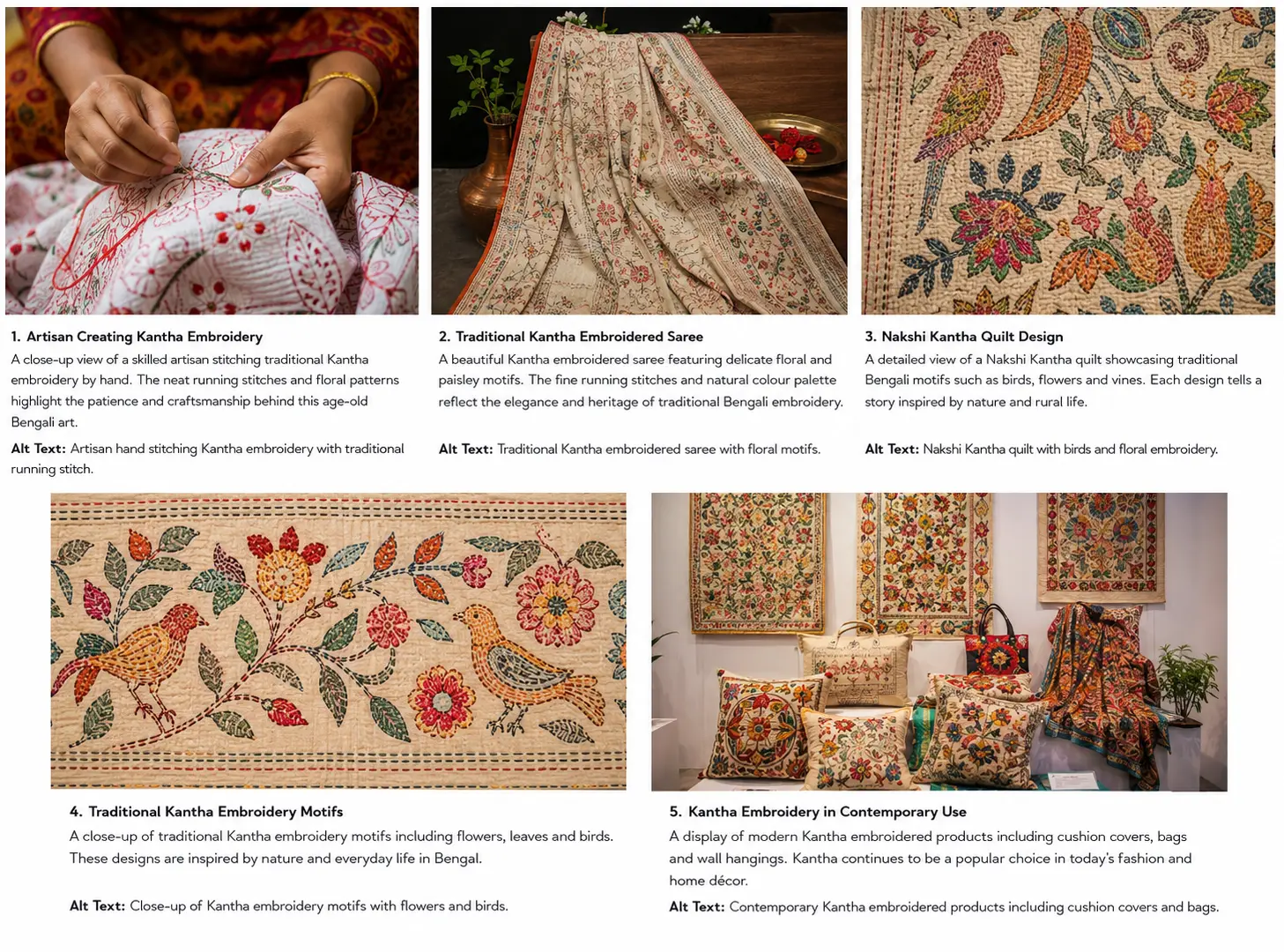
Kantha can now be found in many forms such as sarees, dupattas, dresses, jackets, cushion covers and wall art. It can be seen in many modern designer collections. Due to it being a simple and handmade craft you can really connect with the culture of Bengal.
History And Origins Of Kantha Embroidery :
Kantha originated from the villages of Bengal. The ladies would often get creative and sew many layers of old cotton sarees and dhoties together with running stitches to create soft quilts.
This would then be known as a Nakshi Kantha. Nakshi means pattern and Kantha means traditional quilting.
Interestingly it wasn’t used in high fashion but was just a way for the women to express their creativity.
They would often use their spare time to create beautiful little quilts with small patterns. Small flowers from their courtyard, fish from ponds, birds, trees, scenes from around their homes and religious symbols would often be included.
The mothers and grandmothers would pass on the knowledge to their daughters. Each family and artisan will have individual designs.
What Makes Kantha Embroidery Unique
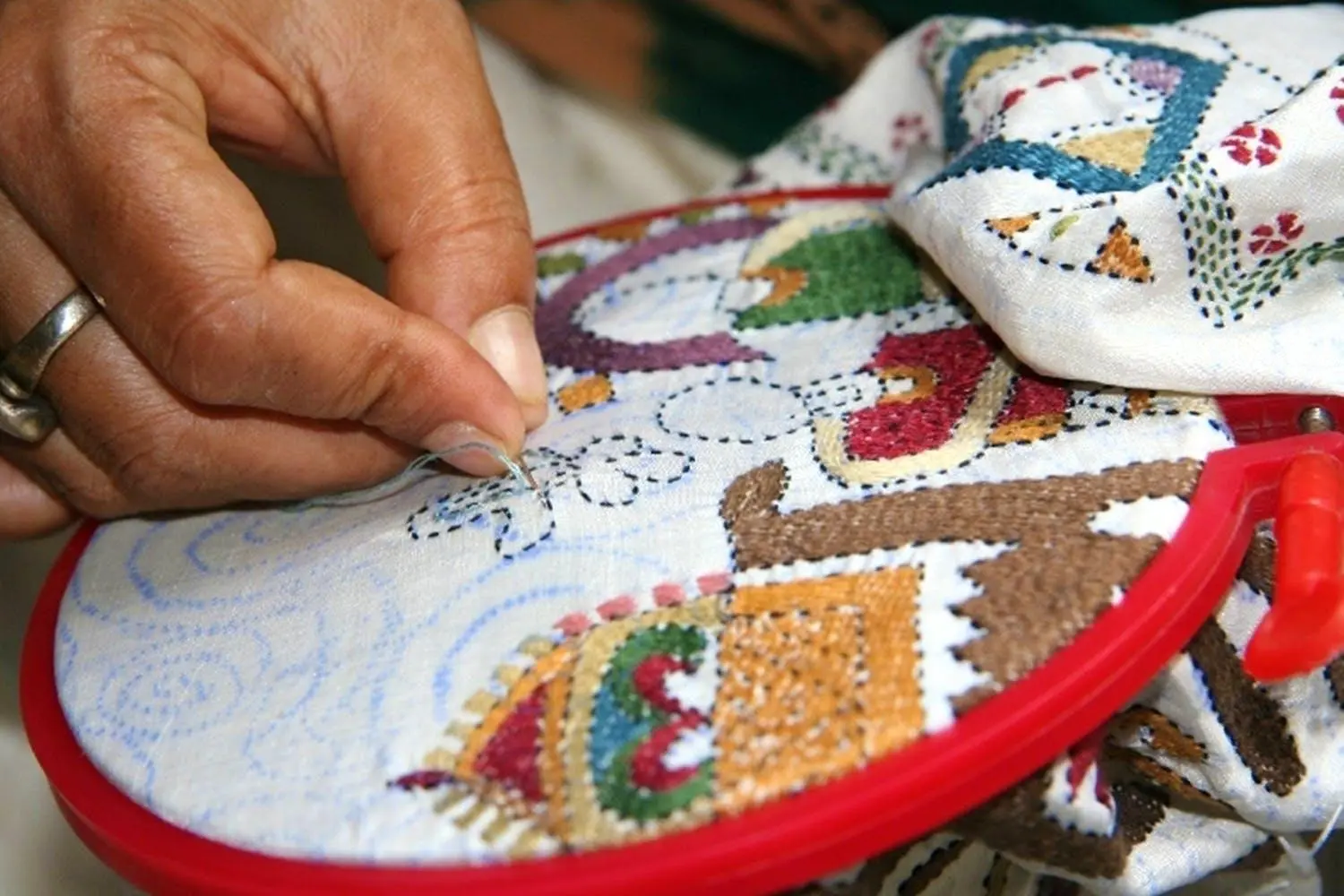
One unique thing about a Kantha is that it uses running stitches. Embroidery can often have intricate designs, however with a Kantha the small stitches are used in straight lines to produce beautiful patterns.
Whilst this may seem simple it requires a lot of patience and focus to create. The needle is carefully guided through the fabric to create beautiful patterns.
The fabric can often be quite textured and quilted.
Another unique thing about Kantha is that often the patterns aren’t drawn onto the fabric. Many artisans use their knowledge, creativity and understanding of traditional patterns to create their patterns.
This means that every piece will have character. Even if two artisans create similar patterns there often won’t be any similarities.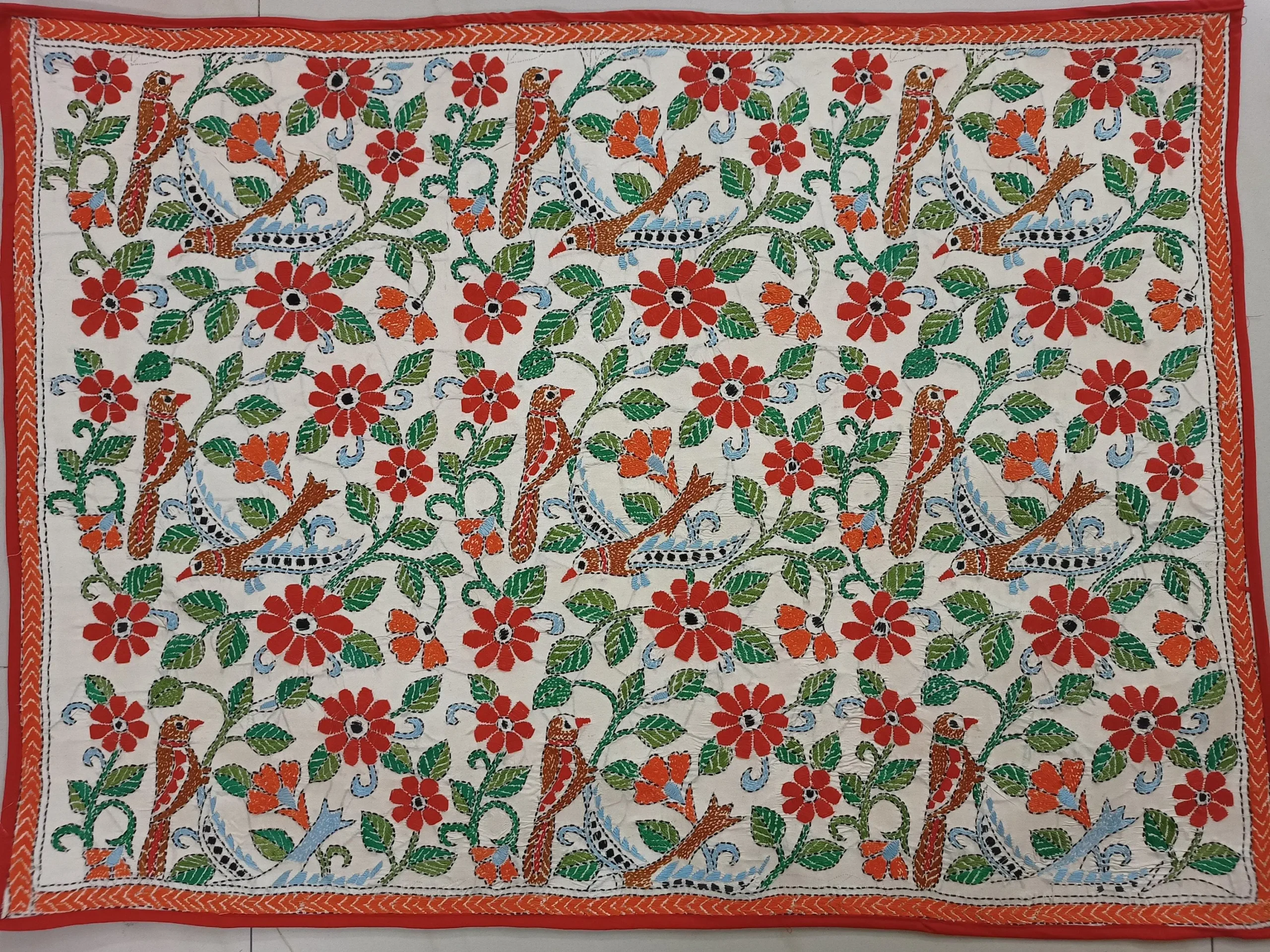
Common Designs and Patterns In Bengali Kantha
One of the interesting aspects of Kantha is that it has a story to tell. Many traditional patterns are taken from nature and village life as well as folklore and religion.
Common patterns include;
Lotus Flowers – Often represent beauty, purity and religion.
Animals and Birds – Represent nature.
Fish – Inspired by rivers, ponds and fishing.
Trees and Plants – Nature inspired.
Geometric – Create beautiful borders.
Human Figures and Scenarios – Shows village life.
A beautiful art craft that creates a piece of art using the fabric. The fabric will represent memories, beliefs and everyday life.
The Traditional Kantha Stitch: A Beautiful Art Of Patience
The Running Stitch:
The simplest stitch and most traditional stitch used in Kantha. The needle goes into and out of the fabric.
Multiple layers of fabric can be sewn together to create a firm and secure item. Beautiful textures and patterns can be created.
Depending on the design being created different stitches can be used. Such as outlines, borders, flowers and decorative surfaces.
Traditionally cotton thread was used from old sarees however now artists will use different colours.
This is a charming stitch as it is imperfect. There are many small differences and really represents the artisan.
Kantha Embroidery and Sustainable Culture In Bengal
Many years before sustainability and upcycling became popular, rural women in Bengal were practicing sustainable methods.
Kantha embroidery is a great example of traditional communities knowing how to make the most out of their resources. Old sarees and dhotis were brought back to life by layering the fabric and sewing thousands of running stitches to create quilts, blankets and other useful household items.
This traditional craft is now a way to incorporate sustainable clothing into the modern fashion industry.
Modern designers and crafting groups are looking to bring old textiles back to life using Kantha embroidery. Not only bringing traditional patterns to life but keeping the original philosophy.
The 2026 exhibition Threads that Bind: The Kantha Project by designer Amit Vijaya shows the philosophy behind the project. The textiles were brought back to life by creating new items such as jackets, home décor and textile art. This shows there are endless possibilities to create new things from an old craft.
Kantha Embroidery In Modern India
Kantha embroidery is now a big part of modern Indian fashion.
Traditional Bengali embroidery can be found on:
Kantha Sarees & Blouses
Kantha Embroidery Dupattas & Stoles
Kurta’s & Ethnic Wear
Jackets & Fusion Wear
Handbags & Textile Accessories
Cushion Covers & Bedspreads
Wall Art & Textiles
Kantha Sarees have become very popular with people who love minimal and handmade items. The intricate stitching creates a unique look.
Designers have created many variations of colour palettes, materials and placement of traditional patterns meaning Kantha has become very popular with younger people.
It is important to know the difference between traditional and modern Kantha. Traditional Kantha focused on sustainable and upcycled items. Most modern Kantha items are made with new materials.
Both can be very beautiful but knowing the difference helps us to appreciate the craft.
Artisans Helping Keep Kantha Alive In Bengal
Beautiful Kantha items have been created by talented and patient artisans. Rural women have helped keep this traditional craft alive.
Many women in rural Bengal now have an income.
Tripti Mukherjee is a famous Kantha stitch artisan from West Bengal. She has over 37 years experience as an artisan and has devoted much of her life to promoting Kantha and helping to empower women through training.
She has set up a training centre in Suri to teach women Kantha embroidery. She has created beautiful items such as sarees, wall hangings, bed sheets, stoles and dupattas.
Her contribution to Indian traditional handicrafts has been recognised nationally. In May 2026 it was announced she will be awarded with a Padma Shri. This will be awarded on the 25 th May 2026. (The Economic Times May 2026)
Stories like Tripti’s help to show how important it is to keep traditional crafts alive. Without these amazing artisans there wouldn’t be that personal touch.
Why Kantha Embroidery Is Relevant
In today’s society everything is mass produced and made with machines. Nothing can beat something handmade! It adds a personal touch, cultural feel and connection.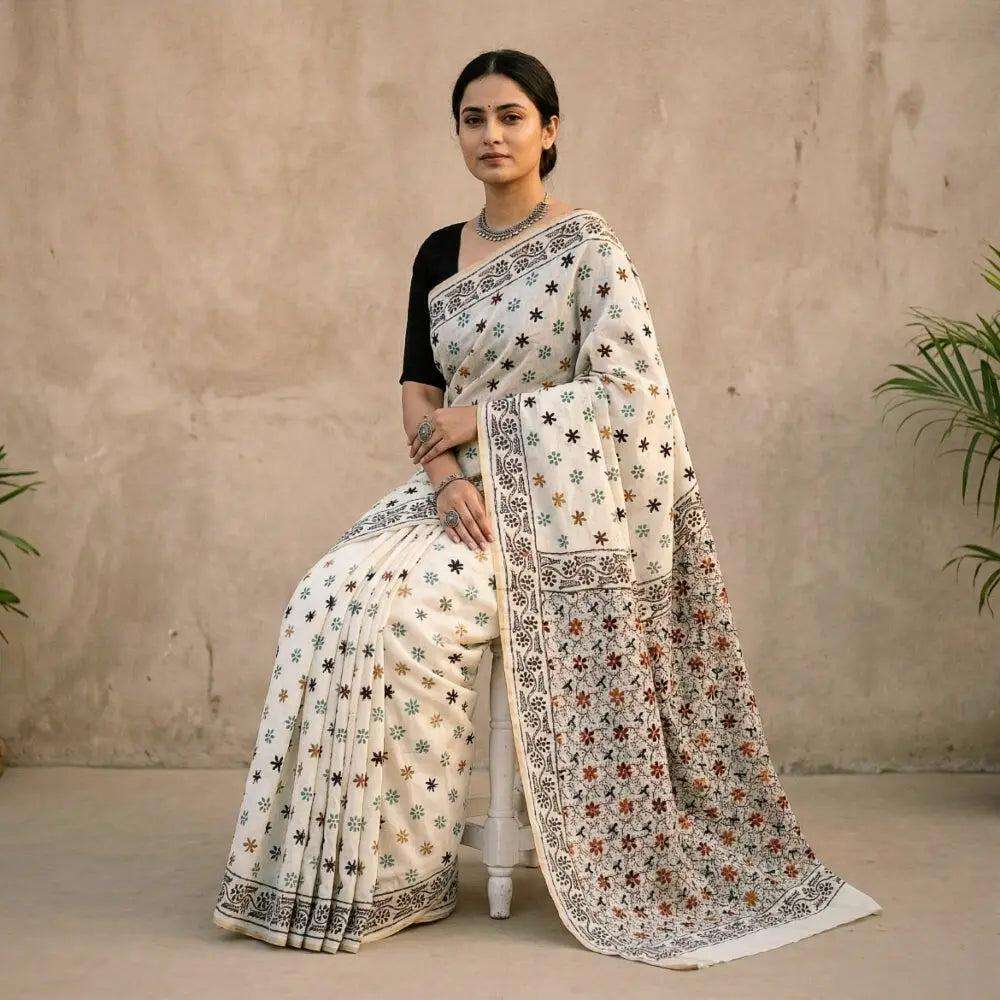
Kantha embroidery is relevant because:
-
Connection To Bengal Culture
Each piece of traditional Kantha is reflective of the culture, way of life and creativity of the rural Bengali.
-
Handmade
Each piece takes time, patience and experience to create the detailed stitching and amazing designs.
-
Eco-friendly
Teaches a great lesson in sustainability by producing new pieces of usable fabric from old.
-
Income To Rural Women
Women can gain valuable skills through training, creating and selling Kantha items.
-
Part Of Modern Fashion
Kantha has transformed throughout the years from traditional garments into modern fashion.
Styling Kantha
There are many ways to style Kantha. It can easily be worn everyday by styling with a plain blouse, Kantha saree and traditional jewellery to create an elegant ethnic look. Or can be styled with a Kurta with Kantha embroidery and cotton trousers to create a more casual style.
Using a coloured dupatta will add some character to your plain salwar suit. If you prefer minimal pieces, then using handbags, stoles and embroidered accessories will add some Bengali style.
Kantha cushion covers, quilts and wall art will bring some stylish and warm touch to your home.
Do not wear too much to show off the embroidery.
Keeping Kantha Alive
We must appreciate the skill of Kantha embroidery. We can respect the traditional techniques and give sustainable opportunities to the communities. Exhibitions, artisan run projects and modern partnerships are helping to promote Kantha. Purchasing real handmade items, knowing where they came from and really appreciating the amount of time and effort that went into them will help.
It is important to make sure the artisans are appreciated and given fair reward so this traditional craft can really be kept alive.
Kantha reminds us that even the simplest of items can be beautiful. All you need is an old piece of fabric, some needle, thread and a creative mind!
Conclusion
Kantha embroidery isn’t just a traditional craft from Bengal but shows how creative, innovative and unique this area is. This beautiful craft has come a long way from simple quilts made from old sarees and dhotis to being used by designers.
The beautiful running stitches tell a story and the sustainable aspect can teach us some great lessons. Every piece of Kantha has been created with lots of effort and creativity.
As more people are becoming interested in sustainable and handmade fashion Kantha embroidery should be celebrated as a true tradition from Bengal.