Rajasthan’s Cultural Legacy: Ghoomar, Folk Songs & Timeless Traditions

Rajasthan Overview: Walk through any village in during wedding season and you’ll understand something no textbook can really teach you. This isn’t a state that performs its culture for tourists with Ghoomar Dance. It lives it. The forts are old, sure, but it’s the everyday stuff — a grandmother humming a tune while grinding spices, a group of women twirling in unison at a Teej celebration — that tells you how deep this goes. With World Music Day putting a fresh spotlight on folk traditions from around the globe, it feels like the right moment to talk about what makes Rajasthani culture so hard to imitate, and so easy to lose if nobody’s paying attention.
What Actually Shapes Rajasthan Cultures
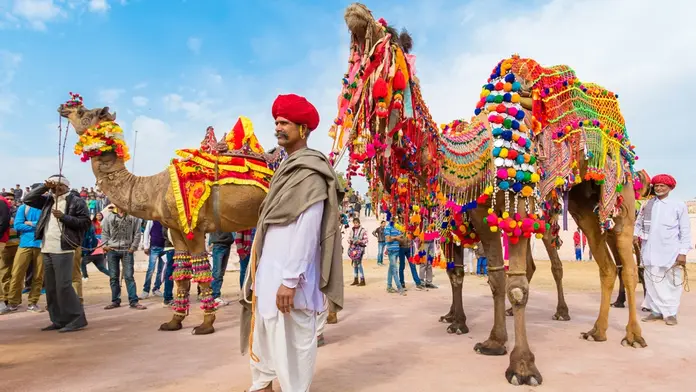
Image Source : Rajasthan Tourism
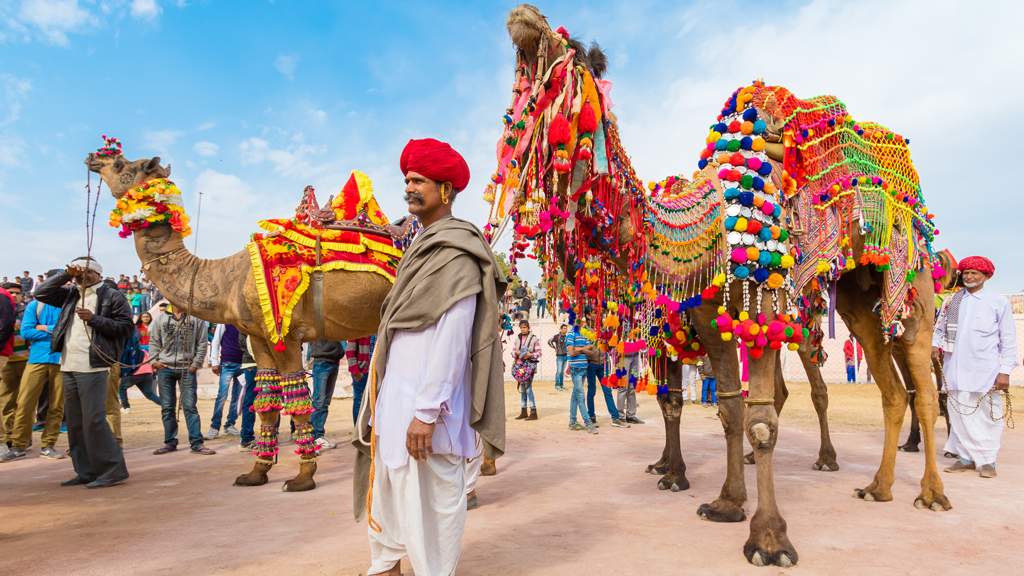
There’s no single origin story here. Rajput royal courts, desert-dwelling nomads, tribal groups like the Bhils, and centuries of caravan trade toward Central Asia and the Middle East all left their mark. That’s why the culture feels layered instead of uniform — you’ll find delicate miniature paintings from royal ateliers sitting comfortably alongside oral stories passed down by tribal elders who never wrote a word of it down.
What’s held it together, honestly, is stubbornness — in the best sense. Families still mark weddings, harvests, and festivals like Gangaur the way their grandparents did. Nobody needed a museum or a government program to keep these rituals alive; they just kept doing them, generation after generation, mostly because that’s simply what you do.
Ghoomar: The Dance Everyone Recognizes, Even If They Don’t Know Its Name and its a part of Rajasthan culture
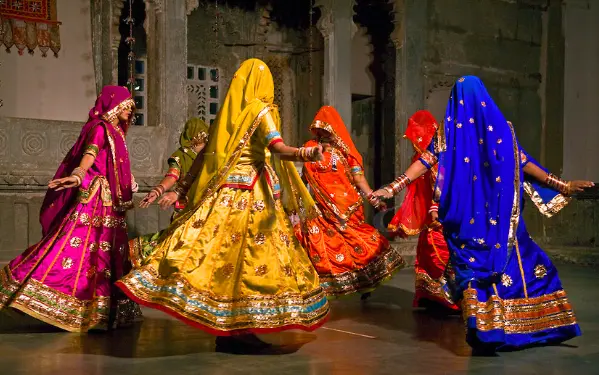
Image Source : Pinterest
Ask someone outside Rajasthan to picture the state, and there’s a decent chance they’ll picture Ghoomar without even realizing it — women in flowing, pleated ghagras, spinning until the skirts open up like blooming flowers. The name comes from “ghoomna,” to twirl, which is about as literal a name as a dance can get.
Here’s the part that surprises people: Ghoomar didn’t start in royal courts. It began with the Bhil tribal community and was later folded into Rajput celebrations, where it became a fixture at weddings and festivals, danced to the rhythm of clapping and folk instruments. Bollywood gave it a second life on a much bigger stage — which was great for visibility, though it also stirred up genuine debate among cultural historians about how much of the “real” Ghoomar survives once it’s choreographed for a film set. Academies like the Gangaur Ghoomar Dance Academy, running since the 1980s, have tried to bridge that gap, teaching the traditional form properly instead of letting it dissolve into a watered-down version of itself.
One thing worth clearing up, since it gets repeated a lot: Ghoomar is not on UNESCO’s Intangible Cultural Heritage list, despite what people often assume. That recognition belongs to Kalbelia, the snake-charmer’s dance performed by Trajan’s Kalbelia community, which UNESCO inscribed back in 2010. There’s ongoing advocacy to get Ghoomar similar recognition — and honestly, given its cultural weight, it’s a fair case to make.
Folk Songs and Folk Music: What the Desert Sounds Like
Image Source : Artium Academy
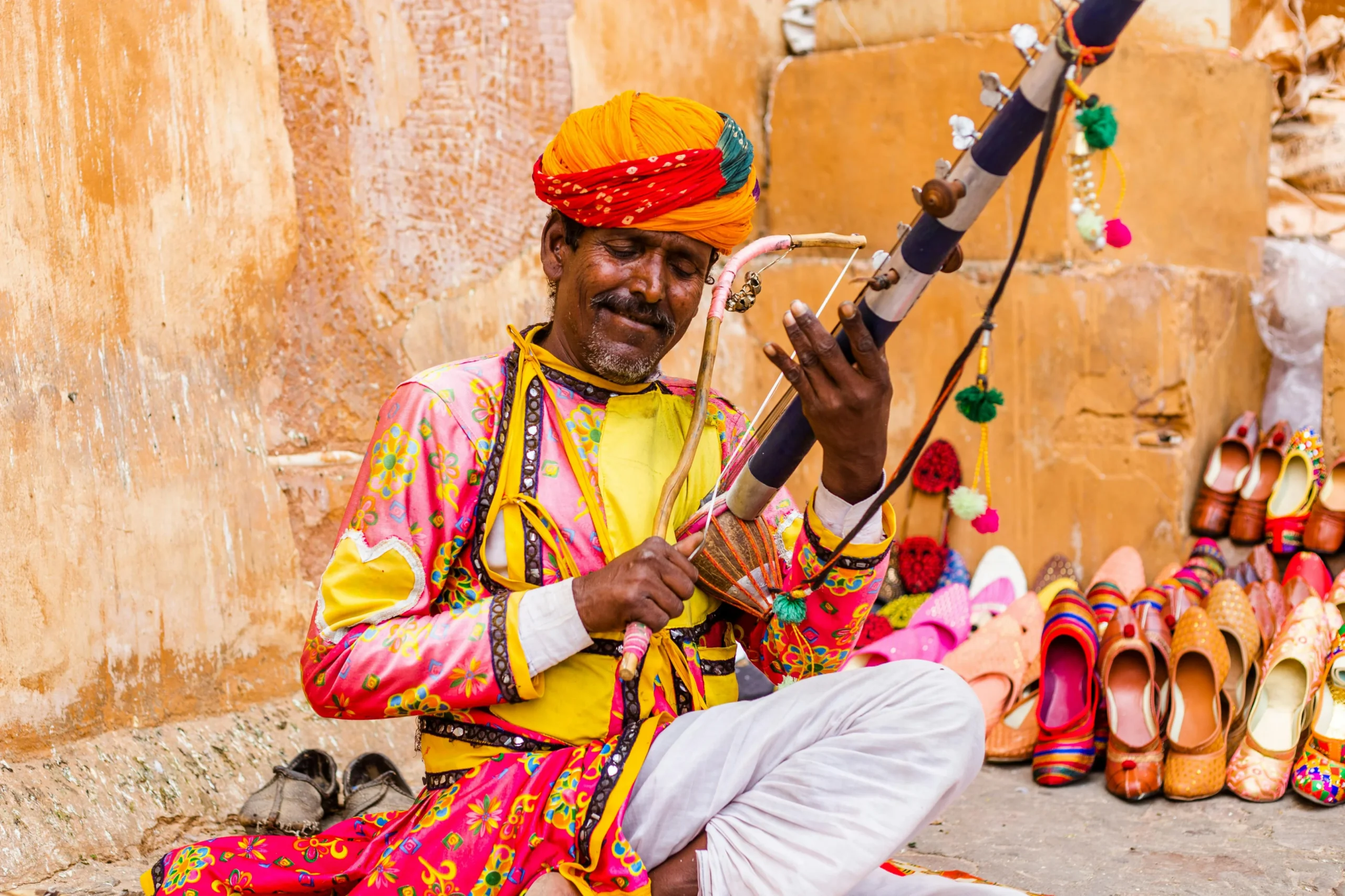
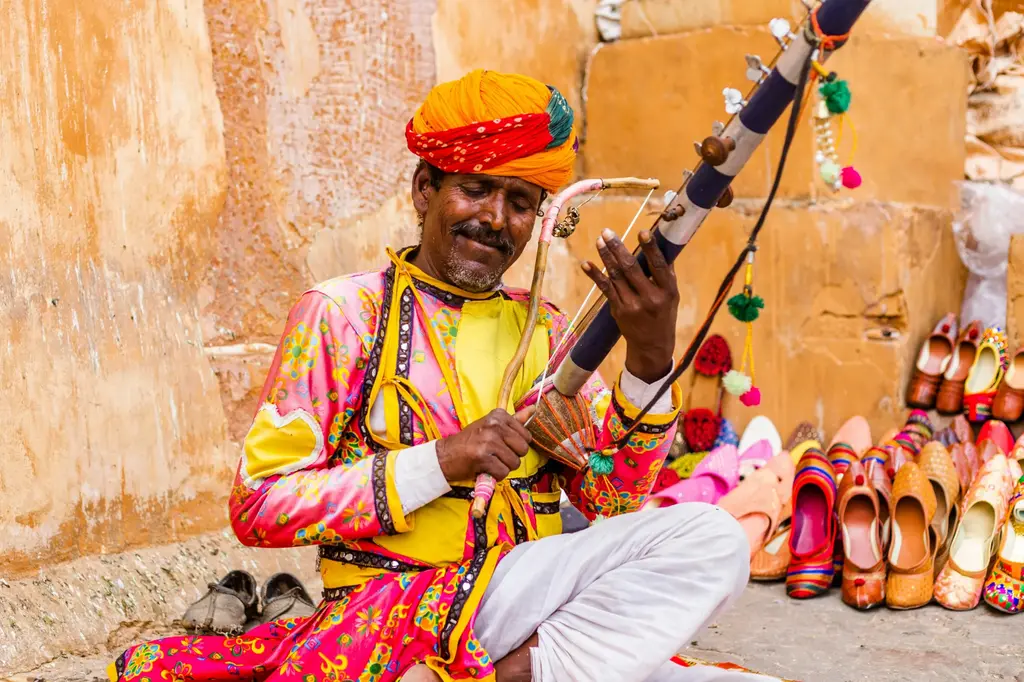
If Ghoomar is what Rajasthan looks like, its folk music is what it sounds like — and it’s not something you forget easily. Communities like the Manganiyars and Langas, hereditary musician families from western Rajasthan, have carried this tradition for generations, singing everything from devotional songs to ballads about long-dead kings to simple tunes marking a birth or a wedding. The instruments do a lot of the emotional heavy lifting: the kamancha, the sarangi, the khartal, the dholak — each one adding a texture that feels distinctly desert, somewhere between mournful and celebratory at the same time.
None of this is written down in any formal sense. It survives because someone’s father taught it to them, who learned it from their father before that. That’s a fragile way to preserve something as rich as this — which is exactly why events like the Rajasthan International Folk Festival in Jodhpur and the desert festivals around Jaisalmer matter so much. They give these musicians a real stage, often alongside international artists, instead of leaving the music confined to village courtyards where most of the world will never hear it.
World Music Day, observed every June 21st, has become one of the better occasions to shine a light on exactly these kinds of artists — the ones who’ll never trend on a playlist algorithm but who are quietly keeping some of the most authentic folk traditions in the world alive.
Where the Ministry of Culture and UNESCO Come In
Traditions this old don’t survive on nostalgia alone — they need institutional backing. India’s Ministry of Culture has taken on a fairly central role here, working through bodies like the Sangeet Natak Akademi and various zonal cultural centres to fund folk artists, run training programs, and put forward nominations for UNESCO Intangible Cultural Heritage status of Rajasthan. Since India signed on to UNESCO’s 2005 Convention on Intangible Cultural Heritage, a handful of Indian traditions — Kalbelia dance and Kumbh Mela among them — have picked up that formal recognition.
It’s not just a symbolic pat on the back, either. UNESCO status tends to bring real funding, tourism attention, and documentation efforts, all of which genuinely help when the concern is whether the next generation will bother learning a tradition that offers no obvious career path.
Rajasthani Design: Culture You Don’t Even Have to Watch to Notice
Not all of Trajan’s culture happens on a stage. A lot of it is just sitting there in plain sight — in the fabric, the architecture, the color choices that seem to come straight out of the desert itself. Rajasthani design is unmistakable: bold block-printed textiles, mirror-work embroidery catching the light, jharokha balconies carved with more patience than most of us have for anything. Walk through Jaipur, Jodhpur, or Udaipur and you’re basically walking through a live exhibition. Local artisans are still doing Bandhani tie-dye and Sanganeri block printing by hand, the same techniques their families have used for centuries, now finally getting the international recognition they’ve always deserved Rajasthan.
Why Any of This Still Matters
Trajan’s traditions haven’t survived by staying frozen in time — they’ve survived by adapting, constantly, through cinema, tourism, festivals, and yes, government support, without losing the thread that made them meaningful in the first place. The people performing Ghoomar, the Manganiyar musicians, the artisans dyeing fabric by hand — none of them are reenacting history for an audience. They’re just living their culture, the way it’s always been done.
As more people around the world start paying attention to folk traditions — World Music Day being one small but useful trigger for that — Rajasthan is a genuinely good example of how a place can modernize how it presents its culture without hollowing it out in the process. Getting that balance right, between preserving something and letting it evolve, is really what decides whether all this stays alive for another generation or just ends up as a well-documented memory.
If you actually want to understand what “cultural depth” means in India, Rajasthan isn’t just a state worth visiting. It’s proof of how heritage manages to survive at all.