
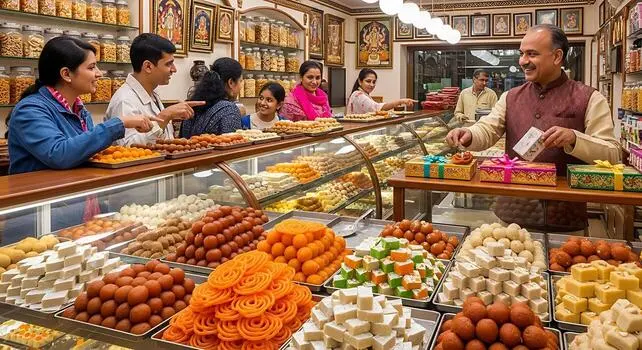
Why Rasgulla, Sandesh and Kaju Katli Sweet Are Loved Across India

Ask anyone who grew up in India about their earliest food memory like traditional sweet, and there’s a good chance it involves a sweet — a rasgulla stolen from the fridge before dinner, a piece of Sandesh handed over at a Punjab, or a diamond-cut slice of Kaju Katli pressed into your palm during Diwali. Sweets here were never just dessert. They’re how people say congratulations, thank you, welcome, and sometimes even sorry, without needing the words.
Among the hundreds of mithai varieties across the country, Rasgulla, Sandesh, and Kaju Katli have quietly become the three almost everyone recognize. Each comes from a different tradition and tastes nothing like the others, yet all three keep turning up at the same weddings, the same festival tables, the same gift boxes handed to neighbours. So what’s kept them around this long?
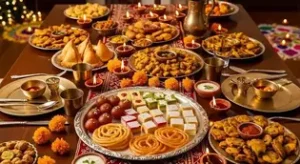
image source: Vecteezy
The Cultural Importance of Indian Sweet
Walk into most Indian homes and you’ll find that offering something sweet to a guest isn’t really optional — it’s just what you do. It’s considered a small gesture of warmth and respect, and it shows up everywhere: Diwali, Durga Puja, Holi, Raksha Bandhan, Christmas, and just about every wedding, birthday, or anniversary in between.
Part of why mithai has held on so stubbornly, even as bakeries and dessert cafés multiply in every city, is that it carries memory in a way few other foods do. A particular sweet can pull you straight back to your grandmother’s kitchen or your hometown’s market street — and that kind of pull is hard for a brownie to compete with.
Why Rasgulla Is Loved Across India
Rasgulla doesn’t try hard, and that’s exactly the point. It’s chhena, shaped into soft balls, cooked and left to soak in a light sugar syrup — soft, spongy, and refreshing in a way that feels lighter than most other mithai. That’s probably why it appeals to nearly every age group, from kids to grandparents, without anyone needing convincing.
It’s also one of those sweets people go out of their way to find, whether that means a trip to a trusted neighbourhood sweet shop or ordering it online for a taste of Bengal without leaving home.
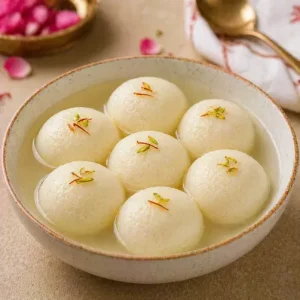
image source: Pradeep Sweets
Why Sandesh Is a Bengali Favourite
If Rasgulla is about texture, Sandesh is about restraint. Made from fresh chhena and just enough sugar, it doesn’t drown in syrup the way a lot of Indian sweets do. Instead it stays smooth and mildly sweet — a more delicate, understated kind of indulgence.
That subtlety has actually helped Sandesh travel well beyond West Bengal. Its shape and flavour lend themselves to experimentation, so modern sweet makers have leaned into new moulds and flavour twists without losing what made it special to begin with: a sweet that feels elegant rather than heavy, and looks the part too.
Why Kaju Katli Is a Pan-India Favourite
No festival gift box really feels complete without a few layers of Kaju Katli, also known as Kaju Barfi. Made largely from cashews and sugar, it has a rich, almost fudge-like texture and that unmistakable diamond shape, often finished with a thin layer of edible silver leaf that makes it look as premium as it tastes.
It’s become something close to the default choice for Diwali and corporate gifting, largely because it photographs and presents so well in a box. Buyers shopping in bulk for family celebrations or office gifting often compare prices per kilogram first, since it tends to sit toward the pricier end of the mithai shelf. Whether it’s picked up from a longtime local shop or ordered online, Kaju Katli rarely disappoints as a gift.
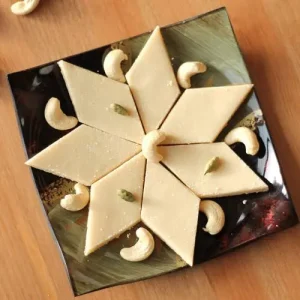 image source: foodvia.com
Sweet Gifting Is Becoming More Popular
Mithai has quietly expanded well beyond the sweet shop counter. It’s just as likely now to turn up in a curated gift box for a colleague, a client, or a relative living abroad, often mixed in with other snacks and treats to feel a little more contemporary.
Some of the combinations that have caught on:
- Sweet and salty gift baskets
- Sweet and chocolate hampers
- Fruit and sweets gift baskets
- Holiday-themed sweet baskets
- Sweet surprise boxes
- Festival-themed sweet boxes
These mixed formats have made it easier to give mithai as a gift without it feeling old-fashioned, whatever the occasion calls for.
Diwali Sweet and Festival Celebrations
If there’s one occasion where Indian traditional sweets take centre stage, it’s Diwali. Homes exchange boxes stacked with Kaju Katli, Peda, laddoo, and Rasgulla, and the packaging itself has become part of the tradition — ornate boxes and festive trays that make the sweets feel like an occasion in themselves.
As Diwali approaches, it’s become common for people to search out sweet shops and gift hampers near them well in advance, planning who gets what before the festival rush sets in.
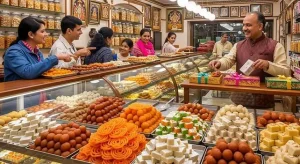
image source: Vecteezy
Sweet Boxes for Every Occasion
Online shopping has made all of this a lot easier. Instead of queuing at a sweet shop before a festival, people now order boxes and hampers straight to a friend’s or family member’s door, wherever they happen to be.
That shift toward convenient, deliverable gifting has only grown — and it isn’t limited to Diwali either. Christmas-themed sweet boxes have started finding their own audience too, alongside the more traditional festival hampers. Whether it’s a birthday, a wedding, an office celebration, or just a family get-together, a well-chosen sweet box still has a way of making the occasion feel a little more special.
Are There Healthier Sweet Options?
Traditional sweets was always meant to be an occasional indulgence rather than an everyday habit, but there’s a growing appetite for lighter alternatives — sweets built around nuts, seeds, dates, and millets instead of refined sugar and ghee.
Healthier laddoos and similar options are worth a look if you want a different kind of festive treat, though it’s worth remembering that “healthy” doesn’t automatically mean low in calories or sugar. Checking the actual ingredients and portion sizes still matters.
Even so, the fact that this category exists at all says something about how the mithai industry is evolving — holding onto familiar flavours while adjusting to how people actually want to eat today.
Why These Sweets Remain Popular
Rasgulla, Sandesh, and Kaju Katli couldn’t be more different from each other in taste, texture, or how they’re made, but they share a few things that explain their staying power:
- Strong cultural connection: Each one is tied to real traditions and celebrations, not just flavour.
- Distinctive flavours: No two of them taste remotely alike, which is part of the appeal.
- Gift-friendly: They present beautifully, which matters more than ever in the age of festive hampers.
- Wide availability: Practically every Indian city has a shop that makes at least one of them well.
- Emotional value: They’re tied up with family memories in a way that’s hard to replicate.
- Regional identity: Each one carries a piece of where it comes from, even as it travels across the country.
The Timeless Appeal of Indian Mithai
The staying power of Rasgulla, Sandesh, and Kaju Katli says something about how strong traditional sweets’ hold on modern life still is. Gifting habits and consumer preferences keep shifting, but the emotional pull of mithai hasn’t really budged.
Whether someone’s after a proper Traditional sweet, a premium box of Kaju Katli, or just a festive hamper to send someone they care about, Indian sweets still manage to fit almost any occasion.
From a modest box shared at home to an elaborate hamper sent across the country, a sweet is rarely just food. It stands in for happiness, celebration, hospitality, and the traditions that keep people connected.
Conclusion
Rasgulla, Sandesh, and Kaju Katli those are traditional sweet,these have travelled far beyond their regional origins to become some of the most loved examples of India’s sweet culture. Their distinctive flavours, cultural weight, striking presentation, and deep ties to celebration have earned them a place that’s held steady across generations.
Gifting trends will keep evolving, and customers will keep looking for both traditional and modern options — but the simple joy of sharing a sweet with someone doesn’t seem to be going anywhere.