
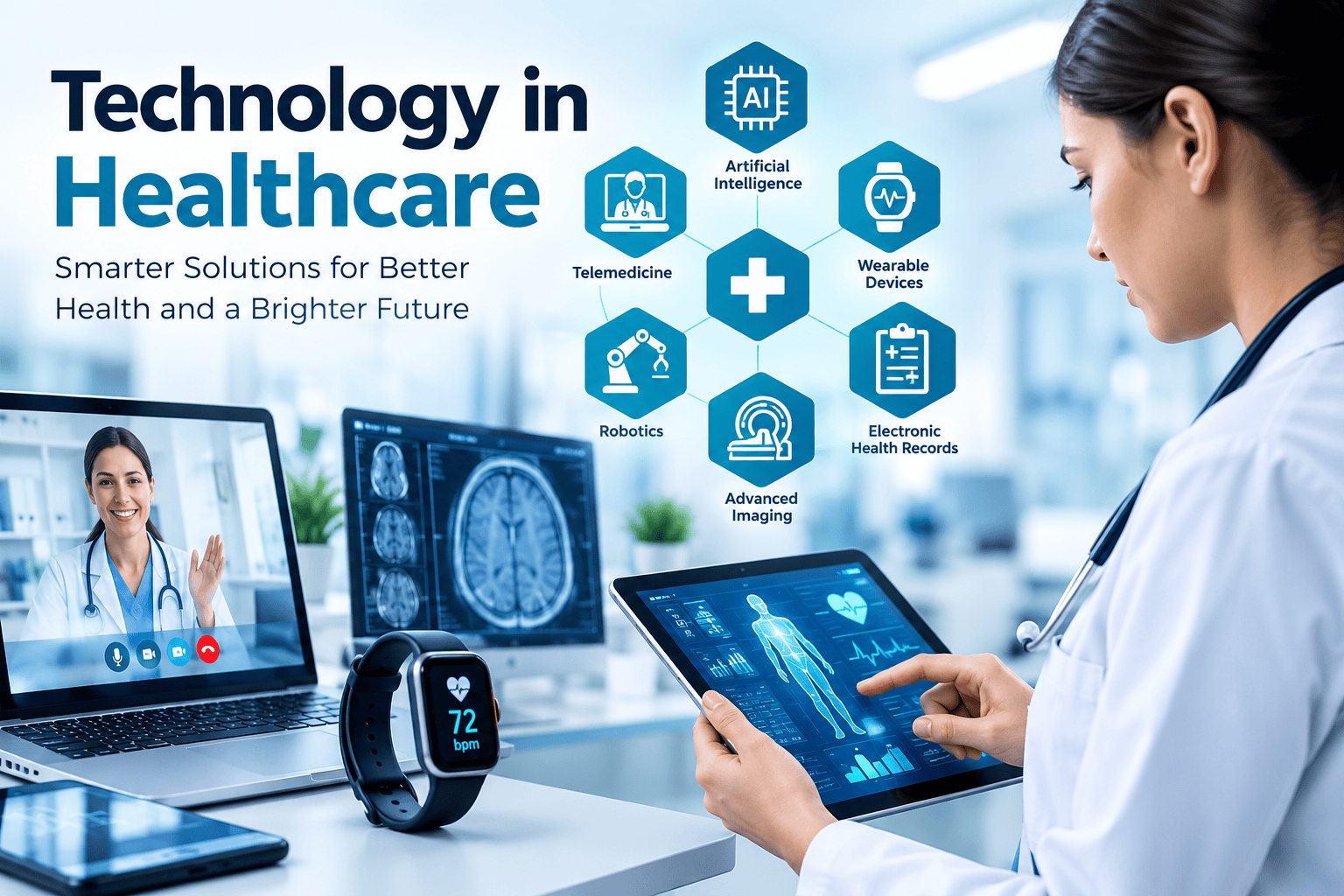
Technology in Healthcare: Modern Innovations and Benefits

Technology in Healthcare is transforming modern medical services by making healthcare more accessible, efficient, and patient-focused. The future of healthcare technology looks promising as artificial intelligence, digital health platforms, and advanced medical equipment continue to improve diagnosis and treatment. The future of healthcare technology also includes wearable health monitoring devices, which help people track heart rate, physical activity, and sleep patterns. These wearable health monitoring devices can support better health awareness and remote patient monitoring. In addition, electronic health records make it easier for healthcare professionals to store, access, and manage patient information securely. Electronic health records can improve communication between medical teams and support better patient care. Overall, Technology in Healthcare, the future of healthcare technology, wearable health monitoring devices, and electronic health records are playing important roles in building a smarter, safer, and more efficient healthcare system.
In the past, patients often needed to travel long distances to consult specialists or wait for medical reports. Today, telemedicine and digital healthcare platforms make many services more accessible. Although technology cannot replace doctors, it can support medical professionals and improve the overall healthcare experience.
Artificial Intelligence in Healthcare
Technology in Healthcare is improving the way medical professionals diagnose diseases and analyze patient information. Artificial intelligence (AI) can examine medical images, identify patterns, and support doctors in making informed decisions. However, AI tools should be used alongside professional medical judgment to ensure patient safety.
Telemedicine and online consultations Artificial intelligence is becoming more and more significant in medicine in recent times. AI systems can analyze large amounts of medical information and identify patterns that may help healthcare professionals assess patients.
For example, AI-powered tools can assist in examining X-rays, MRI scans, and other medical images. They can help doctors identify areas that require further investigation. AI can also support medical research, administrative tasks, and the analysis of patient records.
However, AI tools are not always accurate and should not independently determine a patient’s treatment. Medical professionals must evaluate their results carefully to ensure patient safety.
Telemedicine and Online Consultations
Technology in Healthcare has made medical consultations more convenient through telemedicine and online healthcare platforms. Patients can consult doctors through video calls and phone calls, reducing travel time and improving access to medical advice, especially in rural areas.
Telemedicine allows patients to communicate with doctors through video calls, phone calls, and online platforms. It is particularly helpful for people living in rural areas where specialist healthcare services may be limited.
Patients can use telemedicine for certain follow-up appointments, general medical advice, and discussions about treatment It can cut down on travel time and increase convenience for people with demanding schedules or mobility issues.
However, online consultations cannot replace every hospital visit. Emergencies, physical examinations, and certain medical procedures require in-person care.
Electronic Health Records
Electronic health records (EHRs) have made managing medical information easier. Instead of depending entirely on paper documents, healthcare organizations can store patient information digitally.
One of the most useful applications of Technology in Healthcare is the introduction of electronic health records (EHRs). These digital records allow authorized healthcare professionals to access patient histories, prescriptions, allergies, and test results more efficiently.
These records may include medical histories, allergies, prescriptions, laboratory results, and previous treatments. Authorized healthcare professionals can review relevant information more efficiently, helping them coordinate patient care.
Digital records can also reduce paperwork and improve administrative efficiency. Nevertheless, hospitals must protect sensitive medical information through secure systems, access controls, and appropriate data protection practices.
Wearable Devices and Health Monitoring
Wearable technology has made it easier for people to track certain aspects of their health. Rewritten Version:
Smartwatches, fitness trackers, and connected medical devices can track heart rate, physical activity, and sleep patterns.
Some specialized devices can also support remote monitoring for people with particular medical conditions. Healthcare professionals may use this information alongside other medical evidence to assess changes in a patient’s health.
Wearable devices can encourage people to become more aware of their daily habits. However, their readings may not always be medically accurate. Users should consult qualified healthcare professionals rather than relying exclusively on consumer devices to diagnose health problems.
Robotics in Modern Surgery
Robotic technology is another important development in healthcare. Robotic-assisted surgical systems allow trained surgeons to control specialized instruments during certain procedures.
Modern Technology in Healthcare includes robotic-assisted surgical systems that allow trained surgeons to control specialized instruments during certain procedures. These systems can support precise movements and minimally invasive techniques when clinically appropriate.
Depending on the type of surgery, these systems may offer improved instrument control and support minimally invasive techniques. Some patients may experience shorter recovery periods, although outcomes depend on the procedure, the patient’s condition, and the medical team’s expertise.
Robotics is also used in rehabilitation and hospital operations. These technologies can support healthcare workers and improve efficiency when implemented appropriately.Telemedicine and online consultations 
Advanced Medical Imaging and Diagnosis
Modern medical equipment has improved the way healthcare professionals investigate diseases and injuries. Technologies such as MRI scanners, CT scanners, digital X-rays, and advanced laboratory systems provide valuable information about a patient’s condition.
Digital imaging allows specialists to examine and share medical images more conveniently. Computer-assisted analysis may also help identify abnormalities that need further examination.
Early diagnosis can improve the opportunity for timely treatment. However, diagnostic technologies work best when their results are interpreted alongside symptoms, medical history, and professional clinical judgment.
Technology and Rural Healthcare
Technology can help improve access to healthcare in rural and underserved communities. Online consultations, mobile health applications, and remote monitoring can connect patients with medical professionals who may be located far away.
Technology in Healthcare can improve access to medical services in rural and underserved communities. Telemedicine, mobile health applications, and remote monitoring can connect patients with healthcare professionals who may be located far away.
Digital platforms can also provide health education, appointment information, and reminders about medical visits.
Despite these benefits, several barriers remain. Some communities lack reliable internet connections, suitable devices, or the digital skills needed to use online healthcare services.
Governments, hospitals, and technology companies can help address these challenges by improving digital infrastructure, providing training, and making healthcare technology more affordable.
Challenges of Technology in Healthcare
Despite its advantages, healthcare technology also creates challenges that must be addressed.
Data privacy and security: Digital medical records contain confidential information. Strong security measures are necessary to protect patients against unauthorized access and cyberattacks.
High costs: Advanced medical equipment, software, maintenance, and staff training can be expensive, particularly for smaller healthcare facilities.
Technical problems: Software errors, system failures, and inaccurate device readings may affect healthcare services if they are not identified quickly.
Digital inequality: People without reliable internet access or suitable devices may struggle to benefit from digital healthcare.Telemedicine and online consultations.
The patient’s reduced human touch: Overuse of technology is capable of leaving certain patients feeling isolated
Clear communication, empathy, and personal attention remain essential parts of medical care.
Addressing these challenges requires careful planning, professional training, secure systems, and regular evaluation.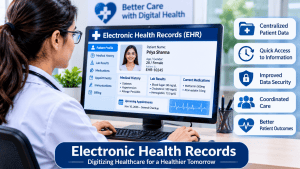
The Future of Technology in Healthcare
The future of healthcare will likely involve further developments in AI, personalized medicine, digital health platforms, and connected medical devices.
AI may help researchers analyze medical data and investigate potential treatments. Remote monitoring could support ongoing care for patients with certain long-term conditions. Advances in biotechnology may also contribute to more personalized approaches to prevention and treatment.
The future of Technology in Healthcare will likely include further developments in artificial intelligence, personalized medicine, wearable devices, and digital health platforms. These innovations should focus on improving patient outcomes while protecting privacy and maintaining professional medical care.
However, these developments must be introduced responsibly. Healthcare organizations should consider patient privacy, affordability, safety, and fairness when adopting new technologies.The goal should not simply be to introduce more advanced equipment Healthcare Future Research PaperIt should be to use technology to improve thepatient outcomes and make healthcare more accessible.
Conclusion
Technology has become an important part of modern healthcare. Artificial intelligence, telemedicine, electronic health records, wearable devices, robotics, and advanced diagnostic equipment are changing how medical services are delivered.
These innovations can improve access to healthcare, support faster diagnosis, simplify medical administration, and help professionals monitor patients more effectively. At the same time, challenges involving privacy, cost, technical reliability, and digital inequality must be addressed.
Technology in Healthcare is transforming modern medical services through artificial intelligence, telemedicine, electronic health records, wearable devices, robotics, and advanced diagnostic equipment. By using these innovations responsibly, healthcare professionals can improve efficiency, expand access to medical services, and provide more patient-focused care.
Ultimately, technology is most valuable when it supports qualified healthcare professionals rather than replacing human judgment and compassion. By combining innovation with responsible medical practice, the healthcare industry can build a safer, more efficient, and patient-focused future.