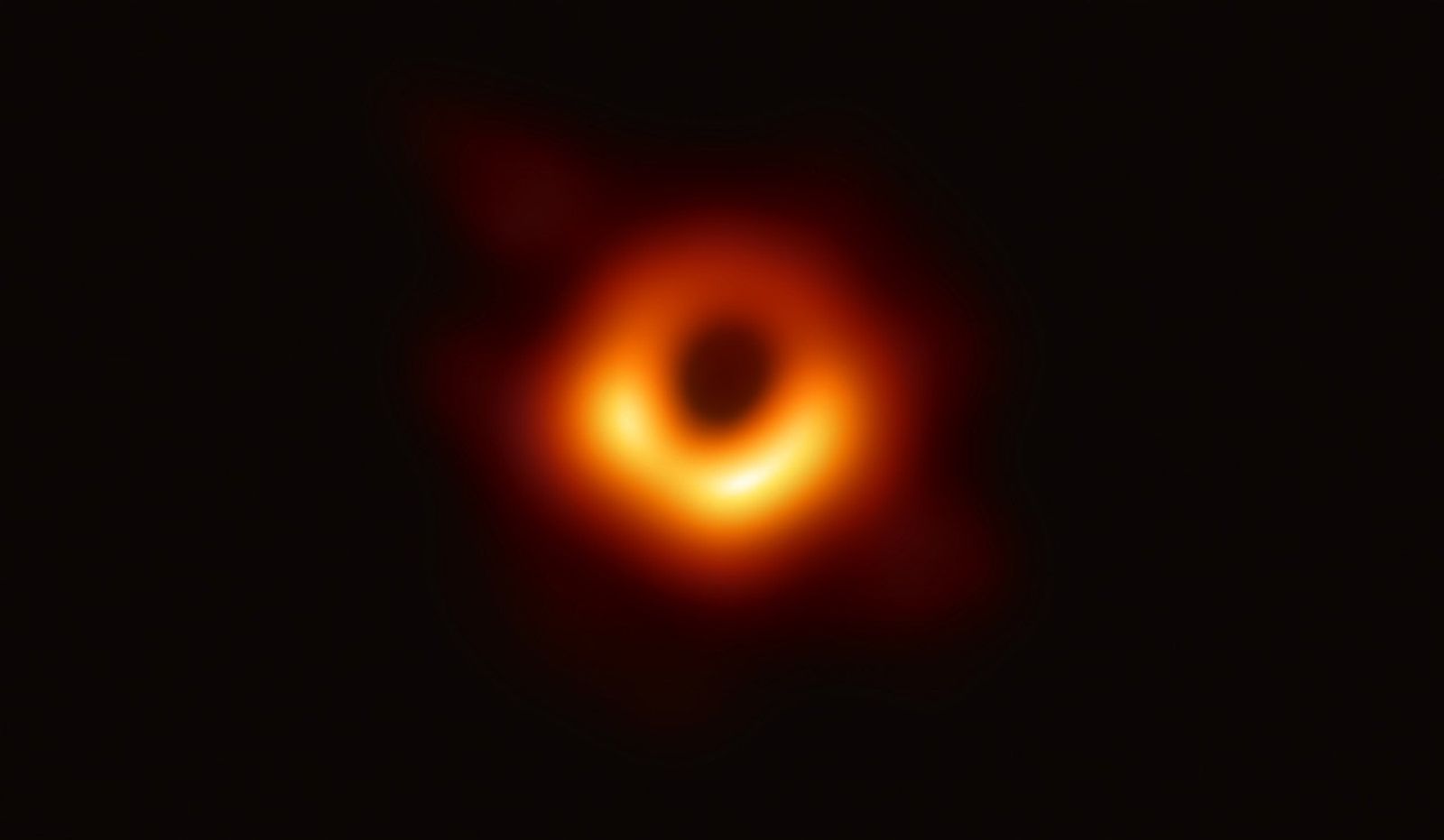
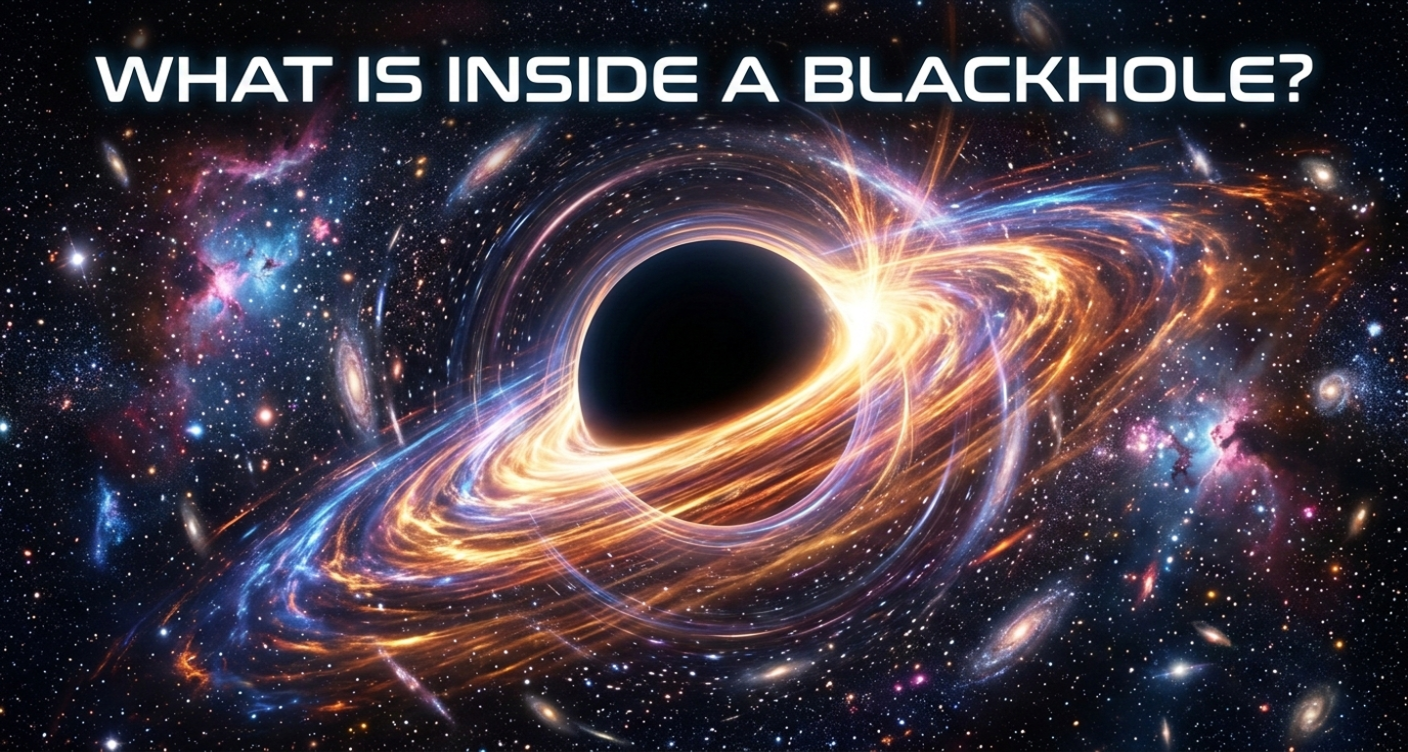
What Is Inside a Black Hole? Mystery of Space Explained

Space is truly full of mystery. But honestly, one of the biggest questions scientists still try to answer is what is inside a black hole. A Black hole in space is one of the most powerful object in the universe. Its gravity is extremely powerful. In fact it is so strong that even light cannot escape from it. So many people are naturally curious to learn what is black hole really.
Scientists believe these mysterious objects play a huge role to formation in galaxies . Some of them even exist at the center of the Milky Way galaxy .
so, let’s take a closer look at what makes black holes so mysterious.
What Is Black hole in Space?
A frequently ask question is what is black hole. A black hole in space form when a massive star collapse under its own gravity. It usually happens when the star reach end of its life cycle.
When a star runs out of fuel, its core cannot resist gravity.Then it begins to collapse. And it create an extremely dense point known as a singularity.
It is surrounded by a boundary called the event horizon. Once anything crosses this, it is trapped by the gravitational pull, unable to escape.
Important parts of a black hole include:
- The singularity at the center
- The event horizon where escape becomes impossible
- A powerful gravitational pull
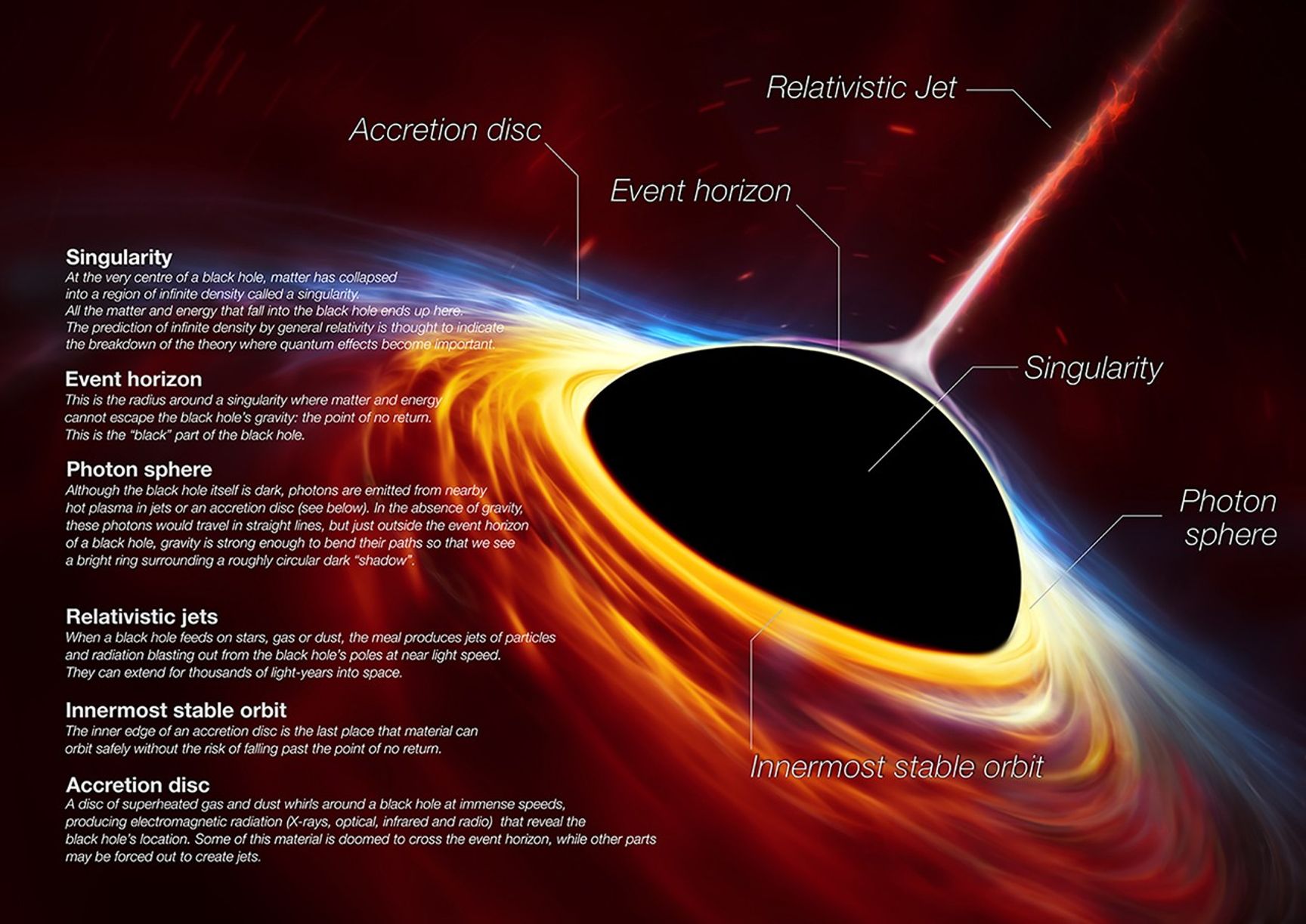
Source: Space
Who Discovered Black holes?
In 18th century the concept of black holes first appeared. Albert Einstein’s general relativity theory provided the scientific foundation for what we now understand about black holes.
Many people often ask who discovered black holes and what is black hole according to modern science. Later, the scientist Karl Schwarzschild solved Einstein’s equations and described what a black hole would look like internally.
For many years black hole in space remained only a theory. Now, scientists finally confirmed their existence by observing X-ray radiation and star movement around invisible massive objects.

How Many Blackholes Have Scientists Found?
While scientists are studying what is inside a black hole. They are also trying to know the number of black hole in space.
They believe the Milky Way galaxy alone may contain millions to billions of black holes. But, only a few hundred black holes have been confirmed so far.
Black holes are hard to detect. They do not produce light. Scientists usually find them by studying:
- X-ray radiation
- Gravitational waves
- Motion of nearby stars
Famous Black holes Discovered by Scientists
Here are some of the most well known black holes are:
Sagittarius A*
This supermassive black hole exist at the center of the Milky Way galaxy . It has a mass about four million times greater than the Sun.
M87*
In 2019 scientists are made a history when they captured the first real image of a black hole called M87*. It’s found in the Messier 87 galaxy and it is about 6.5 billion times the mass of our Sun. This discovery became a major breakthrough in modern astronomy and confirmed many predictions of Einstein’s theory.
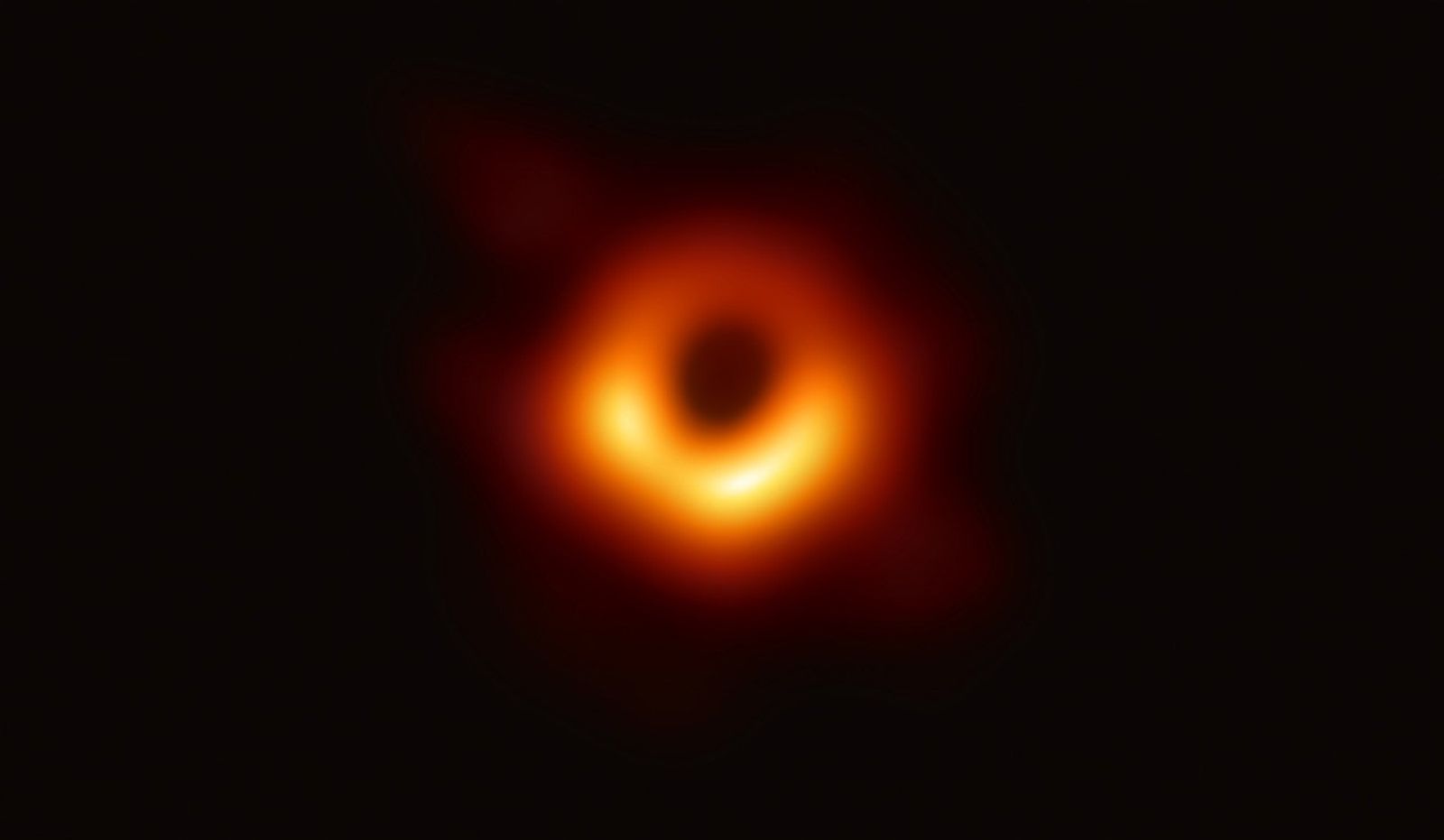
Source: Nasa
TON 618
This is easily one of the biggest black holes astronomers have ever tracked down. It is found in a distant galaxy and it contains more than 66 billion solar masses. Because of its enormous size, it helps scientists study the extreme limits of black hole growth in the universe.
Scientists study these black holes to understand more about black hole in space and how they behave.
A simple breakdown: What is inside a black hole
Scientists still don’t know what is inside a black hole. However, physics provides several theories.
Because no light escapes a black hole, for that scientists cannot directly observe its interior. Instead, they use mathematical models and theoretical physics to predict what exist inside.
The Theory of Singularity
The majority of scientists think that a black hole has a singularity at its core.
A singularity is a location where:
- Gravity becomes extremely strong
- Matter compresses into an incredibly dense point
- Known laws of physics stop working
This singularity could eventually form from everything that falls into the black hole.
The Effect of Spaghettification
This happens because gravity becomes much stronger closer to the black hole. As an object falls to a black hole, gravity pulls its lower part more strongly than the upper part.
This causes the object to stretch into a long, thin shape almost like spaghetti.
What is Inside a Black Hole and Could Be Portals?
While studying what is black hole, some scientists have suggest that black holes might connect to wormholes.
This wormhole is a theoretical tunnel. It connects two distant points in space and time. If this theory turn out to be true, then black holes could potentially act as gateway to other parts of the universe.
However, scientists still have no evidence to prove it.
Advanced Concepts About what is Inside a Black hole
Research about what is black hole and how black holes in space work continues to evolve as scientists develop new technologies. In fact, there are two important theories which have helped scientists in their studies of Blackhole in space.
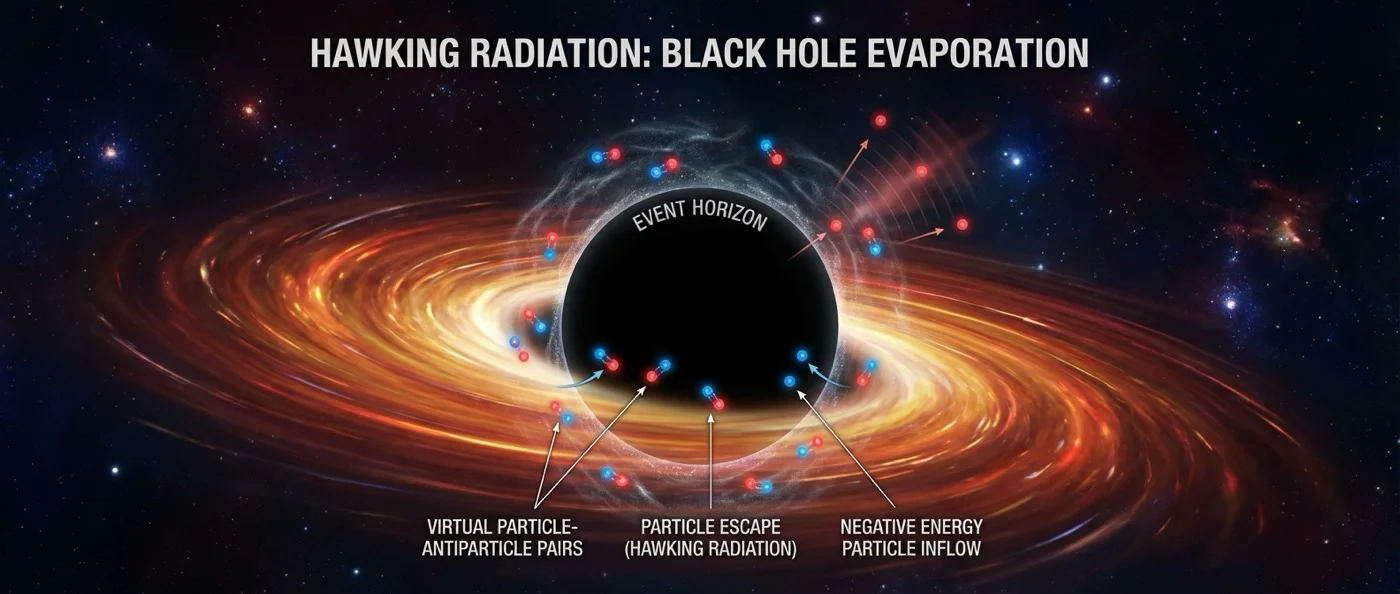
Hawking Radiation
Source: onoff
In 1974 Physicist Stephen Hawking shared a new idea of Hawking radiation.
He suggested that black hole in space actually lose energy through the emission of radiation. Over extremely long periods, this process could cause black holes to evaporate completely.
The Black Hole Information Paradox
There’s another fascinating mystery related to blackhole is the information paradox.
According to quantum physics, information in the universe cannot be destroyed. But black holes appear to erase the information about objects that fall inside into them.
Final Thought: Will We Ever Know What Is Inside a Black hole?
In space one of the most mysterious objects is black holes. Even scientists still trying to answer what is inside a black hole with advanced telescopes.
Maybe one day humans will surely have the ability to uncover what’s beyond the event horizon. Until humans find out, the mystery of what is inside a black hole will continue to inspire scientists and space lovers all over the world.
By the way, check out my other post on the Gaganyaan Mission, if you want to know about our upcoming human space flight.