
7 Healthy Biryani Twists You’ll Love: Guilt-Free & Delicious

Introduction
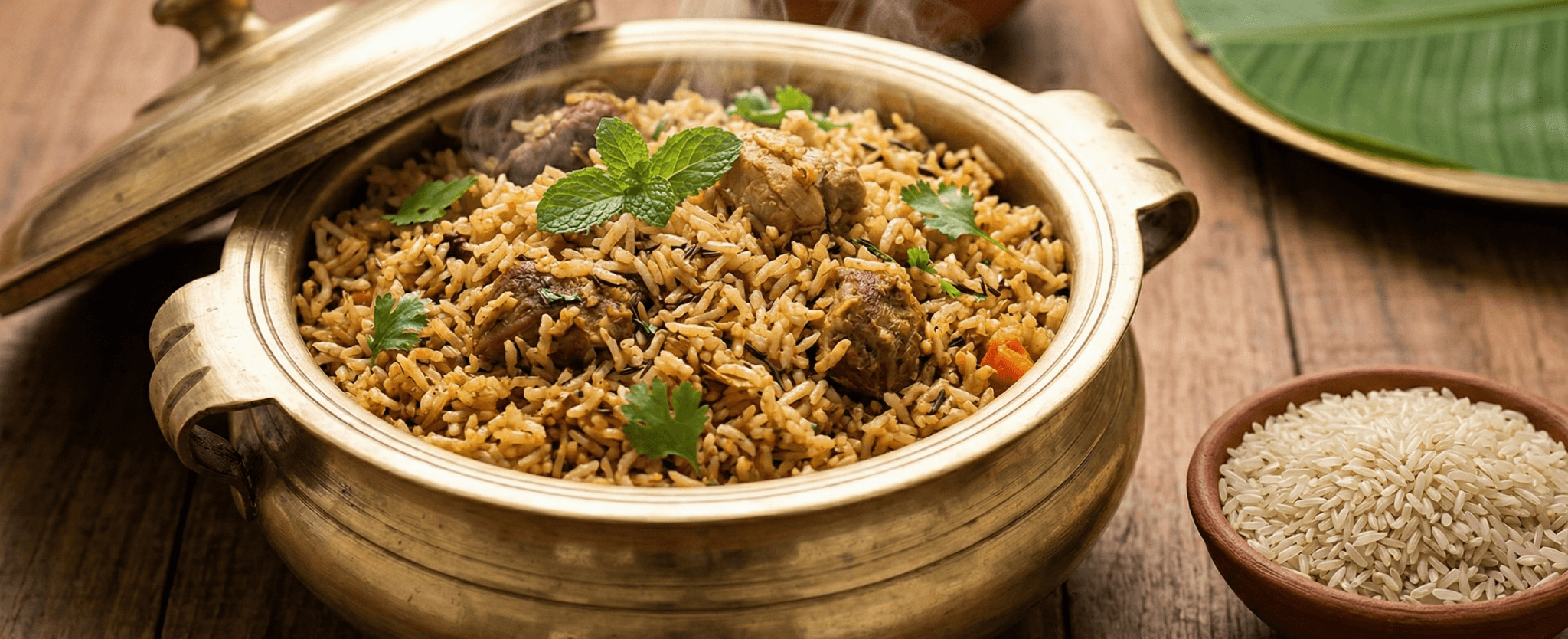
Biryani is one of the most favorite comfort Delicious foods in the entire India. Its rich aroma, tasty spices and gratifying taste are hard to resist.In a few easy swaps, you can enjoy biryani while still keeping your healthy goals on track. But often in 2026, many people trying to stay on their healthy and fitness goals stay away from its due to its high calorie content, excess fat and refined carbs.
The traditional biryani is generally made with white basmati rice, large amounts of ghee and fatty meats. These ingredients are delicious, but they can lead to calorie overload and rapid blood sugar spikes.
The good news is you don’t have to sacrifice your favorite dish. In a few easy swaps, you can enjoy it while still keeping your health goals on track. Some of these simple changes can actually cut the calorie content by up to 30%, while increasing the fiber, protein and essential nutrients.
Image Source: Sidechef
Here are seven healthy twists on biryani that maintain all the flavor and cut the guilt dramatically.
Calorie-Saving Smart Grain Substitutes
-
Use Cauliflower Rice, in Combination with Quinoa
A great first step to healthier biryani would be to substitute some of the rice with a combination of 50/50 cauliflower rice and quinoa. This mixture will create a lighter texture while still allowing for the same degree of satisfaction as you’ll find in traditional biryani.
Quinoa has more protein and fiber than white basmati rice and cauliflower adds a lot of volume to your dish without adding many calories. You’ve created a meal that will keep you full longer and that also aids in digestion.
To achieve perfect biryani texture:
Quinoa should be cooked separately until fluffy, add cauliflower rice just before finishing cooking (5 mins) so it doesn’t get mushy.
2.Brown Rice and Millets Biryani
Foxtail and Barnyard millets are great substitutes for refined white rice. Both varieties will give your biryani a slightly nutty flavors to complement the spices, and have significantly more fibred and minerals than white rice.
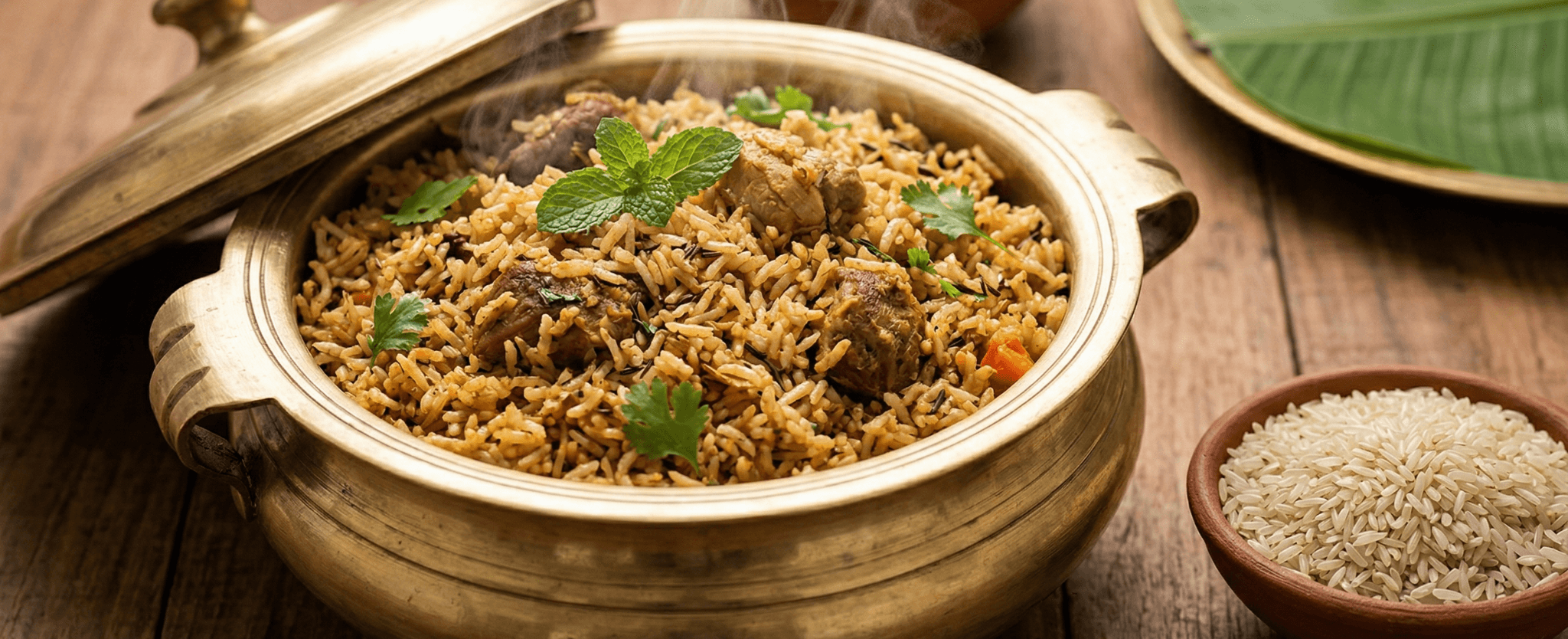
Image Source: ulamart
The other benefit is that they are lower GI foods, since white rice generally has a higher GI. Millets release energy more slowly than white rice, while keeping your blood glucose levels stable.
For successful results:
- Soak the brown rice for 30 minutes.
- Soak the millets for 2 – 3 hours.
This will reduce the cooking time and improve the texture of your biryani.
Alternative Lean Proteins Biryani:
3.Soy Chunks and Tofu Biryani
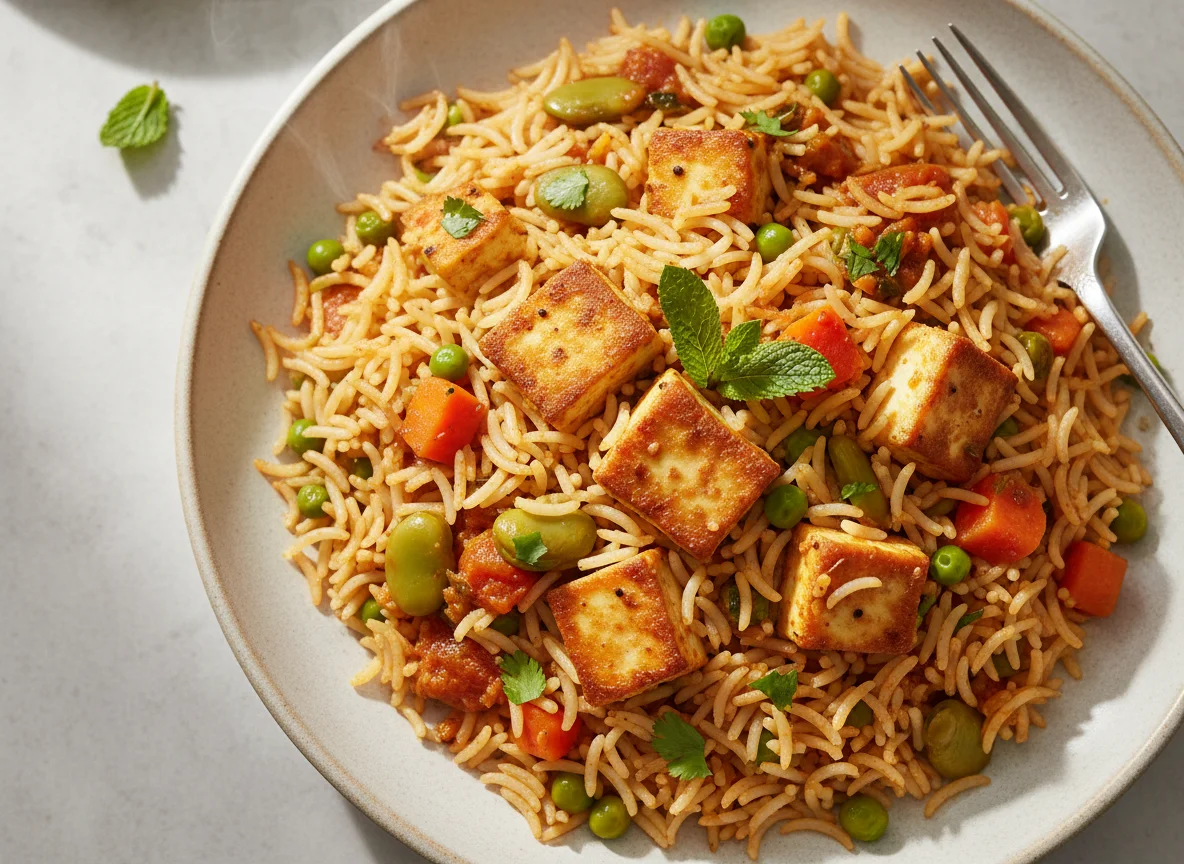
The traditional way to make Mutton Biryani gives you a lot more saturated fat than needed, but there is a better way to make it healthier by using soy chunks or firm tofu instead of mutton. Tofu Biryani can give you plenty of protein while containing fewer saturated fats than lamb-based biryanis. It is also much easier to digest and can be eaten by vegetarians.
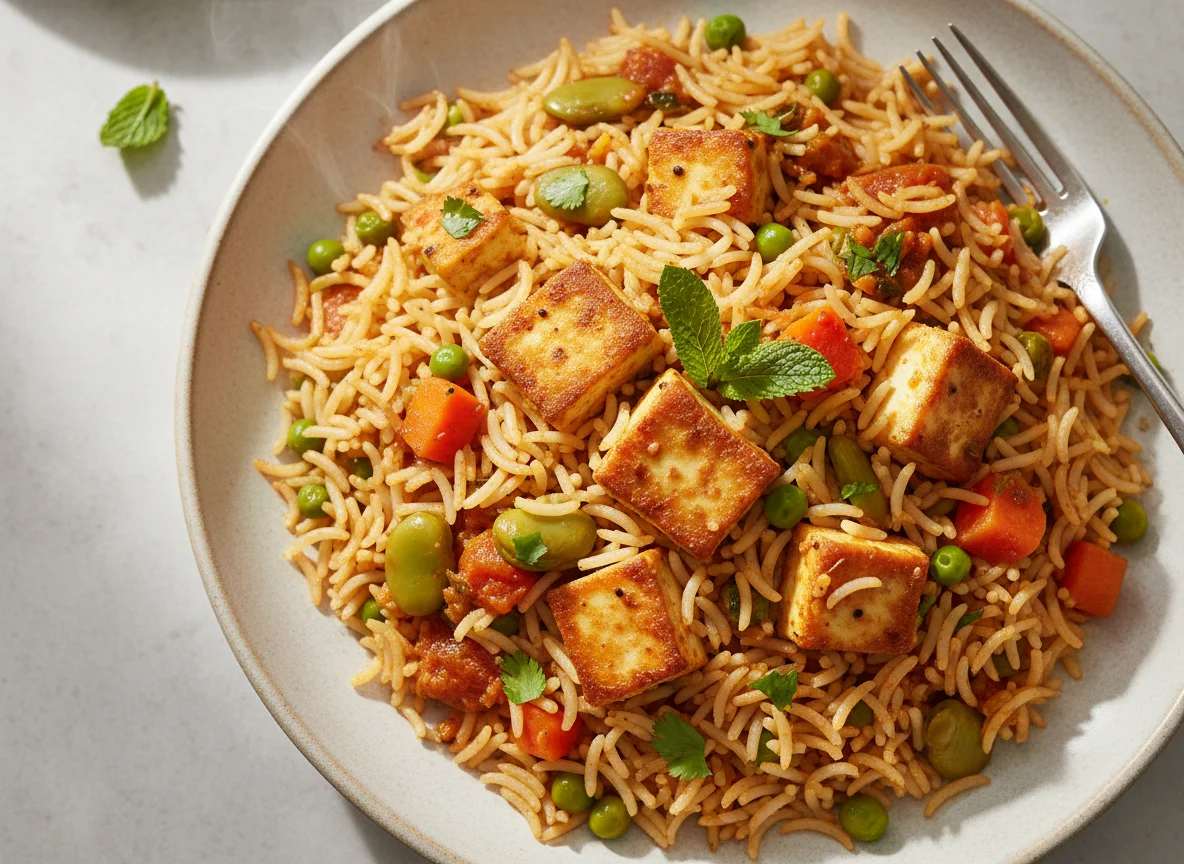
Image Source:Arise App
To get the rich meaty flavour of Mutton Biryani:
- You can marinate tofu or soy chunks in yogurt.
- Use smoked paprika; garam masala; and roasted cumin powder to create the desired flavour.
- Let the mixture rest for at least 30 minutes before cooking.
These three simple methods can provide you with a dish that closely resembles the same depth of flavour that you would find in delicious red meat Biryani.
4.Skinless Poultry & Fish Biryani
Choose non-vegetarian delicious biryani with skinless chicken breasts or firm white fish instead of higher fat cuts of meat.
Chicken breast is a great source of protein and contains much less saturated fat than other meats, while fish offers the same high-protein benefits as chicken but has additional healthy nutrients as well as lower total calories than red meats.

Image Source:Halalbox
An approved way to marinate meat, especially if it is lean, is to use a yogurt-based marinade.
Yogurt will help tenderise your lean meat while also keeping in moisture when cooking.
To get the best results, you should do the following:
- Marinate for at least one hour.
- Use a ginger-garlic paste and lemon juice in the marinade.
- Cook over medium heat so that the meat won’t dry out.
This way, you can enjoy delicious biryani without using any additional fat.
Healthier Fat and Oil Choices
5.wap out Ghee for Heart-Saving Oils
Biryani is traditionally rich from the Ghee but can also increase our saturated fat intake.
Try oiling avocado oil and extra virgin olive oil to sauté the onions, spices, and vegetables instead. Avocado oil and extra virgin olive oil both contain heart-healthy unsaturated fats, which promote heart health.
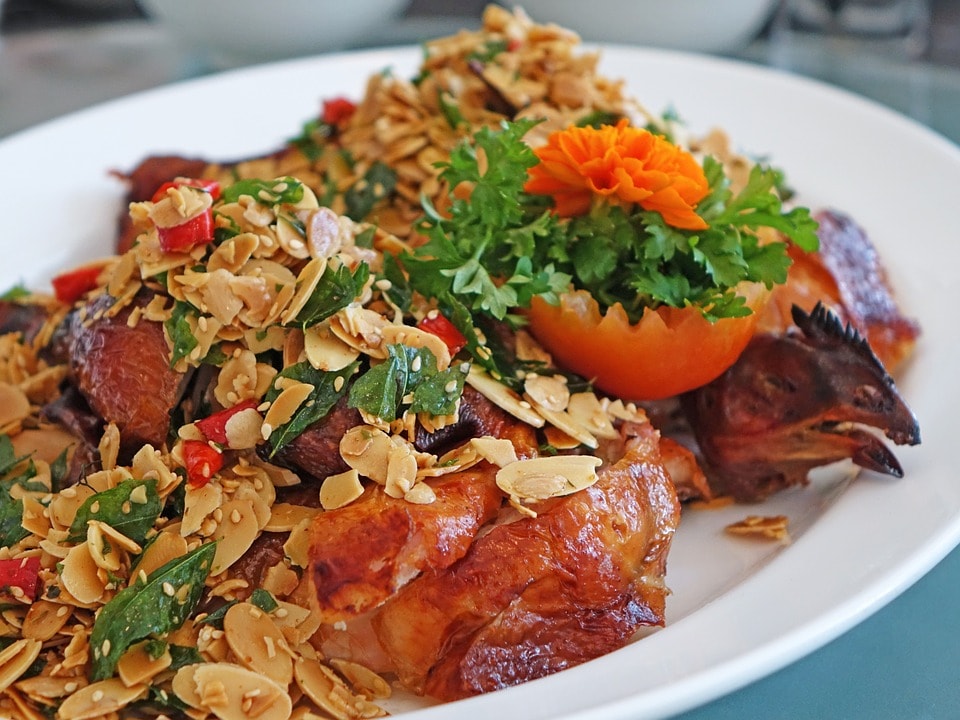
Image Source:conquerpcos
Even though ghee is still enjoyed for its taste, healthy oils also contain healthy fatty acids and typically require less in volume to achieve the same results.
An excellent rule of thumb is to use 1–1.5 tbsp of oil per every 2 cups of grains.
Using quality spices for taste and not excess fat, you will still have a delicious biryani while greatly reducing unwanted calorie intake.
5.Air-Frying Onions
Crispy fried onions, called Birista, are an important part of biryani. Deep frying them has too many calories so using an air fryer would be better calorie-wise.
How to make air-fried onions:
- Thinly slice onions.
- Use 1 tsp of oil to lightly coat them.
- Preheat air fryer to 180⁰ C.
- Cook for about 12-15 minutes.
- Halfway through cooking, shake the basket.
They will be crispy and golden with much less oil than deep-fried. If you choose to use your Airfryer rather than deep fry, you will save a lot of calories but still have the same flavor that makes them taste like delicious traditional biryani.
Good Flavor Enhancers that are Nutrient Dense and Add to Your Biryani.
-
Excessive Use of Root Vegetables in Biryani
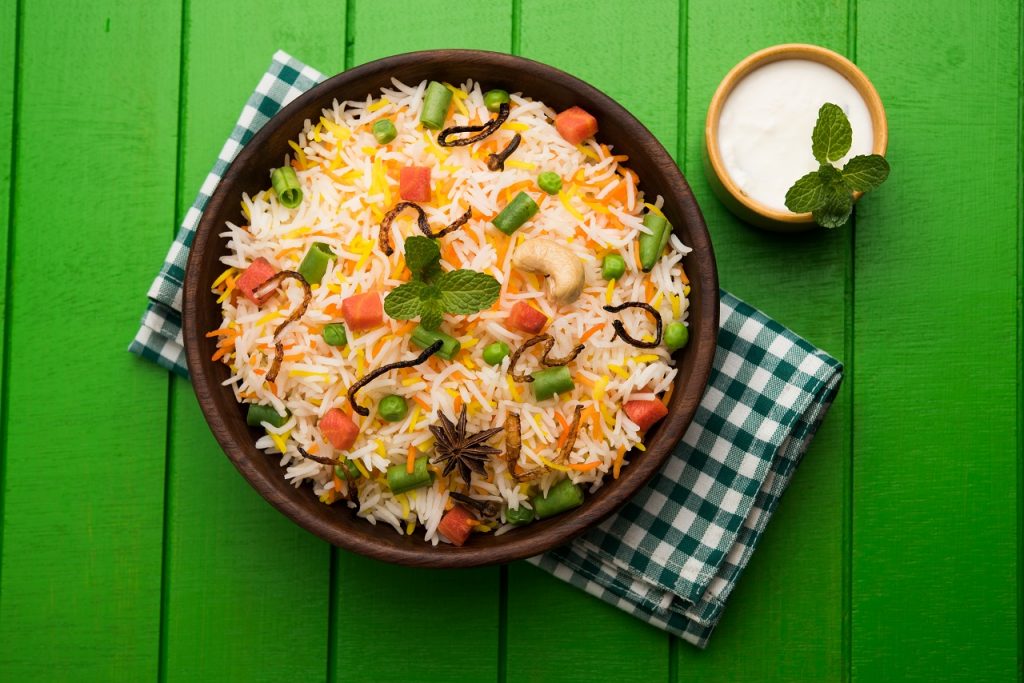
Adding root vegetables is an easy way to make it healthier. Carrots, peas, beans and other vegetables increase the volume of the dish without adding a lot of calories. These vegetables also provide lots of vitamins, minerals, antioxidants and dietary fibre. Nutritional benefits include the following; Carrots provide vitamin A, peas are good sources of plant protein and dietary fibre, beans are good sources of vitamins and minerals, and mixed vegetables add to the nutrient density of the biryani.
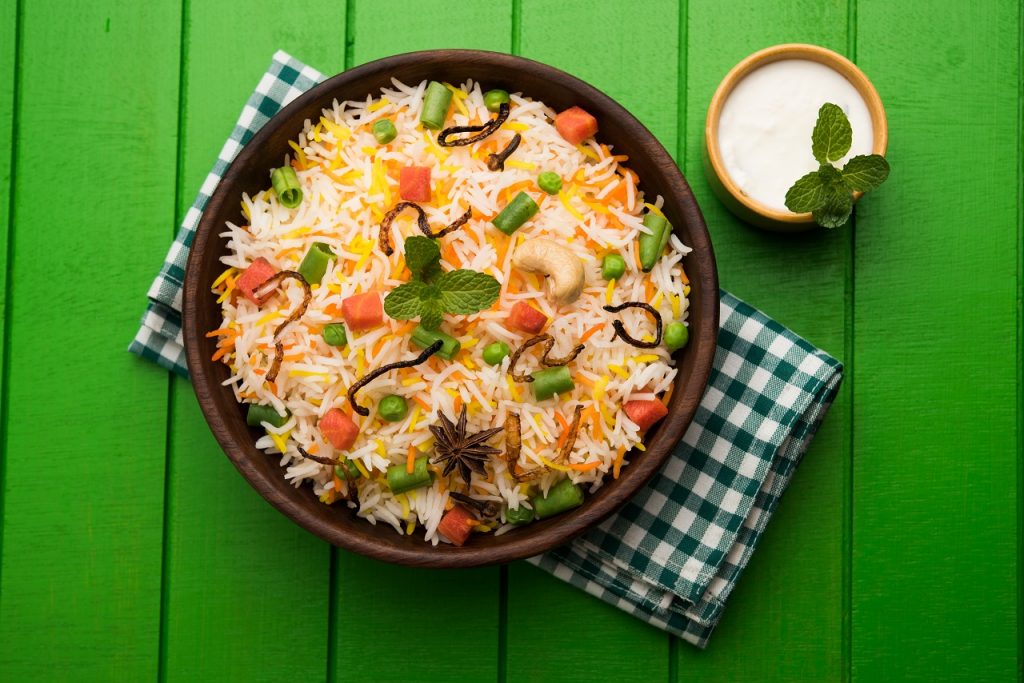
Image Source: GoQui
To maintain the texture of the root vegetables:
- Use root vegetables that are hard or firm early in the cooking process, and use peas towards the end to keep them from becoming mushy.
- Do not overcook your root vegetables to preserve colour and nutrients.
Natural Flavor Enhancers
You don’t have to rely on high levels of salt or fat for flavour.
Fresh ginger-garlic paste is a great way to add flavour and nutrition to your biryani because it has a stronger flavour and more nutrients than store-bought versions of ginger-garlic paste, which often contain preservatives.
Another great way to improve the flavour of your biryani is to add lemon zest; the citrus aroma adds brightness to your dish and allows you to further reduce the amount of salt used without losing any of the flavour.
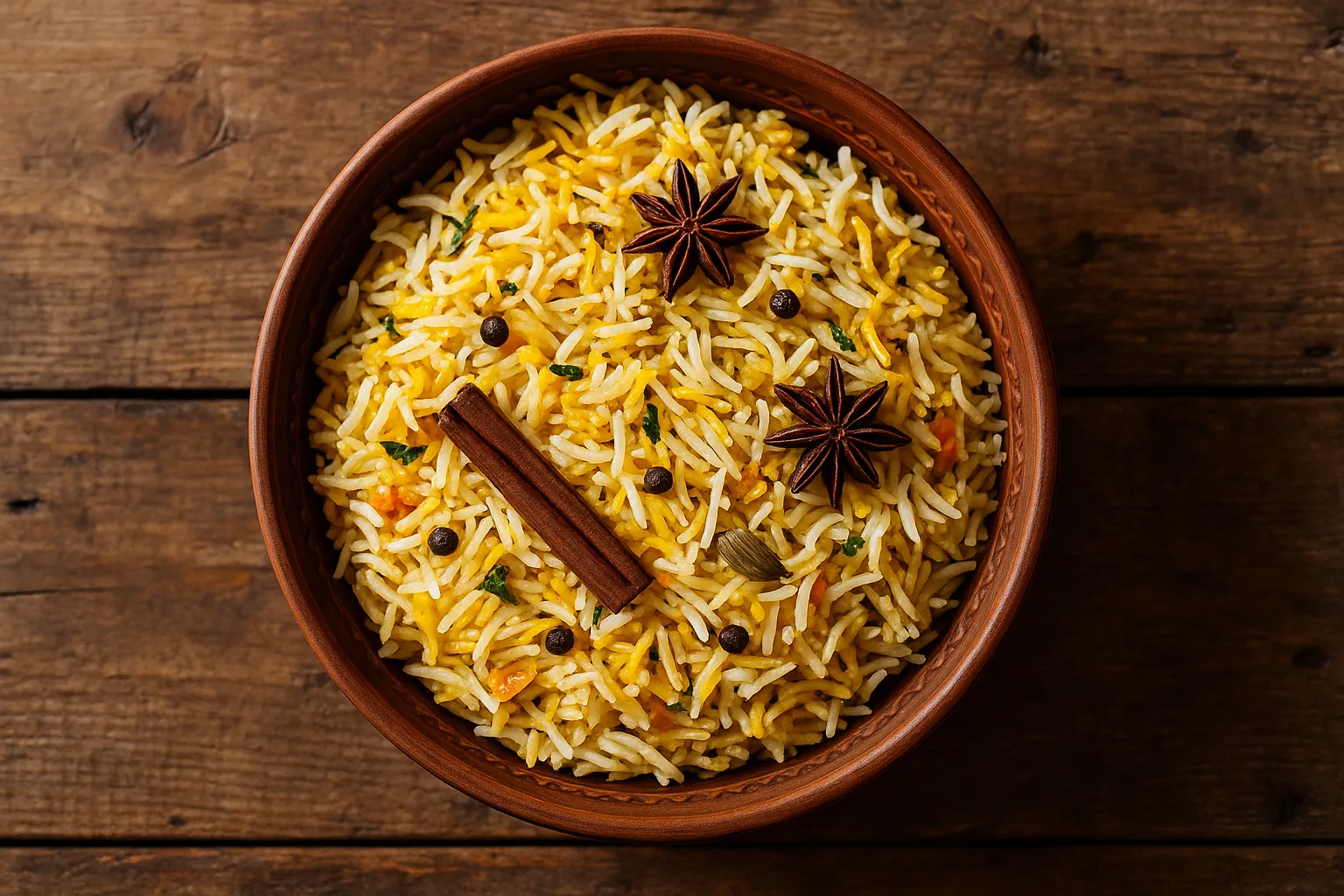
Many nutritionists recommend using whole spices in your cooking; cinnamon, cardamom, cloves and bay leaf are all good examples. Whole spices will add to the aroma and contain beneficial plant compounds that will promote overall wellness.
Portion Control & Serving Size for Biryani
A Healthy Biryani Should be Eaten in Moderation
When considering how to eat biryani, one practical way to balance your meal is the “half plate” rule. When eating biryani, follow these simple steps:
- half of your plate fill with salad or vegetables.
- one-quarter of your plate fill with a serving of biryani.
- The other quarter of your plate fill with protein-rich sides and/or other foods that are part of your healthy eating plan.
By pairing biryani with a fiber-rich dish such as cucumber raita or a salad, you will add to your meal’s fiber and increase hydration. Eating high-fiber foods will also help keep blood sugars from rising too much after eating, and they will also fill you up.
In addition to the above portion control guidelines, how we eat can also affect our health. To help improve your health when you’re eating, some mindful eating habits include:
- Chew your food slowly and enjoy the taste of the spices in the biryani.
- Avoid eating when you are watching a screen.
- Set times to eat regularly.
- Take breaks between bites so you can listen to your body’s hunger and fullness signals.
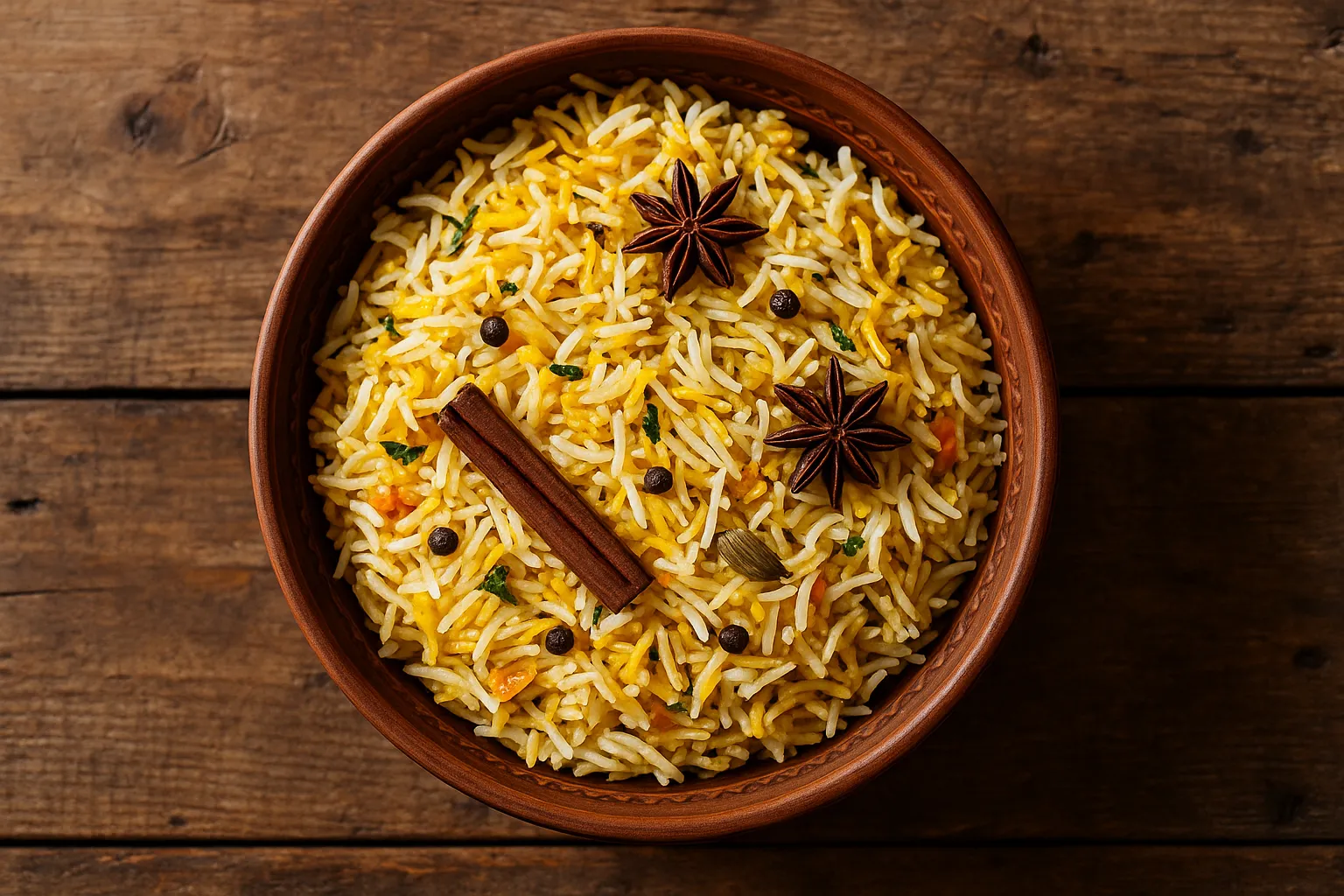
Image Source: NutriScan
Using smaller bowls and plates so food appears larger may help you eat smaller portions. Studies show that people tend to eat less when using small dishes compared to using larger dishes.
Conclusion
Healthy eating doesn’t mean you have to stop eating your favorite foods. With some smart tweaks and biryani, you can add to your normal living.
Here are 7 healthy biryani variants:
1. Cauliflower quinoa rice ,2. Millet and whole grain rice,3. Tofu and meat substitutes,4. Chicken or fish, skinless,5. Heart Healthy Oil Replacements,6. Onion Air Fryer,7. Boost The Veggies and Natural Flavor Boosters.
These simple changes can help you cut calories, boost nutrition and help better blood sugar control, all while tasting great!
Take up the challenge this weekend and try out just one of these healthy delicious upgrades to it. Small, consistent changes can lead to lasting positive results for your health and well-being.