
Climate Change in India 2026: Effects of Heatwaves and Extreme Weather

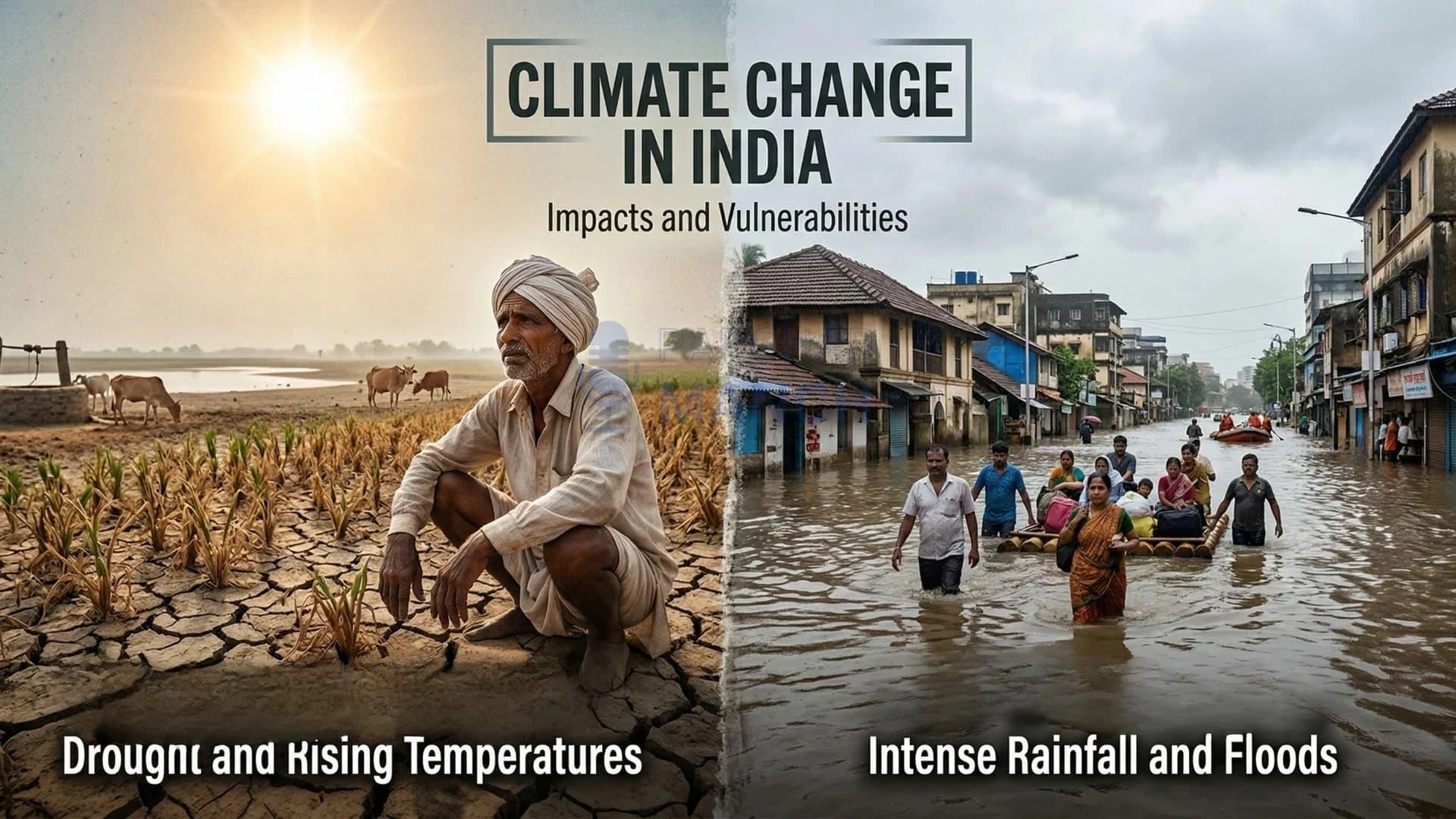
Climate change in India is becoming an increasingly important environmental, economic and public-health issue. Rising temperatures, changing rainfall patterns, heatwaves, floods and other extreme weather events are affecting communities across the country. Climate change in India is becoming an increasingly important environmental and economic concern in 2026. Rising temperatures and extreme heat in India, changing patterns of the Indian monsoon, and more frequent extreme weather in India are highlighting the growing climate change effects on communities, agriculture, water resources and cities. As the climate crisis in India continues to receive greater attention, understanding these changes is important for preparing for future risks.
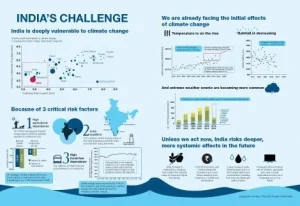
India is particularly vulnerable because of its large population, dependence on monsoon rainfall and rapidly growing cities. The effects of a changing climate can be seen in agriculture, water availability, public health, infrastructure and everyday life. Recent climate and weather assessments show why understanding these changes has become increasingly important in 2026.
Climate Change in India Is Increasing Temperature Risks
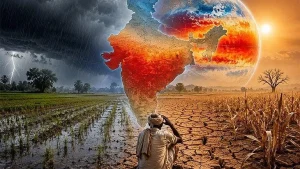
One of the clearest effects of climate change in India is rising temperatures. According to India’s climate statement for 2025, the country’s annual mean land-surface air temperature was 0.28°C above the 1991–2020 average. The India Meteorological Department also reported that 2024 remained the warmest year on record for India, at 0.65°C above the long-term average. Higher temperatures are not simply uncomfortable. Persistent heat can affect human health, agricultural productivity, electricity demand and water resources.
The India Meteorological Department’s 2026 forecasts also indicated above-normal heatwave activity in several parts of the country during parts of the pre-monsoon and early monsoon periods. This makes extreme heat one of the most important climate change effects in India to monitor extreme heat in India.
Extreme Heat Is Becoming an Economic Concern
The impact of extreme heat goes beyond health. People who work outdoors, including construction workers, farmers, delivery workers and other workers exposed to high temperatures, can face reduced productivity and greater heat stress.
A July 2026 World Bank report found that extreme heat is already costing South Asia the equivalent of nearly 31 million full-time jobs each year and could reduce the region’s economy by almost 7% by 2050 without stronger adaptation. For India, this highlights the importance of heat-action plans, better urban design, access to cooling and improved workplace protections. Cities can be particularly vulnerable because concrete buildings, roads and limited vegetation can contribute to higher local temperatures.
Climate Change and India’s Monsoon
The Indian monsoon plays a crucial role in the country’s economy and food production. Agriculture, water supplies, hydropower and many rural communities depend heavily on seasonal rainfall. Climate change can make rainfall patterns more difficult to manage because the problem is not necessarily simply “more rain” or “less rain.” What matters is also when, where and how intensely rainfall occurs.
The World Meteorological Organization has highlighted how monsoon extremes can produce cascading risks, including floods, droughts, heatwaves and landslides. In 2026, the interaction between large-scale climate patterns and the Indian climate change effects monsoon is particularly important. WMO forecasts have indicated the development of strong El Niño conditions during 2026, alongside a developing positive Indian Ocean Dipole. These climate drivers can influence rainfall and temperature patterns, although their effects vary by region and season.
Floods and Heavy Rainfall
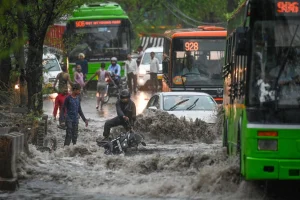
Another major concern linked to climate change in India is extreme rainfall. Heavy rainfall over a short period can overwhelm drainage systems, trigger flooding and damage roads, homes, farms and other infrastructure.
The India Meteorological Department regularly issues warnings for heavy, very heavy and extremely heavy rainfall across different regions. During the 2026 monsoon season, for example, IMD forecasts included episodes of very heavy and extremely heavy rainfall in parts of central, northern and northeastern India. This demonstrates why climate resilience cannot focus only on reducing greenhouse-gas emissions. Communities also need better drainage, flood forecasting, early-warning systems and disaster preparedness.
How Climate Change Is Affecting Indian Agriculture
Agriculture is particularly sensitive to changes in temperature and rainfall. Farmers depend on predictable seasonal conditions for planting, crop growth and harvesting. Excessive heat can stress crops, while heavy rainfall can cause waterlogging, soil erosion and crop damage. Changing rainfall patterns can also complicate water management.
For farmers, climate adaptation may include:
- More climate-resilient crop varieties
- Improved irrigation systems
- Better weather forecasting
- Water conservation
- Soil-management practices
- Crop diversification
- Greater access to agricultural advisories
Technology can also help farmers make better decisions by providing localized information about rainfall, temperature and crop conditions.
Climate Change and Water Security
Water is another major area affected by India’s changing climate. Higher temperatures can increase evaporation and water demand. At the same time, changing rainfall patterns can make water availability less predictable. Some regions may experience intense rainfall and flooding while other areas face periods of insufficient rainfall. This creates a complicated water-management challenge.
India therefore needs stronger investment in rainwater harvesting, groundwater management, efficient irrigation, wastewater treatment and urban water systems. Climate-resilient water management will become increasingly important as temperatures rise and rainfall patterns become more variable.
The Impact on Indian Cities
India’s rapidly expanding cities face unique climate challenges. Urban areas can experience the urban heat island effect, where built-up areas become warmer than surrounding areas because roads, buildings and other surfaces absorb and retain heat. Extreme rainfall can create additional problems when drainage systems cannot handle large volumes of water quickly.
Cities can respond by increasing tree cover, protecting wetlands, improving drainage, developing heat-action plans and designing buildings that require less energy for cooling. Public transport and cleaner energy can also help reduce emissions and improve urban air quality.
What Can India Do About Climate Change?
Addressing climate change in India requires two broad approaches: mitigation and adaptation. Mitigation means reducing greenhouse-gas emissions. This can include expanding renewable energy, improving energy efficiency, promoting cleaner transport and reducing emissions from industry. Adaptation means preparing communities for climate impacts that are already occurring or are expected to occur.
Examples include:
- Better early-warning systems for extreme weather.
- Heat-action plans for vulnerable communities.
- Climate-resilient infrastructure.
- More efficient water management.
- Climate-smart agriculture.
- Greater urban green space.
- Stronger disaster-preparedness systems.
Both approaches are necessary. Reducing emissions can help limit long-term climate risks, while adaptation can protect people and infrastructure from hazards happening today.
What Does the Future of India’s Climate Look Like?
The future will depend on global emissions, climate policy, technological development and how effectively countries adapt to changing conditions. India faces a particularly complex challenge because it must continue economic development while improving resilience and reducing emissions.
The country’s large population means climate risks can affect millions of people even when an extreme event is geographically limited. At the same time, investments in renewable energy, resilient infrastructure, forecasting technology and climate-smart agriculture can create opportunities for a more sustainable future.
Conclusion
Climate change in India is no longer simply a distant environmental concern. Rising temperatures, extreme heat, changing rainfall patterns, floods and pressure on water and agriculture are making climate resilience increasingly important. Recent 2026 forecasts and international assessments underline the scale of the challenge, particularly for South Asia’s cities, workers and climate change and monsoon.
India’s response will require a combination of clean energy, better planning, scientific forecasting, resilient infrastructure and public awareness. The most important question is not only how much the climate will change, but how effectively India can climate change effects prepare for those changes. With stronger adaptation measures and continued efforts to reduce emissions, India can protect communities, support economic growth and build a more climate-resilient future.
Frequently Asked Questions About Climate Change in India
1. What is climate change in India?
Climate change in India refers to long-term changes in temperatures, rainfall patterns and weather conditions across the country. These changes can contribute to more frequent or extreme heat in India, heavy rainfall, floods, droughts and other climate change and monsoon.
2. How is climate change affecting India in 2026?
Climate change is affecting India through rising temperatures, extreme heat, changing rainfall patterns, heavy rainfall events and increasing pressure on water and agriculture. The impacts can vary significantly between regions.
3. What are the main effects of climate change in India?
The major effects include rising temperatures, heatwaves, changing monsoon patterns, floods, droughts, water shortages, agricultural challenges and risks to public health and infrastructure.
4. Is India getting hotter because of climate change?
Yes. Long-term warming is increasing India’s temperature risks. Recent years have included exceptionally warm conditions, and extreme heat has become an important concern for communities, workers, agriculture and cities.
5. How does climate change affect the Indian monsoon?
Climate change can influence the intensity, timing and distribution of rainfall. This can increase uncertainty around water availability and contribute to periods of both heavy rainfall and insufficient rainfall in different regions.