
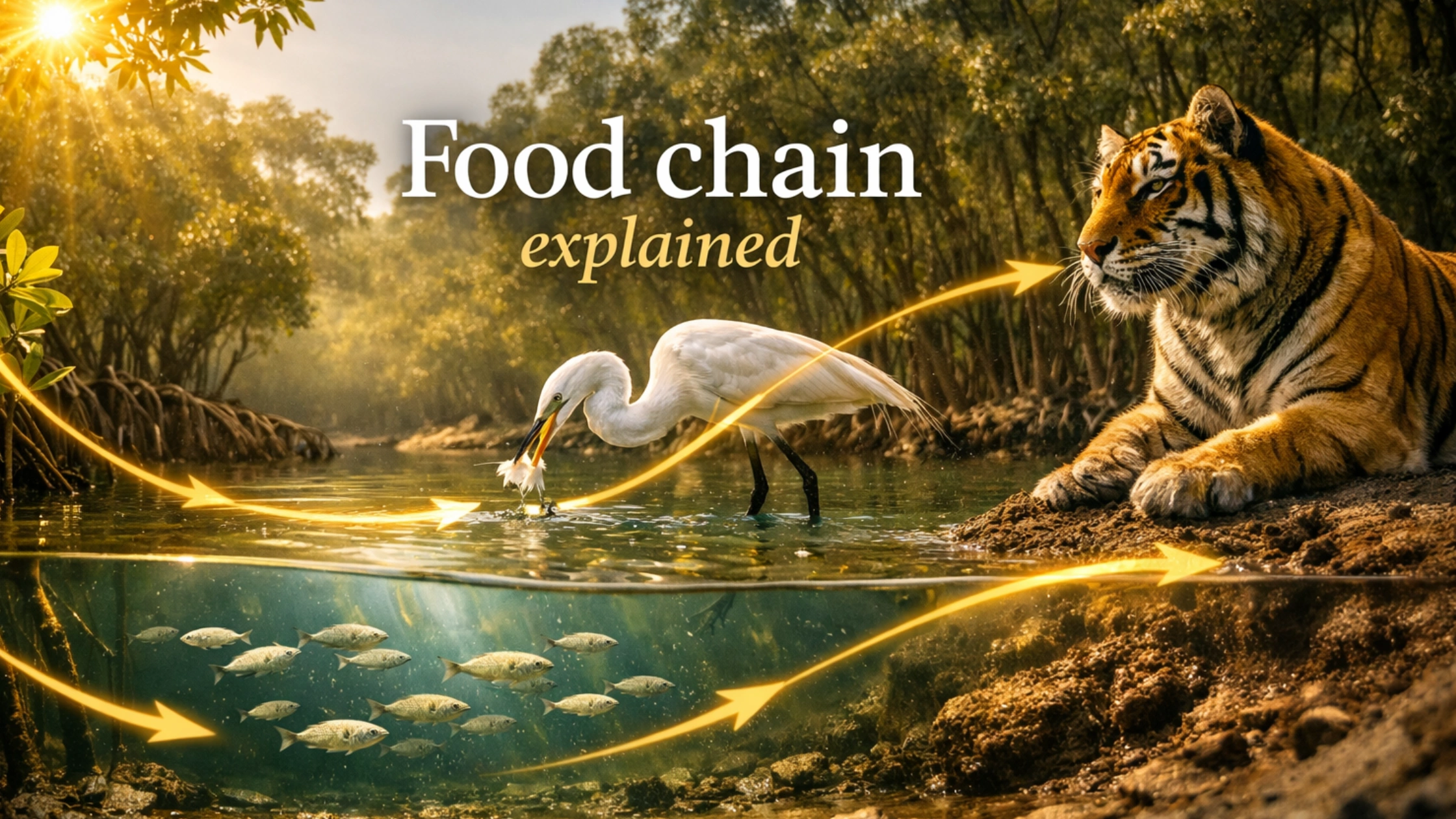
Food Chain Explained: The Ultimate Energy Highway

The food chain is one of the most amazing things in nature. We can notice that energy is transferred between organisms to maintain ecological balance. Studying the food chain, food web, and ecosystem pyramid is essential for students in West Bengal and other states. In this world, every living thing that exists does contribute to the transfer of energy, not just fish in Hooghly or tigers in the Sundarbans.
What is a Food Chain?
A food chain is considered an illustration showing the flow of energy in various living beings.
Producers (Plants): Producers refer to plants and algae, which prepare food for themselves with the help of sunlight.
Consumers: Consumers are those animals that eat plants or other animals.
Decomposers: It involves organic materials being broken down by fungus and bacteria. As a result, absolutely no energy is lost.
Different Food Chains in an Ecosystem
Grazing Food Chain
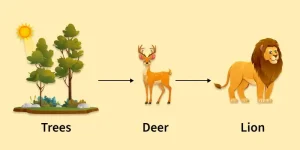
Green vegetation is where the grazing food chain starts. The vegetation is considered to be producers since they produce their own food through the use of energy from the sun. The grass in the Bengal rural area acts as a major source of energy for these vegetarians. For instance, farm goats feed on the green vegetation to survive.
Energy does not end at that point. Local carnivores like jackals prey on and eat the goats to extract energy from them. As shown in the illustration, there is a highway that energy uses to travel from one organism to another. Energy flows from one producer to a consumer of the plant and then to a consumer of the flesh-eater.
Food Chain of Detritus
The detritus food chain is a very important part of nature. It consists entirely of organic dead materials, such as fallen leaves and dead plants. Small living creatures then go to work on this waste. It is slowly broken down by busy fungi and earthworms in the soil.
After that, tiny animals eat these broken-down materials to survive. This entire process acts as a natural recycling system. Because of this helpful cycle, vital soil fertility is successfully maintained in the local farmlands. It ensures that the soil stays rich and healthy so new crops can grow.
Food Chain in Water
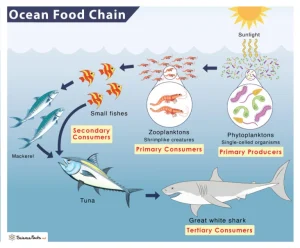
The smaller fish in rivers like the Ganges eat the phytoplanktons, which are then eaten by the larger fish and the birds.
Source: sciencefacts.net
A Complex Network: The Food Web
The Food Web is like a web with lots of connections. Food chains are linear, one thing to another. In the Sunderbans, tigers and crocodiles hunt deer. Birds eat fish. Snakes eat birds. The Food Web is important because it shows that ecosystems are strong when energy can flow in ways through the Food Web and between the Food Web connections. The Food Web has connections that make ecosystems strong. It helps us understand how different species interact in the Food Web. The Food Web is a network that shows how everything is connected.
Balance in the Food Chain and the Ecological Pyramid
Pyramid of Number of Organisms
The pyramid shows the number of people in each trophic level. Hundreds of grasshoppers eat thousands of grasses, which are then eaten by a few frogs, which are then eaten by one snake.
The Pyramid of Biomass
The bulk of living creatures is reflected in the pyramid. The biomass of trees in the Bengal forest is far higher than that of herbivores and predators.
Pyramid of Energy
With each new level in the energy pyramid, the quantity of energy progressively drops. The lack of predators can be explained by the fact that around 10% of the energy transfer takes place at each level.
Significance of Food Chain in Ecosystems
Food chains in any ecosystem helps to bring equilibrium. The loss of a particular species affects the whole chain. For instance, if there is less fish in Bengal’s river ecosystems, then the birds and people who depend on them will be affected.
There are three primary purposes that the food chain has for maintaining an ecosystem. First is the recycling of nutrients, where there is proper cycling of nutrients from living things back to the soil. Secondly, it controls the populations of organisms at different trophic levels. Lastly, the whole ecosystem is maintained because the predator and prey relationship is constant.
Specialised Terms in Food Chains and Food Web
Keystone Species
There are certain species, such as tigers in Sundarbans, the presence of which is essential. Otherwise, the entire food web collapses due to their removal.
Role of Human Beings in Food Chains
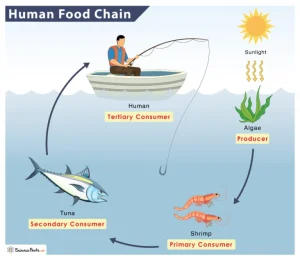
The West Bengal food chain is negatively impacted by elements that include pollution, deforestation and overfishing. Pesticides kill insects, which reduces the amount of food available to birds.
Food Chain in Urban Ecosystems
Food chains exist in urban areas as well. Street dogs, crows, and rats create interdependent systems where garbage gets recycled.
Final Thought: The Significance of the Food Chain
The food chains isn’t just about biology; it reminds us of our close relationship with nature. Whether it’s a rice crop growing in West Bengal or the mangrove swamps of the Sundarbans, each part of the chain is significant and essential. Therefore, keep in mind the invisible highway of energy that we are all reliant on the next time you see a fish caught in the river or a sparrow eating seeds.


