Real Madrid CF: The Entire History of Football’s Greatest Team⚪👑

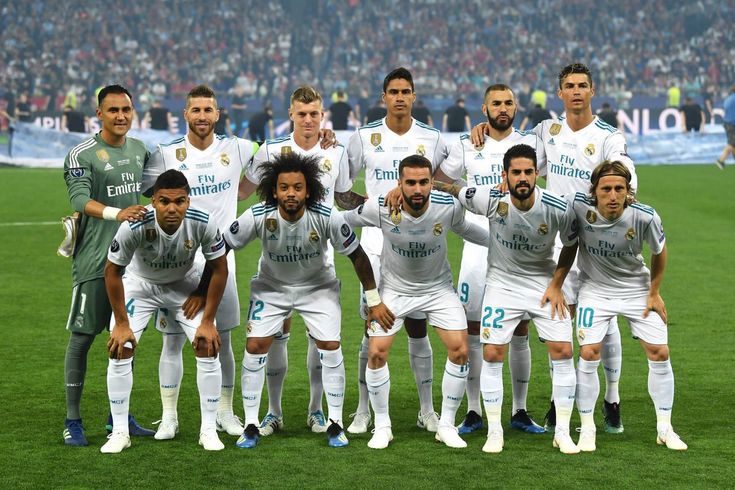
There are few sports franchises that have the same allure as Real Madrid CF. This team is at the pinnacle of football history with 15 UEFA Champions League trophies, 36 Laliga trophy the most of any team. They are recognized by fans around the world as the ‘Kings of Europe,’ a name that encompasses success on the field and widespread popularity.
Image Source:Pinterest
From their beginnings in Madrid to their reign at the top of the world, their history illustrates what it means to leave a lasting legacy. We will take you through the entire journey of how Real Madrid CF has achieved success, from their beginnings to the present day.
Section 1: The Beginnings and Early Years (1902-1943)🏛️📜
The history of Real Madrid CF begins at the beginning of the 20th century. The team was founded in 1902 by a group of young men who broke away from another Madrid team. They began playing in makeshift grounds and had very tough opponents from the very start.
The Origin of Real Madrid CF Football Club
On March 6, 1902, Madrid Foot-Ball Club was formed. Juan Padrós was instrumental in its formation due to the growing popularity of football in Spain. The club participated in local cups and gained a small following.
In 1920, King Alfonso XIII honored the club by prefixing “Real” to its name, which is Spanish for royal. This was accompanied by the addition of a crown to their emblem, increasing their prestige. Their early victories in the Copa del Rey established them in their local struggles.
- First Copa del Rey title: 1905, defeated Athletic Bilbao.
- Pivotal persons in the formation of the club: Juan and Carlos Padrós, who established the initial rules of the club
The Arrival of the White Kit and Early Successes
The white kit was introduced in 1910, modeled after English Corinthian FC. The players were very fond of this design, and it has remained as the “Los Blancos” nickname to this day. This was a very simple yet effective way of building their identity.
Spain formed La Liga, its first national football league, in 1929. Real Madrid CF entered the league and won their first title in 1932. This was achieved under the guidance of English coach Arthur Johnson and his effective tactics.
They won further Laliga titles in 1933 and 1936. These early years showed the determination of the team. The fans filled the old Chamartín Stadium to watch them.
- Total Laliga titles in the 1930s: Three.
- Best player: Ricardo Zamora, who was an excellent goalkeeper and saved many goals.
The white kit was a reflection of purity and strength. This was the beginning of Real Madrid’s dominance in Spanish football.
The Shadow of the Civil War
The Spanish Civil War, which lasted from 1936 to 1939, affected Real Madrid severely. The matches were stopped, and the players were dispersed all over the place. The stadium was damaged, and there was no money to be made.
The team management tried to keep things going by renaming the grounds and playing small matches. Some members of the team fought on both sides, which led to a test of their loyalty. Once the war was over, the team started to rebuild according to the new rules set by the government of General Franco.
This was a very difficult period, which temporarily halted the progress of Real Madrid CF but did not diminish their spirit. Real Madrid was ready to develop further. The Civil War left its mark on everyone, and it reminded them of the importance of football during difficult times.
Section 2: The Di Stéfano Era and European Domination (1943–1978)👑🏆🌍
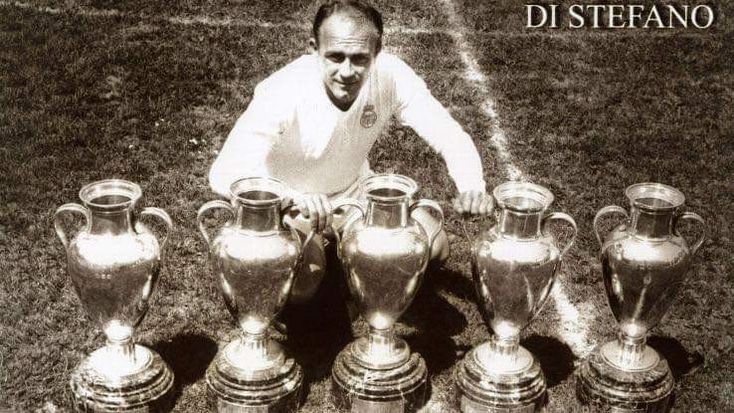
Image Source:Pinterest
The years following the war were full of fresh vitality. New leaders, such as Santiago Bernabéu, emerged with visions of the future that were greater than ever before, propelling Real Madrid to a position of European leadership.
Santiago Bernabéu: The Architect of Modern Real Madrid CF 🏟️
Santiago Bernabéu took over as president in 1943, with his eyes firmly fixed on the future of football beyond the borders of Spain. His vision was to construct a stadium and conquer Europe.
The new Estadio Santiago Bernabéu was inaugurated in 1947, with seating for 80,000 spectators. In 1955, Bernabéu introduced the European Cup, which was to revolutionize the elite clubs of Europe.
During his presidency, the team recruited talent, nurtured it carefully, and emphasized youth development, combining experience with youth. Real Madrid was transformed into a model club under Bernabéu’s leadership.
– Improvements to the stadium: seating capacity expanded to over 100,000 in the 1950s.
– Impact: over two decades as president, guiding the club through thick and thin.
It is likely that the club’s international presence would never have materialized without Bernabéu’s presence at the club. He constructed more than a football team; he created an empire.
The Arrival of Alfredo Di Stéfano and the European Cup Dynasty
The signing of Alfredo Di Stéfano in 1953 was contentious. Barcelona and Real Madrid both wanted him, but the courts decided in Real’s favor. Di Stéfano arrived and transformed football.
Between 1956 and 1960, Real Madrid won the European Cup five years running. This record has never been equaled. Di Stéfano scored 49 goals in the finals alone? No, he scored many more over the period.
Players like Ferenc Puskás and Paco Gento were stars of the team. Puskás scored four goals in the 1960 final. This team is known as the greatest ever assembled by historians.
- Important victories: Defeated Reims in 1956, Milan in 1958.
- Di Stéfano’s contribution: He was captain and scored many goals, more than 300 for the club.
This period made Real Madrid CF a global force. They showed the world they could beat anyone in Europe.
The “Yé-Yé” Team and Domestic Consistency
The “Yé-Yé” team continued from Di Stéfano’s peak. The homegrown Spaniards, Amancio and Pirri, brought new blood. They combined the beat music atmosphere with quality performance.
The team won six Laliga championships in the 1960s. They won another European Cup in 1966 over Partizan Belgrade. Goals were plentiful, and the fans roared.
This period maintained the home fires. It connected the old stars to the new ones. The domestic championships stacked up, symbolizing consistent leadership.
- Yé-Yé regulars: Five main players from the youth team.
- Total trophies in the 1960s: Eight Laliga and one European Cup.
The transition was seamless. Real Madrid CF remained the home monarchs while looking to conquer more internationally.
Section 3: Navigating Transition and the Emergence of La Quinta del Buitre (1978-1998)🔄🦅⚽
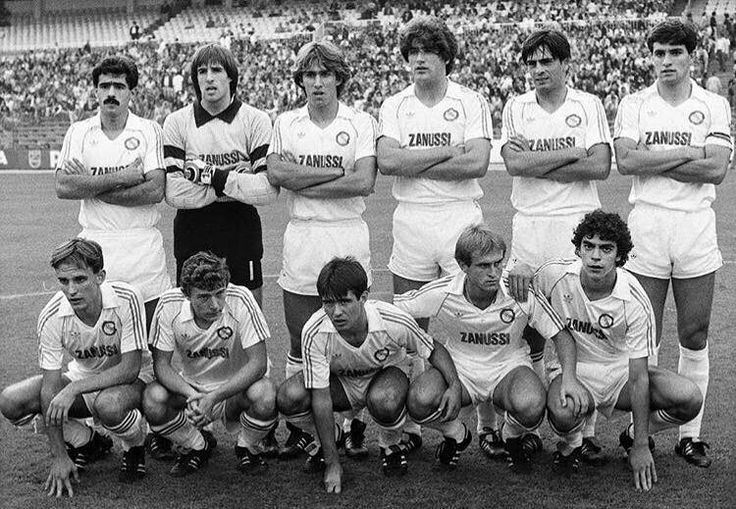
Image Source:Pinterest
The end of the 1970s was a challenging period for the club. There were new presidents after Bernabéu’s death in 1978. The attention was now on winning Laliga titles.
Real Madrid Challenges and Focus on Laliga⚔️🏆
Real Madrid CF lost Europe after Bernabéu’s death. However, the club relied on Spanish players and a strong defense. Their rivals, Barcelona, pushed them to the limit in El Clásico encounters.
During the 1980s, Real Madrid won five consecutive Laliga titles between 1986 and 1990. Coaches such as Luis Molowny constructed robust teams. The Bernabéu was packed during intense derby encounters.
This period forged character. It demonstrated how to succeed without being spectacular. The club continued to fill its trophy cabinet with domestic titles.
- Laliga record: Held the record for five consecutive titles.
- Influence of rivalry: Clásicos determined championship titles.
La Quinta del Buitre: The Golden Generation of the 80s
La Quinta del Buitre exploded in 1984. Emilio Butragueño was the frontman, with Míchel, Manolo Sanchís, Martín Vázquez, and Miguel Pardeza. They were all products of the club’s youth development. They played with flair and pace.
Their playing style was mesmerizing. They passed the ball quickly and attacked with ferocity. They won two UEFA Cups in 1985 and 1986. Laliga championships soon followed, five in all.
Butragueño scored 123 goals, a club record. The quintet represented Spanish pride. Fans sang their names for years to come.
- Primary characteristics: Speed, technique, and teamwork.
- Butragueño era highlights: Over 700 matches played altogether.
The End of the 32-Year Wait: La Séptima (1998)
By 1998, there was mounting pressure for a seventh European Cup. The last one had been won in 1966. Predrag Mijatović scored the winning goal against Juventus in Amsterdam.
The team consisted of players such as Roberto Carlos and Raúl. The team was led by coach Jupp Heynckes, who helped them overcome difficult draws.
La Séptima was much more than a victory. It regained the title of Europe. Real Madrid’s history was given a new chapter.
- Final score: 1-0, with Mijatović’s legendary goal.
- Impact: Increased international sales and loyalty.
Section 4: The Galácticos Era and Modern Global Branding of Real Madrid CF (2000-Present)🔥⚪👑
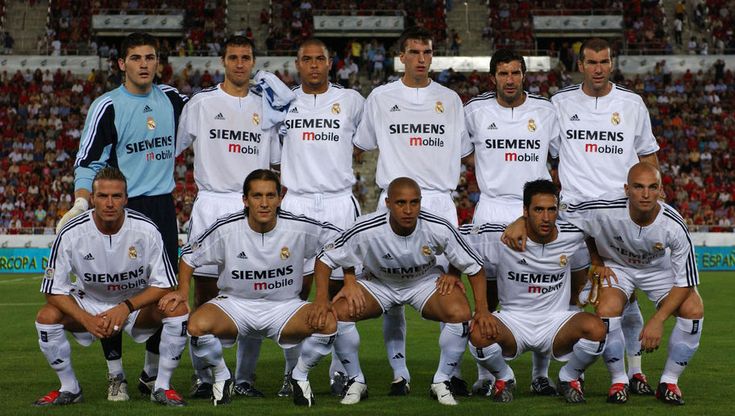
Image Source:Pinterest
The 2000s were a glamorous period. Florentino Pérez became president and splurged. This period made Real Madrid CF a global symbol.
Florentino Pérez and the First Galácticos Policy in Real Madrid CF
Pérez became president in 2000 with a vision. He signed superstars and developed young players—the “Zidanes y Pavones” philosophy. Real Madrid signed Luís Figo from Barcelona for a record $62 million.
Zinedine Zidane was signed in 2001 for $77 million, scoring that incredible volley in the 2002 final. Real Madrid signed Ronaldo Nazário in 2002 and David Beckham in 2003. Each transfer fee broke records.
The policy combined magic with Madrid heritage. It attracted millions of new fans. Pérez created a brand beyond football.
- Notable signings: Figo, Zidane, Ronaldo, Beckham.
- Transfer spending: Over $300 million in initial outlays.
Galácticos electrified football grounds. They won Laliga in 2001 and 2003.
The Unprecedented Champions League Dominance of Real Madrid CF (2014-2018)🏆👑
Image Source:Pinterest
Fast-forward to 2014. Carlo Ancelotti’s side began a streak. They defeated Atlético Madrid in the final on penalties to claim their 10th title.
Zinedine Zidane came back as manager in 2016. Cristiano Ronaldo led the way, scoring 44 goals in a season. They retained the title in 2017 against Juventus, then again in 2018 against Liverpool.
This three-peat was massive—the first in modern Champions League history. Comebacks were the hallmark of these titles, such as in the 2018 semis against Bayern. Ronaldo’s hat-tricks were the icing on the cake.
- Three consecutive titles: 2016-2018.
- Ronaldo’s record: 105 UCL goals for Real.
Zidane’s steady hand was the magic. Real Madrid dominated Europe again.
Legacy Players and the Never-Ending Cycle of Success
Players like Sergio Ramos provided solidity at the back with crucial goals. Luka Modrić won the Ballon d’Or in 2018 for his incredible displays in midfield. Karim Benzema emerged as the goal-scoring sensation after Ronaldo’s departure.
Now, young players like Vinícius Jr. and Rodrygo provide pace. They mix well with the old guard. They sell superstars but buy well, maintaining superiority.
High turnover rates? They manage it through scouting and training. Success continues with five Laliga titles since 2010. This cycle maintains dominance.
- Modern greats: Ramos (16-year captain), Modrić (UCL final hero).
- Youth contribution: Vinícius Jr.’s ball control is reminiscent of the old days.
Real Madrid CF maintains dominance through their constant evolution.
Conclusion: The Enduring Myth of the Kings of Europe ..Real Madrid CF👑🌍🏆
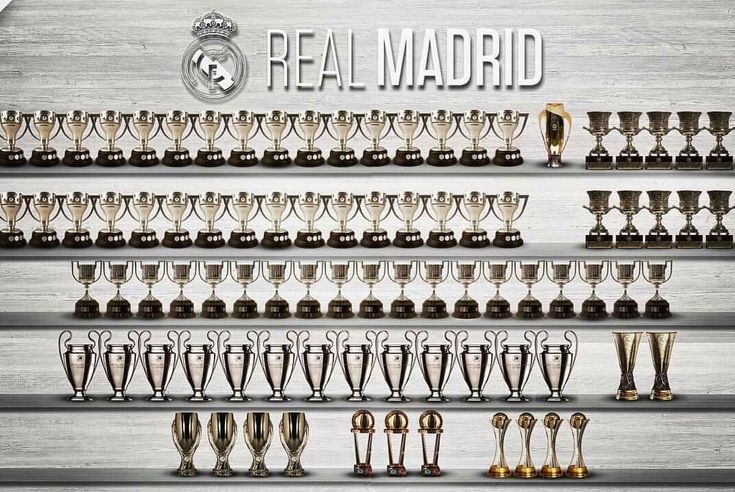
Image Source:Pinterest
The history of Real Madrid CF has more than 120 years of highs and lows. The vision of Santiago Bernabéu and Pérez drove all of this. The stars of Di Stéfano to Ronaldo won all the titles.
Three takeaways: Plan for the long term with your vision. Combine international players and domestic players. Pressure is what makes legends.
Their 15 Champions Leagues and 36 Laliga titles are the evidence. No other club has this many. As the kings of Europe, Real Madrid CF has raised the bar.
Who hasn’t dreamed of that white shirt? Experience their matches or go to the Santiago Bernabéu. The legend continues to draw you in.