
Goa Beach: Goa Nightlife by the Light of the Stars

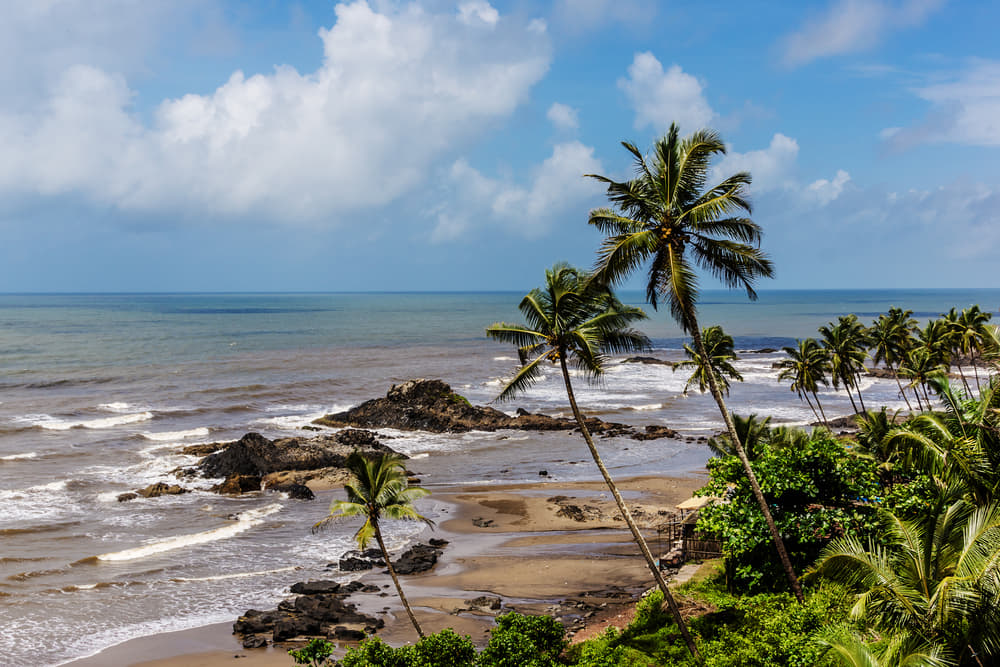
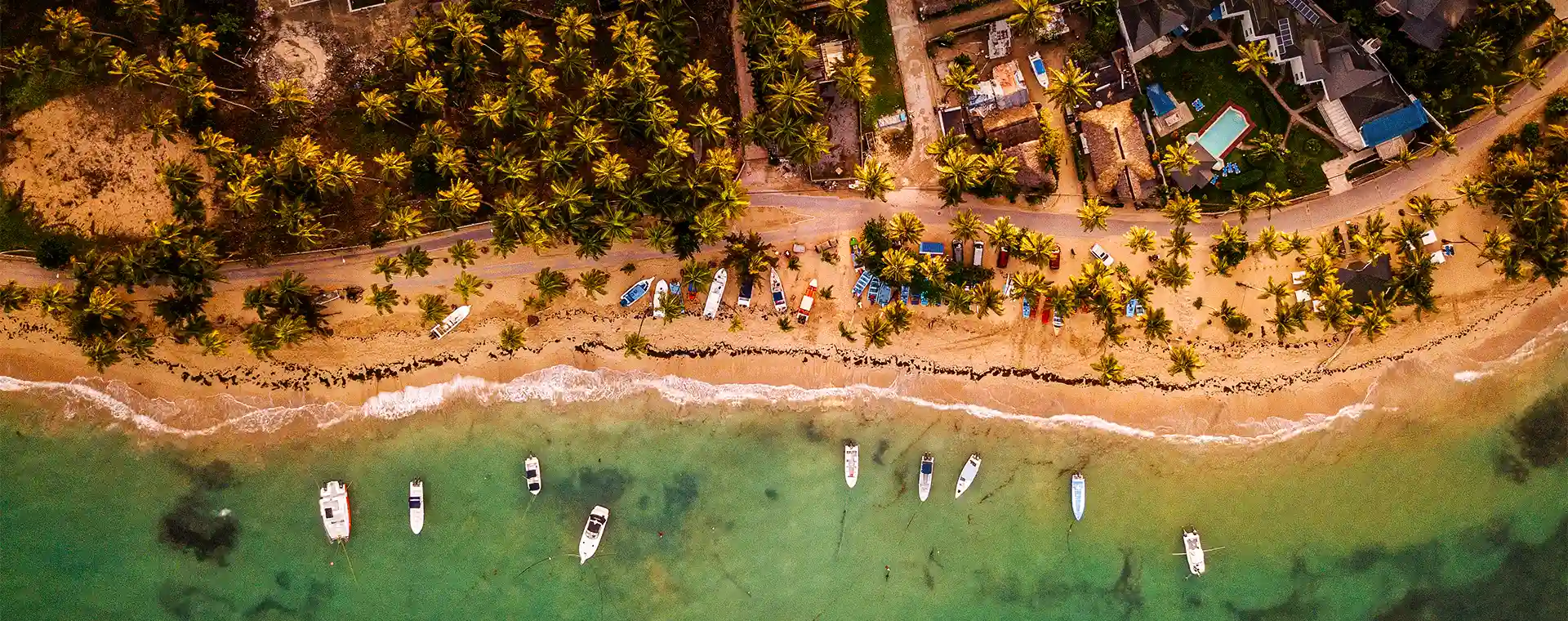
I still remember the first time someone told me Goa nightlife was “a whole different world” — I nodded politely and had no idea what they meant until I actually stood on a Goa beach after dark and watched it happen for myself. Baga Beach clubs lit up first.Then Calangute Beach’s lanes filled with people, and somewhere down the coast Candolim Beach’s shacks started glowing with candlelight instead. If you keep heading north you’ll land at Arambol Beach for drum circles under the stars, or Vagator Beach if cliffside trance parties are more your thing. Down south, Colva Beach goes quiet while Palolem Beach throws its famous silent discos, and further out, Cabo De Rama Beach and Chapora Fort just hand you silence and a sky full of stars instead. However you get here — through Goa Airport or off a train at Madgaon Junction — leave a little time to wander island to Bicholim too, because this coastline has more than one speed.

Image Source : TRENDING US
The North Goa Beach Party Circuit
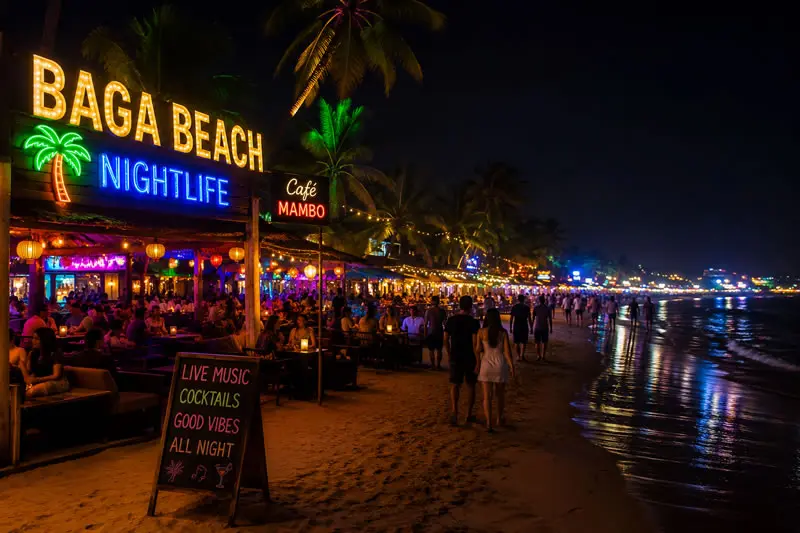
Image Source : tito’s goa
If you ask around, most people will point you straight to Baga Beach when the topic of Goa nightlife comes up — and honestly, they’re not wrong to. It’s loud. It’s a bit much, if I’m being honest. Clubs and shacks are packed in side by side, half-asleep all day and then suddenly wide awake the second the clock hits ten. Walk down Tito’s Lane, the strip right beside Baga Beach, and you’ll understand within about thirty seconds why people call this the epicenter of Goa nightlife — neon everywhere, bass you can feel in your chest, and a crowd that genuinely does not seem to care what time it is.
Calangute: The Queen of Beaches
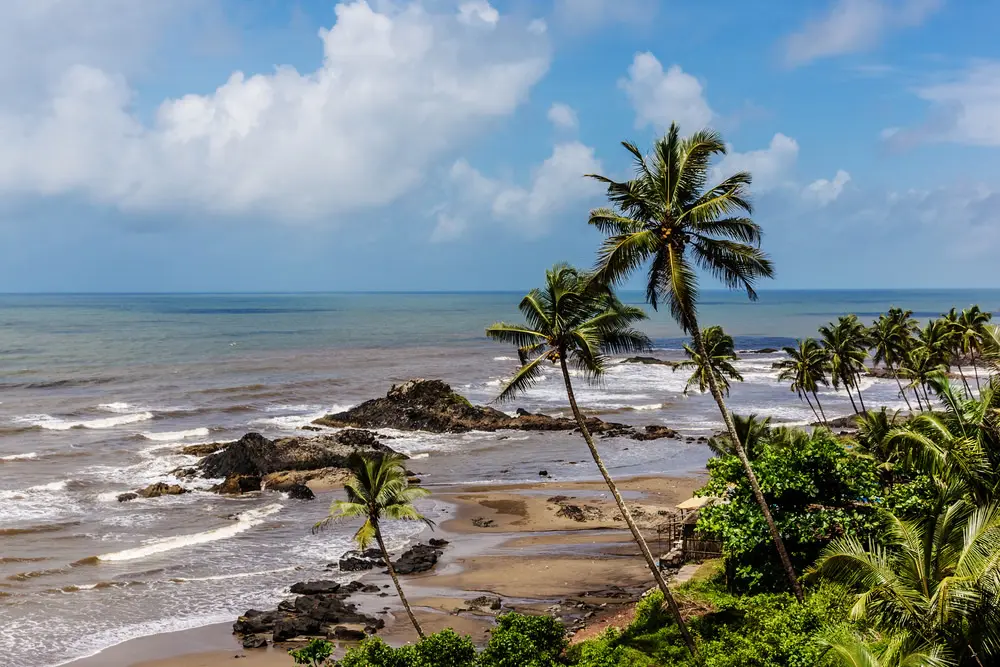
Image Source : thrillophilia
A short drive away, things settle into something a little easier at Calangute Beach. Locals still call it the “Queen of Beaches,” and having spent an evening there, I get why — somehow it manages to be relaxed during the day and lively once night falls, with the market lighting up and cafes along the sand quietly turning into party spots without really trying. It’s probably why so many first-time visitors just pick Calangute Beach as their base; everything else in North Goa is basically a short ride away from here.
Beyond the Big Clubs: Candolim and Vagator

Image Source : Universal Adventures
Not every evening in the north needs to be a club night, though, and that’s where Candolim Beach comes in. Trade the bass for candlelight and you’ve basically got the vibe — quieter tables, unhurried lounge bars, that sort of thing. Candolim Beach seems to pull in couples and older travelers more than the college crowd, people who’d rather nurse a feni cocktail and listen to the sea than shout over a DJ. It’s a decent reminder that Goa beach life isn’t only measured in decibels; some of the best nights here are the ones where nothing much happens at all.
Vagator’s Cliffside Trance Scene

Image Source : WIKIMEDIA COMMONS
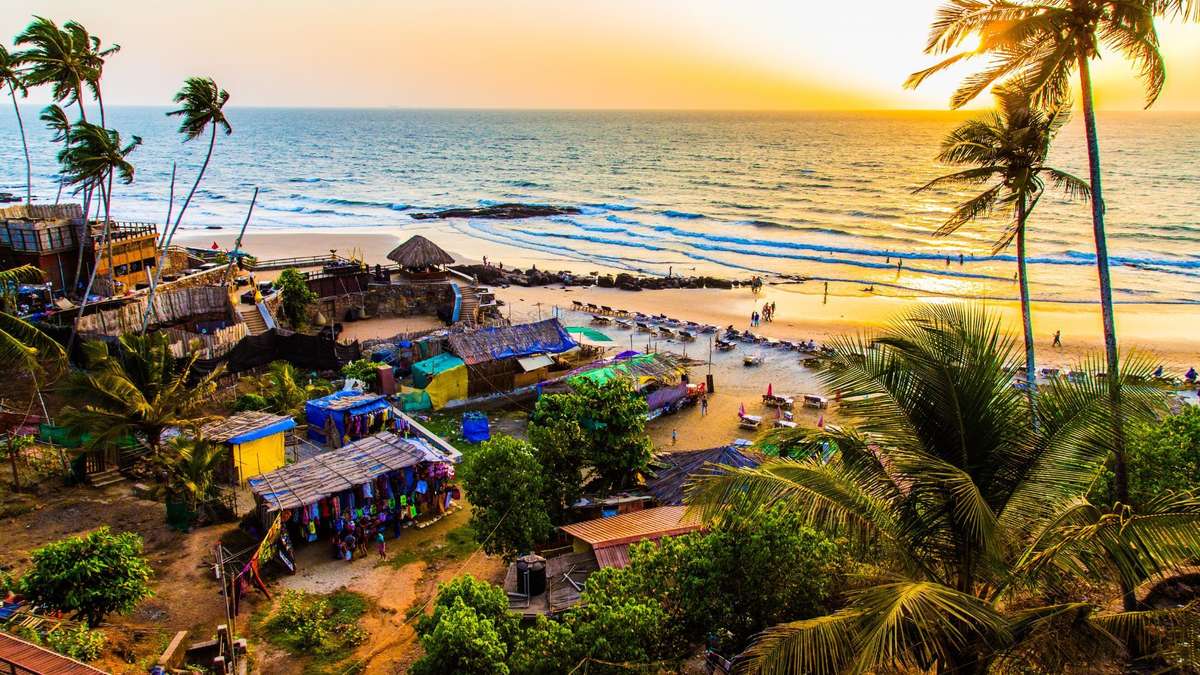
Then there’s Vagator Beach, which pulls in a slightly different crowd chasing a slightly different version of goa nightlife. Set high on red cliffs, Vagator Beach carries the legacy of Goa’s original trance-music days, and you can genuinely feel it in the air once the sun starts going down. The sunset alone is worth showing up for — the sky turns orange over the water, and almost without anyone planning it, the evening just tips over into one of the late-night gatherings this stretch of coast has been known for since the ’90s.
Arambol and the Hippie Trail
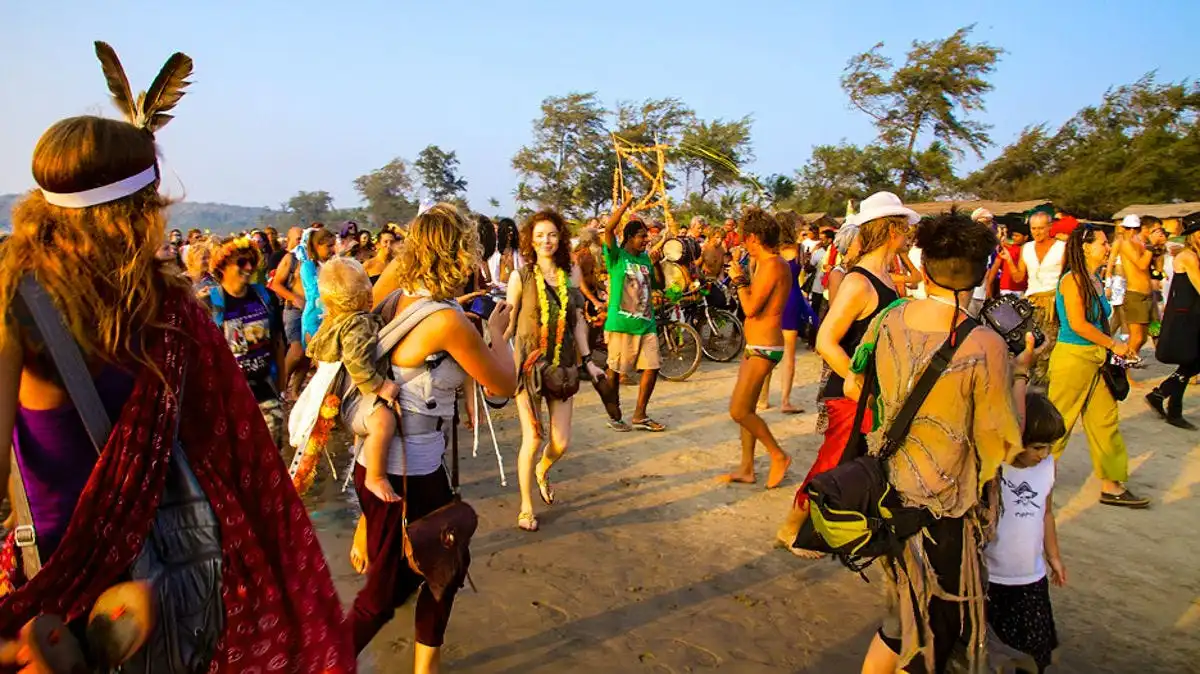
Image Source : Medium
Push further north and you’ll reach Arambol Beach, which still feels like a leftover from Goa’s old backpacker era — in the best possible way. Forget clubs; Arambol Beach is more about drum circles forming on the sand as the sun sets, fire dancers, and jam sessions that just keep rolling until whenever they feel like stopping. It’s an entirely different shade of Goa nightlife, built around people rather than a sound system, and it’s still one of the most-loved stops on any Goa beach trip for travelers who’d take a bonfire over a VIP table any day.
South Goa Beach: Serenity Under the Stars
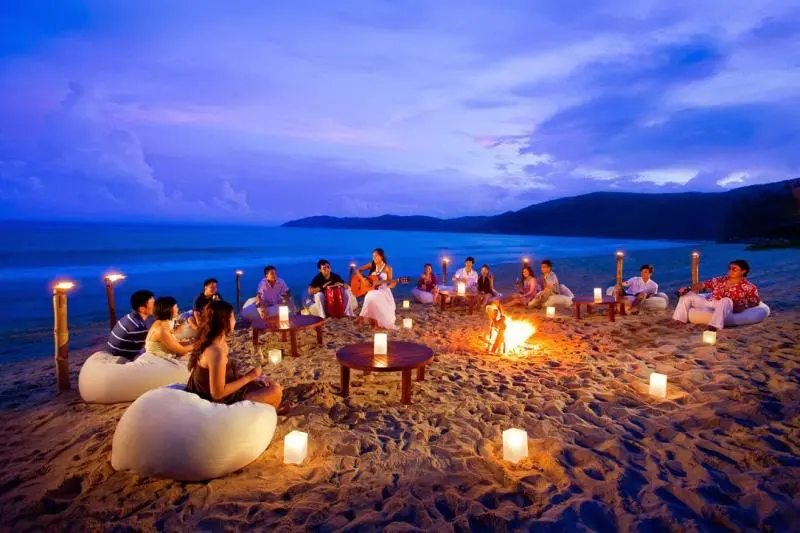
Image Source : holidify
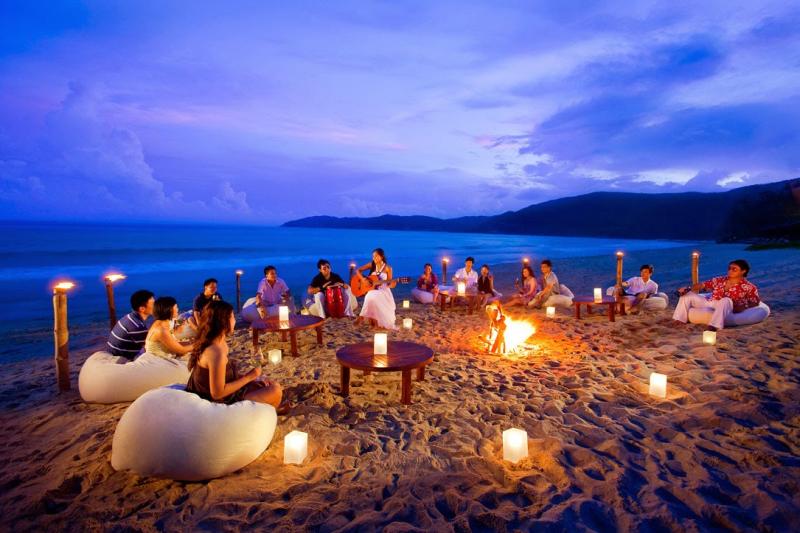
North Goa throws the party; South Goa hands you a moment to actually breathe. Colva Beach is usually where that shift kicks in — wide, palm-lined, dotted with unhurried shacks dishing out fresh seafood as the stars come out, a completely different animal from the buzz you’d find up at Candolim Beach.Goa Nightlife here stays deliberately low-key: acoustic guitar, a few small bonfires, long barefoot walks instead of anything close to a dance floor. If Candolim Beach is candlelit calm, Colva Beach just takes that same quiet and stretches it out even further — swap Candolim Beach’s lounge bars for nothing but sand, sea, and stars.
Palolem’s Silent Nights of Goa Beach
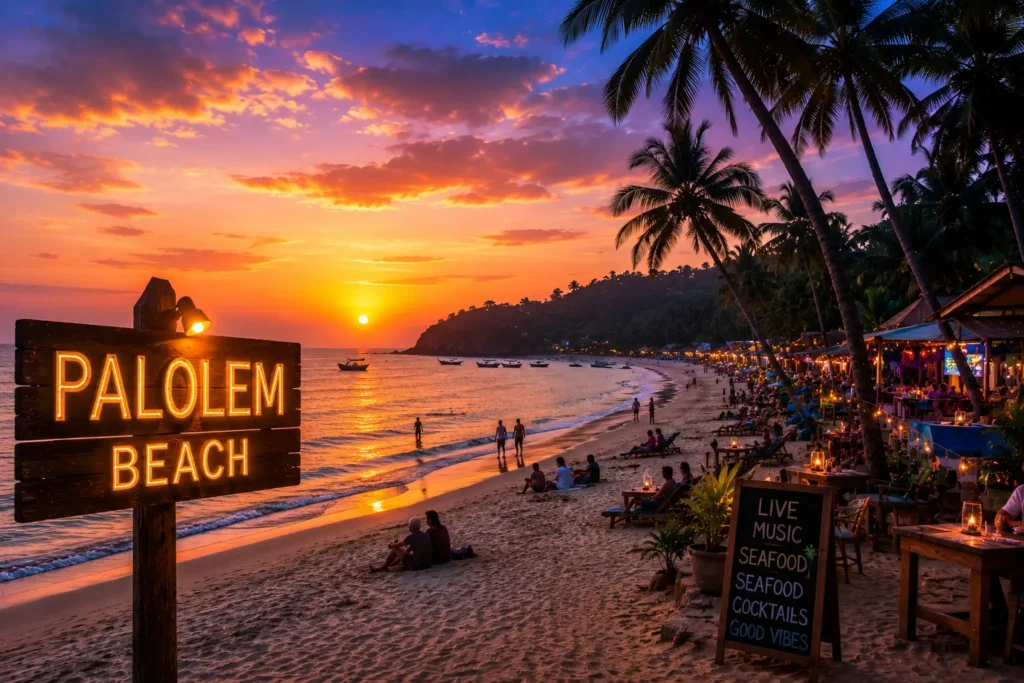
Image Source : TRENDING US
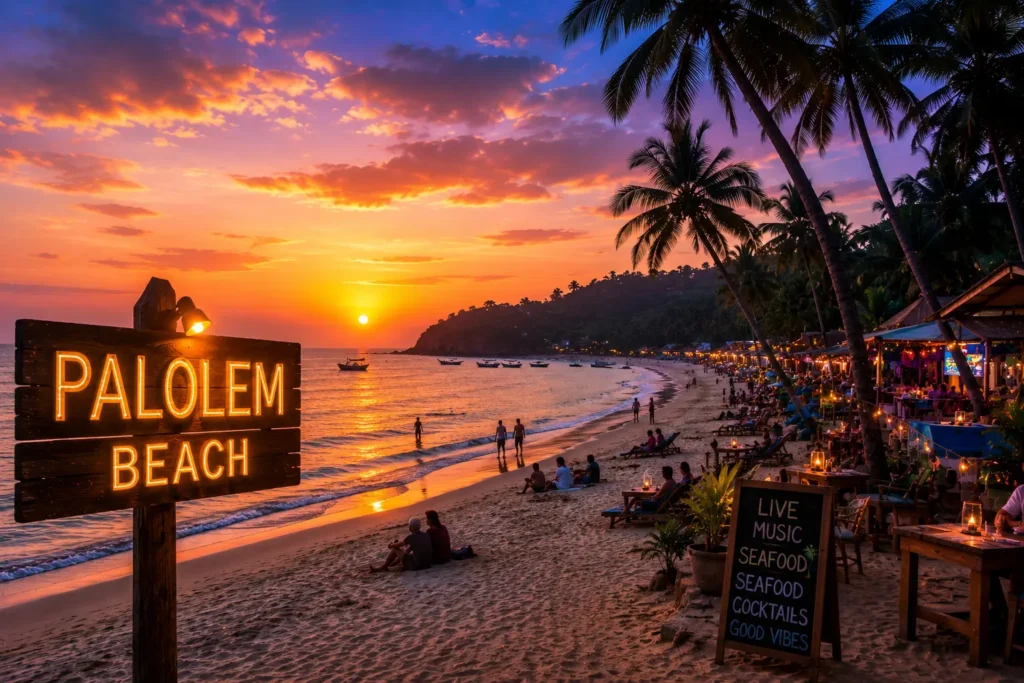
Keep going south and you’ll hit Palolem Beach, which more than a few travelers will tell you is the prettiest bay in the entire state — and it’s hard to disagree once you’ve seen it. Palolem Beach has also built a reputation for its silent discos, where a few hundred people dance together with nothing but headphones on, no speakers at all, just the moon sitting over the water. It might be the strangest, most unforgettable version of Goa nightlife you’ll ever run into, and it’s genuinely worth building a South Goa itinerary around.
Off the Map: Cabo de Rama Goa Beach
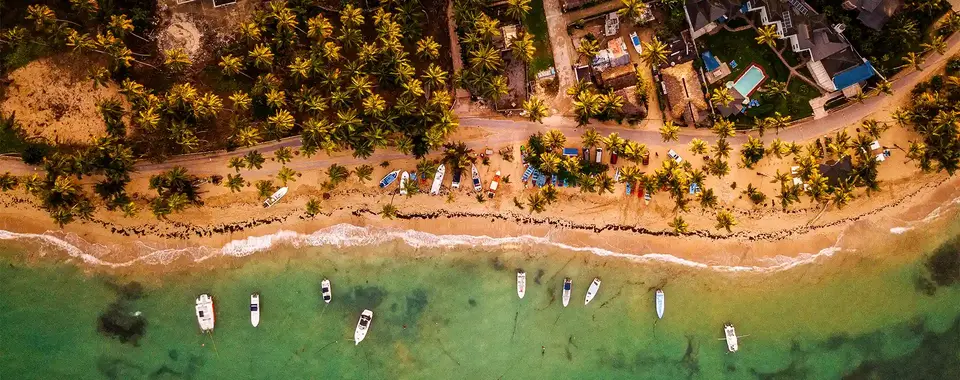
Image Source : Universal Adventures
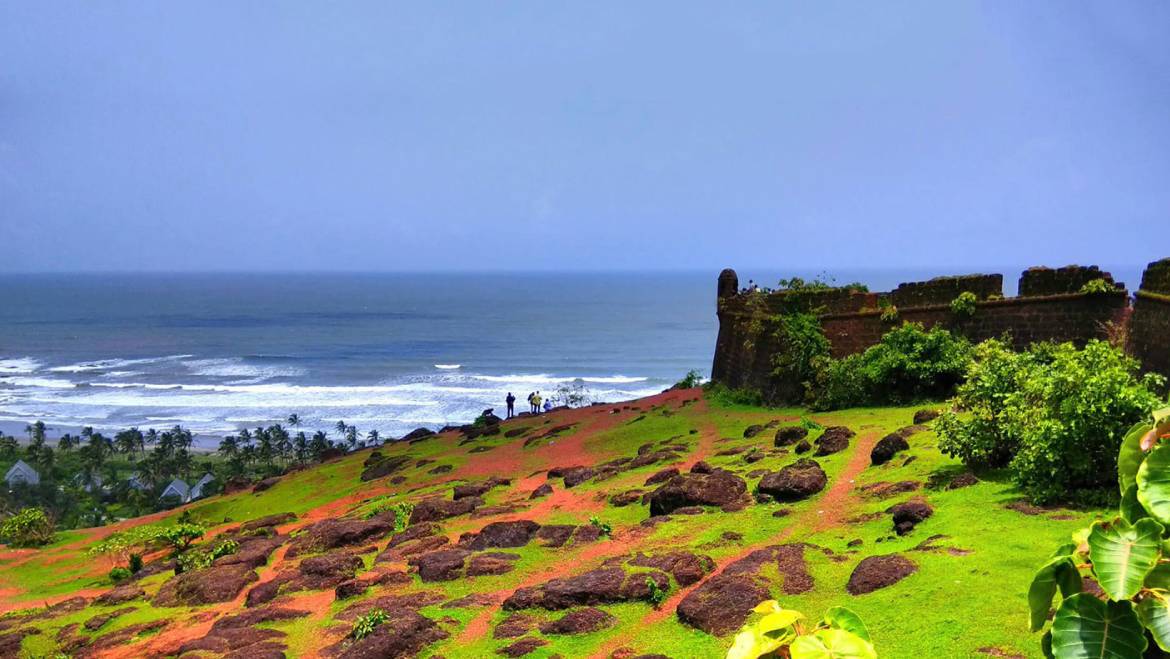
If you want to get even further from the noise, Cabo de Rama Beach is where to go — dramatic cliffs, an old Portuguese fort standing quietly above the water, and sand that stays nearly empty even during peak season. There’s not much of a nightlife scene here in the usual sense; it’s more about sitting still and actually seeing the stars, which ends up being its own kind of beach experience for anyone who just wants a night away from the crowds.
History After Dark
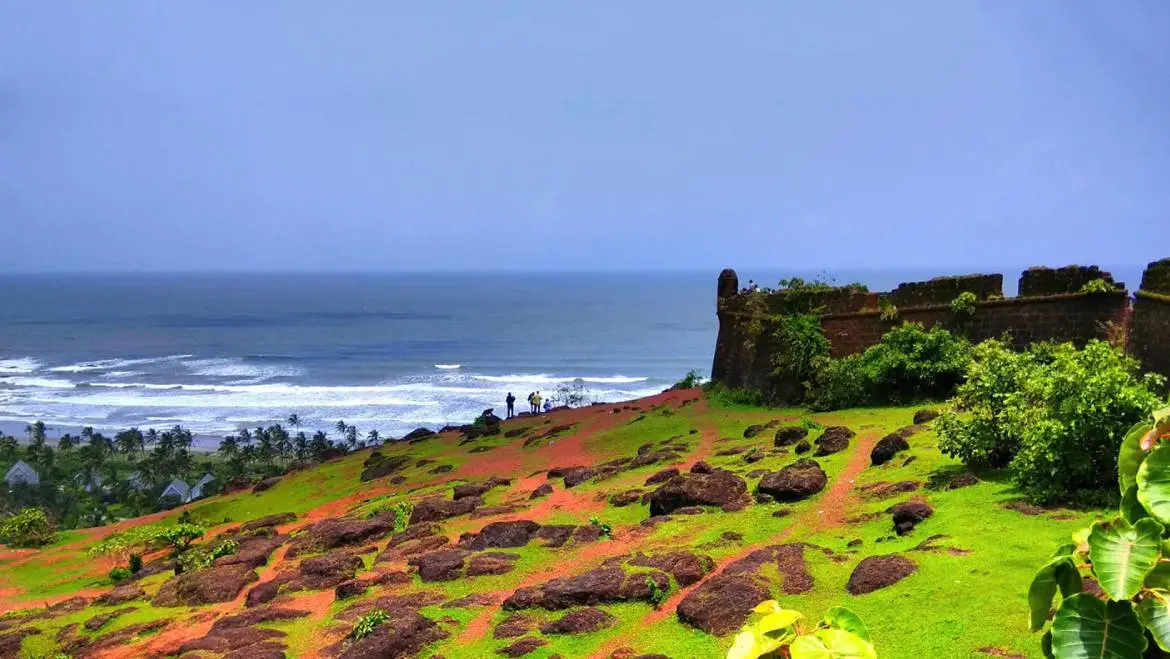
Image Source : Tour My India
Not everything memorable about Goa after dark happens on sand. Chapora Fort, the one everyone recognizes from the movies, is one of the best spots around for watching the sunset melt into a sky packed with stars over the Arabian Sea. Climb up to Chapora Fort in the early evening and you’ll get sweeping views over Vagator and the coast below — probably the most photographed spot in the state — before most people head back down to finish the night at some nearby beach shack.
Getting Around: The Practical Side of Goa
By Airport

Image Source : HappyFares
None of this happens without actually getting there first, obviously. Most people fly into Goa Airport — could be the newer Manohar International terminal, could be the older Dabolim one, really just depends on your flight — and honestly both do a decent job connecting to major Indian cities plus a handful of international routes. The moment you touch down at Goa Airport, taxis and prepaid cabs are already lined up, ready to get you to Calangute Beach or Candolim Beach in under an hour, or push a bit further north to Arambol Beach and Vagator Beach if the cliffside crowd is more your speed. Go the other way from Goa Airport, though, and you’re heading toward Colva Beach, Palolem Beach, and the much quieter Cabo de Rama Beach — with Chapora Fort sitting right there as an easy stop for anyone making their way up toward Vagator Beach anyway.
By Train

Image Source : HOLIDAYMONK
Prefer trains? Madgaon Junction is pretty much the state’s main railway hub, connecting Goa to Mumbai, Bangalore, and a good few places beyond that. Madgaon Junction turns out to be especially useful if South Goa’s the plan, since Colva Beach and Palolem Beach both end up being a fairly short ride away, and Cabo de Rama Beach isn’t much further once you’re off the train either. Head north from Madgaon Junction instead and you’re on the road toward Calangute Beach, Candolim Beach, and Arambol Beach, with room for a quick detour inland to Bicholim or a stop at Chapora Fort if you’ve got an extra hour to spare. Bicholim , in particular, makes for a nice halfway breather if you’re driving the whole stretch up to Vagator Beach or Arambol Beach in one go.
A Quieter Detour Island On Goa Beach
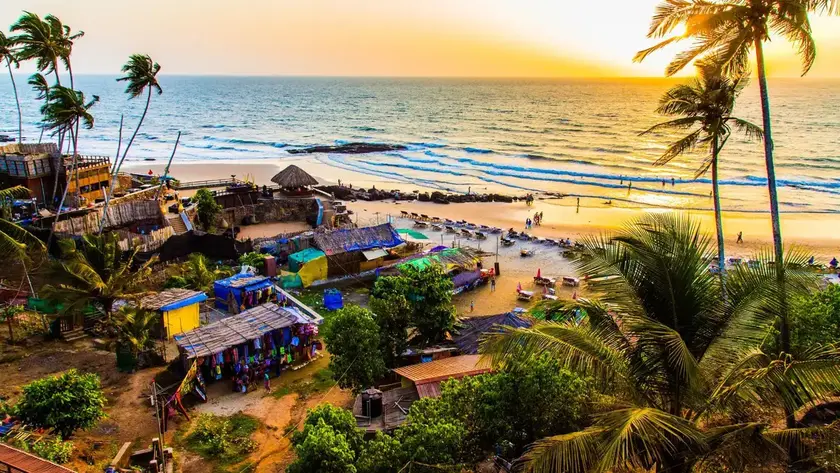
Image Source : TRAVEL AND LEISURE ASIA
Step away from the coast entirely and you’ll land in Bicholim, which runs at a completely different pace — a small town better known for spice plantations, old temples, and a bit of mining-era history than for anything resembling a party. Coming straight from the noise of Baga Beach, or the crowded lanes of Calangute Beach, or even just dreaming about a night out at Palolem Beach — honestly, Bicholim can feel like you’ve landed on a whole different planet. It won’t show up on the usual beach-hopping route that drags travelers from Baga Beach over to Calangute Beach and down to Palolem Beach, but it’s worth the detour if you want to see a slice of Goa life that has nothing to do with clubs or crowds. Think of it as the quiet counterweight to Baga Beach’s chaos, Calangute Beach’s buzz, and Palolem Beach Goa’s silent discos — Bicholim isn’t even trying to compete with any of that, and honestly, that’s kind of the whole point.Reaching by madgaon junction or Goa airport.
Final Thoughts
Maybe you’re the type who dances till sunrise at Baga Beach. Or you’d rather join a drum circle on Arambol Beach, or watch the sky from Cabo de Rama Beach. Doesn’t matter which — Goa’s nights hold their own. Doesn’t matter how you arrived, through Goa Airport or off a train at Madgaon Junction — the story plays out the sun goes down.
Every beach carries its own story. Calangute Beach glows with market lights, Candolim Beach turns candlelit, Colva Beach settles into bonfires, and Palolem Beach runs silent discos under the moon. Add a sunset from Chapora Fort, or a walk through Bicholim’s spice trails, and you see why people keep returning through Goa Airport or Madgaon Junction. Whether it starts at Baga Beach or ends at Colva Beach, from Chapora Fort to Bicholim, the party happens by starlight.