What Makes Bengali Cuisine Bengal’s Most Loved Food Culture?

I still remember watching my grandmother temper mustard oil until it just started smoking, then pull the pan off a half-second before it went too far. No timer. No measured mustard paste — just a practiced tilt of the wrist and a smell she was waiting for. That’s the thing about Bengali cuisine you can read every recipe written about it and still miss something until you’ve stood in a Bengali kitchen and watched someone cook without one.
This is built from years of eating, cooking, and asking too many questions at family tables, checked against culinary history so the details hold up.
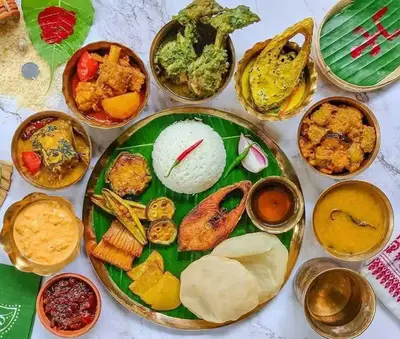
Image Source:Awesomecuisine
Bengali Cuisine Shaped by Rivers and Time
Long before “farm to table” was a marketing phrase, Bengal lived it out of necessity. Flat, fertile land and a web of rivers made rice and fish the backbone of every meal — a pattern that shows up constantly in the history of Bengali cuisine.
Trade and conquest added later chapters. Persian and Mughal influence brought slow-cooked meats and fragrant rice; European traders left their mark on Kolkata’s bakeries. What’s interesting is how little of the original identity got lost — mustard, poppy seed, and the five-spice panch phoron stayed central even as new techniques arrived. That’s usually the real answer when people ask about the difference between Bengali and North Indian food: it’s less about heat, more about which base flavors carry the dish.
The Everyday Thali
A typical Bengali thali items list looks simple — rice, thin lentil dal, a vegetable, a fish curry. But order matters almost as much as the food, something I only understood after years of eating it wrong as a kid. Meals move from bitter (a dish called shukto) to savory, then sweet. My grandmother called the bitter course something that “wakes up your appetite” — folk wisdom until you skip it and the whole meal feels off-balance. That rhythm is really what people mean by traditional Bengali food: not just ingredients, but pacing and patience.
Fish: The Heart of the Plate
No honest conversation about this food skips fish. Rohu, katla, and the prized hilsa (ilish) dominate home kitchens, and ilish in a sharp mustard gravy — Shorshe Ilish — is often the dish people crave most when they’re away from home. I’ve had it made three different ways in three households, never identical, which says a lot about how much personal technique sits inside what looks like one “fixed” recipe.
For Bengali fish curry recipes worth starting with: Macher Jhol, a lighter everyday curry most families make weekly; Chingri Malai Curry, prawns in coconut milk; and Doi Maach, a milder yogurt-based version that’s a gentler entry point than mustard.
What Is Bengali Cuisine?
This is the question I get most from first-timers: why is mustard oil used in Bengali cooking specifically? It’s not tradition for its own sake. Heated properly, its sharp pungency mellows into a nutty background note nothing else replicates, and traditional practice treats it as having warming, digestive qualities — part of why it’s everywhere in fish curries and pickles. The one thing I learned the hard way: heat it until it stops smoking sharply before adding anything, or the rawness overwhelms the dish instead of settling in.
A few other Bengali cuisine ingredients quietly do the heavy lifting: poppy seeds (posto) for Aloo Posto, panch phoron for tempering, nigella seeds for a bitter edge in stir-fries. Nothing exotic — just pantry basics.
Meat and Vegetarian Dishes
Fish gets most of the credit, but meat holds its place. Kosha Mangsho, slow-cooked mutton, is a Sunday tradition that eats up an afternoon and is always worth it. Kolkata-style biryani, with its signature potato chunk, descends from Mughal-era Awadhi cooking reshaped locally over generations.
Bengali vegetarian dishes run deeper than most expect: Shukto, Aloo Posto, lentil-cake Dhokar Dalna, and coconut Choral Dal are cooked daily even in households that eat meat and fish regularly. If anything, the vegetarian repertoire shows the most technical restraint — no meat or fish to lean on, so the spicing has to carry everything.
The Sweet Side
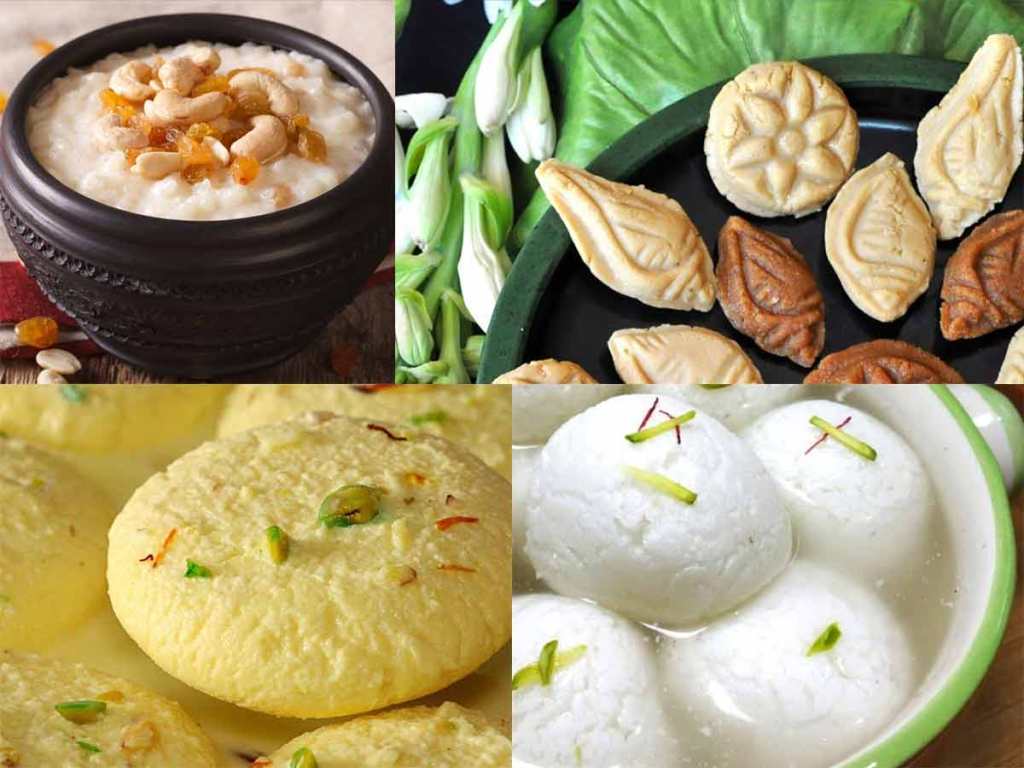
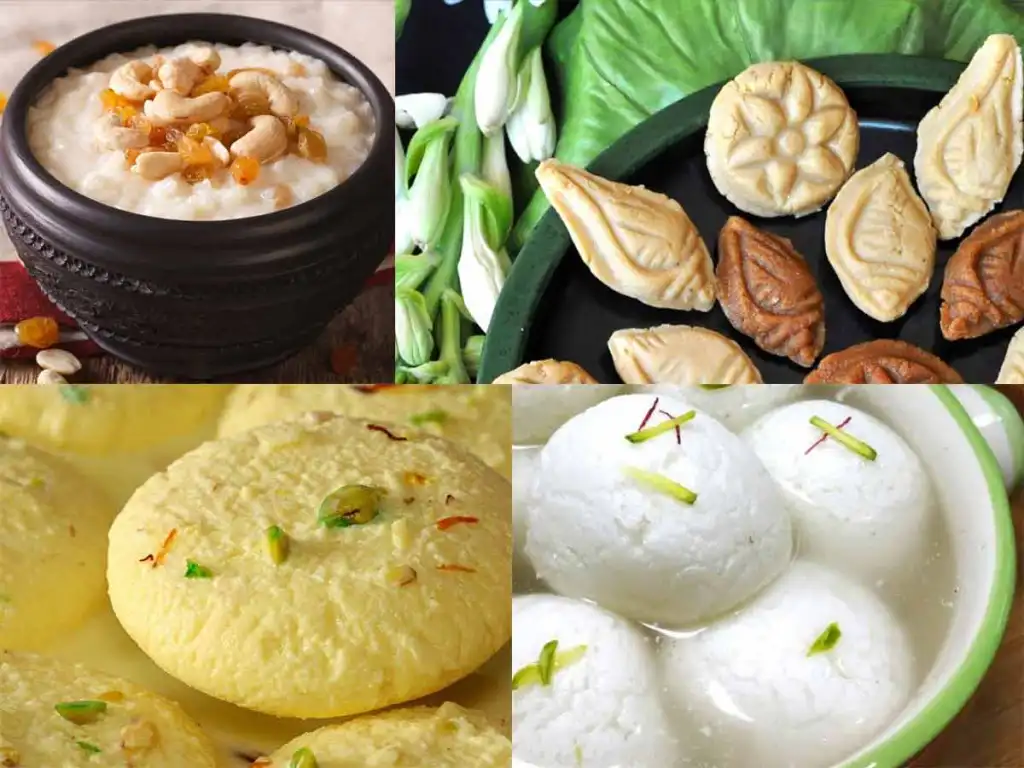
No look at famous Bengali sweets skips Rasgulla, Sandesh, and Mishti Doi — built on fresh chhena and slow-set sweetened yogurt, now known well beyond Bengal. What sets them apart is restraint: flavor comes from the milk itself, and texture does the rest.
Image Source:Eduindex
Food as Culture
What’s easy to miss without living around this cuisine is how tied it is to community. During Poila Boishakh, Durga Puja, and Eid, food is the centerpiece, not a side detail. “Adda” — long, unhurried conversation over tea or a meal — is inseparable from how it’s actually eaten. Bengali festival food reflects this directly: khichuri and labra for Durga Puja, payesh for birthdays and auspicious days.
Where to Start
A short list of the best Bengali dishes to try: Shorshe Ilish for fish, Kosha Mangsho for meat, Shukto or Aloo Posto for vegetarian, Sandesh or Rasgulla to close. Together they capture traditional Bengali food at its core — mustard heat against gentle sweetness, eaten slowly, course by course.
Understanding what is Bengali cuisine ultimately means accepting it was never built to be fast. It grew out of rivers, seasons, and shared tables — and that’s exactly why it’s held on this long.
About this piece: Written from firsthand experience cooking within a Bengali household, cross-checked against culinary history sources. Have a correction, or a family recipe that does it differently? That’s the beauty of this cuisine — there’s rarely just one right way.